






 Portuguese
  Spanish
  4 min of reading
  15 comments


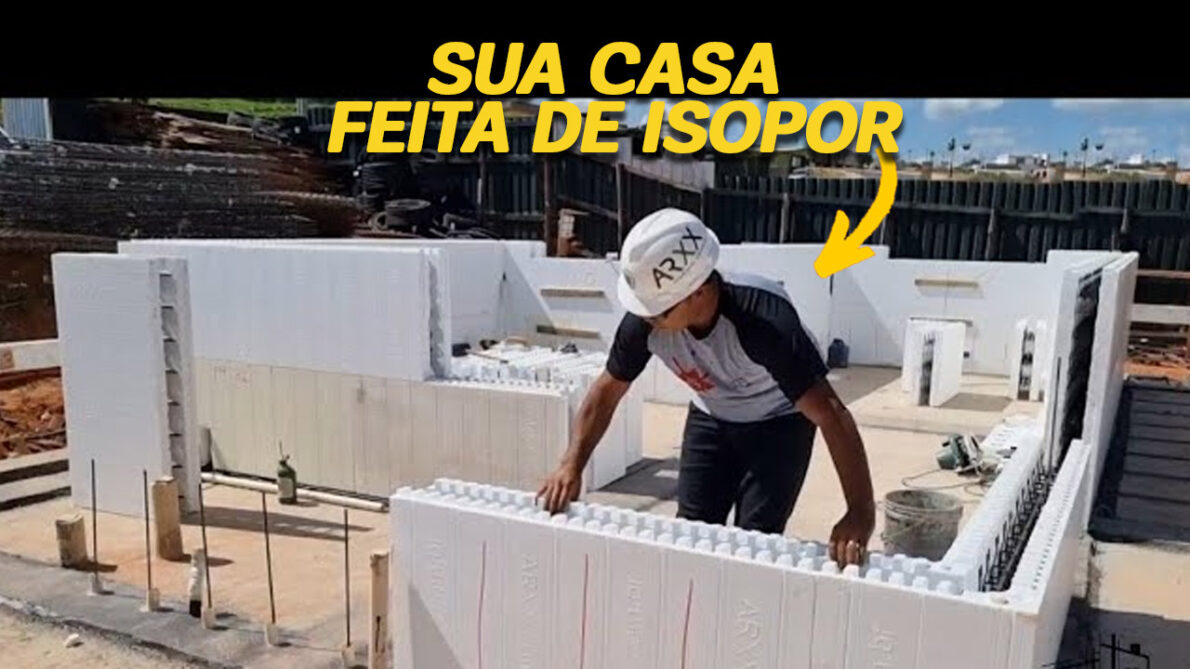


Technology That Uses Styrofoam in Walls and Floors Can Transform the Real Estate Market in Brazil. Major Construction Companies Like MRV, Tenda, and Pacaembu Are Already Interested.
Living in a house built with Styrofoam? It may seem unlikely, but a new technology is about to change the way construction is done in Brazil, bringing an innovative solution that promises to directly impact the final cost of projects.
The lightweight and resistant material has gained the interest of the largest construction companies in the country, such as MRV, Tenda, and Pacaembu, who are eyeing the advantages of this new construction method.
The innovative system from Lightwall, a company from Pernambuco, uses Styrofoam panels coated with cement boards, attracting attention not only for the more accessible cost but also for the speed and efficiency it offers in the construction process.
-
Bolivian Female Construction Workers Form Association to Combat Discrimination and 38% Pay Gap in the Industry

-
Near Amsterdam, residents buy land and discover they must also build streets, manage drainage, handle waste, and grow food on half their plot.
-
Brazil’s WEG to Open New Factory in China by 2027, Expanding Production of Large Rotating Electric Machines and Low to Medium Voltage Motors in Rugao

-
Chinese Shipyard Secures $1 Billion in Orders for Low-Carbon Container Ships Amid Global Fleet Renewal Efforts


According to Valor Econômico newspaper, Lightwall recently opened its second factory in the state of São Paulo and is already planning an ambitious expansion for 2025, with the opening of eight more factories. With this expansion, production is expected to increase from 2,000 to 20,000 houses per year, a capacity capable of meeting the growing demand for housing in the country.
The Secret Behind the Success of Lightwall’s Technology
The differential of this new construction technique lies in the use of cement boards filled with concrete and polystyrene beads (EPS), commonly known as Styrofoam.
According to tests by the Brazilian Association of Technical Standards (ABNT), the system offers not only greater lightness, with walls weighing only 40 kilograms per square meter compared to the traditional 240 kilograms of concrete walls, but also excellent performance in thermal comfort, acoustics, and moisture resistance.
Another interesting point is the speed in the assembly process. The panels come out of the factory customized for the project, which accelerates construction and minimizes material waste, generating savings of 10% to 15% compared to traditional masonry.
This translates into a more efficient and economical solution, especially for the low-income market, where housing shortages are more evident.
MRV, Tenda, and Pacaembu Are Already Eyeing the Technology
With increased production and the regulation of the use of these panels for structural floors and walls, major construction companies like MRV, Tenda, and Pacaembu are evaluating the feasibility of adopting this technology in their projects.
Pacaembu confirmed to Valor Econômico that it is already conducting studies on the material, while Tenda preferred not to comment, and MRV has not yet responded to requests for information.
This interest from major developers indicates that the system may gain even more space in the real estate market in the coming years.
Ambitious Expansion and Focus on the Low-Income Market
Lightwall does not intend to stop there. The company has ambitious plans to invest around R$ 400 million to open new factories by the first half of 2025.
The next industrial plants are expected to be installed in Santa Catarina, Minas Gerais, Goiás, Tocantins, Mato Grosso, Pará, Bahia, and Ceará, expanding the company’s presence in various regions of the country.
This strategic move aims to meet the growing demand in the low-income housing market, where there is enormous potential for growth.
In addition to residential projects, Lightwall has also partnered with Steel Corp, a company specialized in industrialized construction, to offer commercial modules using steel frame technology.
This solution, which uses steel structures, has been widely adopted in fast and efficient constructions abroad, and is now beginning to gain traction in Brazil.
The Regulation That Opens Doors to the Future of Construction
The ABNT played a crucial role in validating this construction system.
After creating the standard that regulates the use of Lightwall’s panels for walls and floors, the entity also launched a second method that uses lightweight concrete-filled PVC panels, a technique quite popular in Canada.
This type of innovation is part of a joint effort by ABNT with the Federation of Industries of the State of São Paulo (Fiesp) and the Ministry of Cities, aimed at modernizing civil construction in Brazil.
Mario William Esper, president of ABNT, highlights that these new technologies are fundamental for the sector.
“It is pointless for civil construction to keep piling up bricks and expect more competitiveness and quality,” Esper stated.
This statement reflects the urgent need for modernization in the sector, so that Brazil can keep pace with global trends and offer quality housing at affordable prices.
The Future of Construction with Alternative Materials
With the growing demand for housing and the need for more sustainable and efficient technologies, the use of materials like EPS and PVC in construction is becoming a tangible reality in Brazil.
The expansion of Lightwall, combined with the interest from major construction companies and ABNT regulation, indicates that we are on the brink of a revolution in the real estate market, which may offer cheaper, more sustainable, and quicker-to-build homes.
Would you comfortably live in a house that you know was made with Styrofoam-based materials? Comment below and share your opinion!





Vai ficar mais fácil pra os **** roubarem
Oi bm dia quero fazer a minha casa de isopor
Resistência e segurança contra fogo e outros?
Se realmente for uma tecnologia de ponta tudo bem, pois quando fala em classe menos favorecida querem empurrar qualquer coisa.
Tem construtora que faz cada apartamento para classe popular, que é uma verdadeira falta de respeito.