






 Portuguese
  Spanish


Discover How 3D Printing Is Revolutionizing Construction with Modern 80 m² Houses Ready in Just 18 Hours, Promoting Sustainability and Reducing Costs
The recent project by Havelar, located in the Greater Porto area in Portugal, represents a milestone in housing construction. This two-bedroom residence, with an area of 80 m², was printed in just 18 hours using the BOD2 printer from COBOD, the same technology used in building the largest 3D printed building in Europe.
The production cost of these homes is significantly low, around 1,500 euros per square meter, compared to the Porto average of 3,104 euros. This savings is mainly due to the speed of 3D printing, which follows a plan and extrudes a cement-like mixture in layers, forming the basic structure of the house.
The rapid execution of the 3D printed walls allows Havelar to offer brand new houses completely built in less than two months, more than double the usual time in the market.
-
Students Build Kansas’ First Hemp-Insulated Social House for a Needy Family: 85% Less Concrete, Solar Roof Returns Energy to Grid, Carbon Negative in Under 20 Years

-
China to Drill 90 Kilometers Under the Sea to Connect Two Cities Currently Linked Only by Ferry

-
18 m² Home Built in Two Days by Teto Volunteers Provides Shelter from Insects and Cold for Resident in Brazilian Community; 43 Delivered in 2026
-
$134.7 Million Project in São Paulo Installs Over 5 Kilometers of Pipes, Creates New Underwater Crossing to Boost Water Supply for Over 450,000 People


Thanks to the use of 3D construction printing, Havelar is able to offer contemporary designed new houses in the mid-market for just 1,500 euros per m², well below current market prices.
Havelar’s ambitions also include achieving carbon neutrality through the use of new materials.
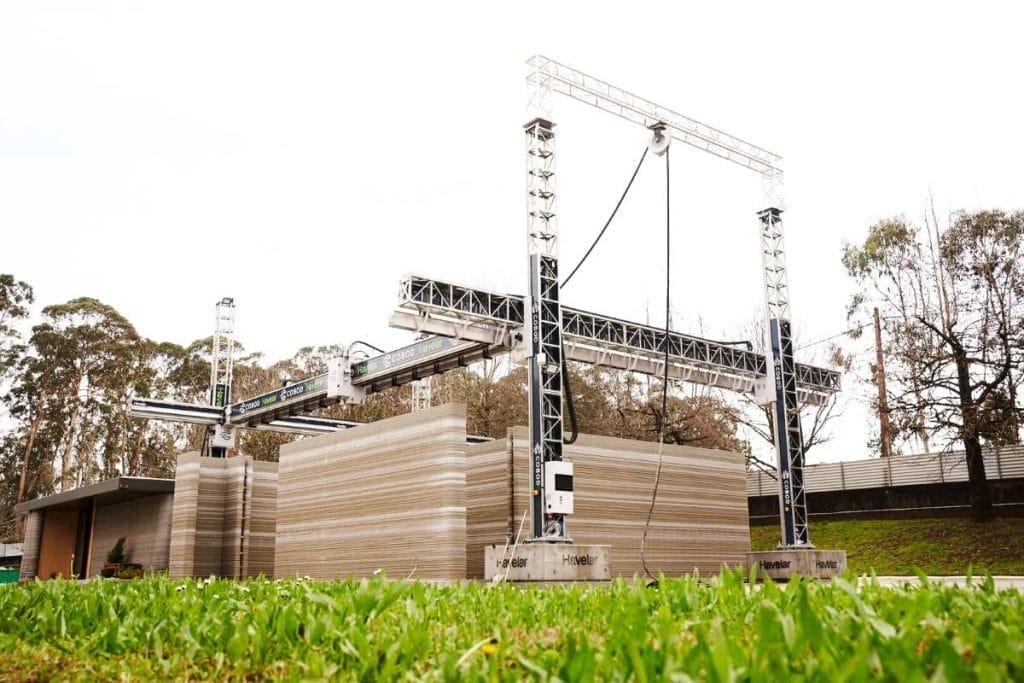
Process
Although the printing process itself took 18 hours, human installers later intervened to install windows, doors, panels, roofs, and other necessary elements. Including the manual work, the entire project was completed in less than two months.
Design and Distribution
The house features a simple single-story design, with ribbed walls that are characteristic of 3D printing. The interior is organized around a central kitchen and dining area, with a living room, two bedrooms, and an adjacent bathroom. While basic compared to other more luxurious models of 3D printed houses, its cost is approximately $400,000 cheaper, targeting a completely different market.
Sustainability and Future
Havelar is not only looking to innovate in construction but also in sustainability. The company aims to achieve carbon neutrality by 2030 through the adoption of alternative building materials such as earth and straw.
Collaborations for a Sustainable Future in Construction
Rodrigo Vilas-Boas, co-founder of Havelar, expresses the company’s vision to collaborate with partners who identify with building sustainable and affordable communities. With a budget of 150,000 euros, it is possible for a young couple to acquire the home of their dreams in an area with good access and services.
This project not only represents a significant advancement in affordable housing construction but also highlights the potential of 3D printing technologies to address environmental and social issues, marking a promising path towards a more sustainable future.
3D House Printing Process Using COBOD Technology
3D printing of houses is a revolutionary technology that promises to transform the construction industry. COBOD is at the forefront of this innovation with its BOD2 printer, one of the most advanced on the market. This article outlines the process of 3D house printing using COBOD technology, highlighting its efficiency, costs, and environmental benefits.
Introduction to COBOD’s 3D Printing Technology
COBOD, a leader in 3D construction technology, developed the BOD2 printer to respond to the growing demand for affordable and sustainable housing solutions. This printer is capable of constructing multi-story structures and adapts to various architectural designs.
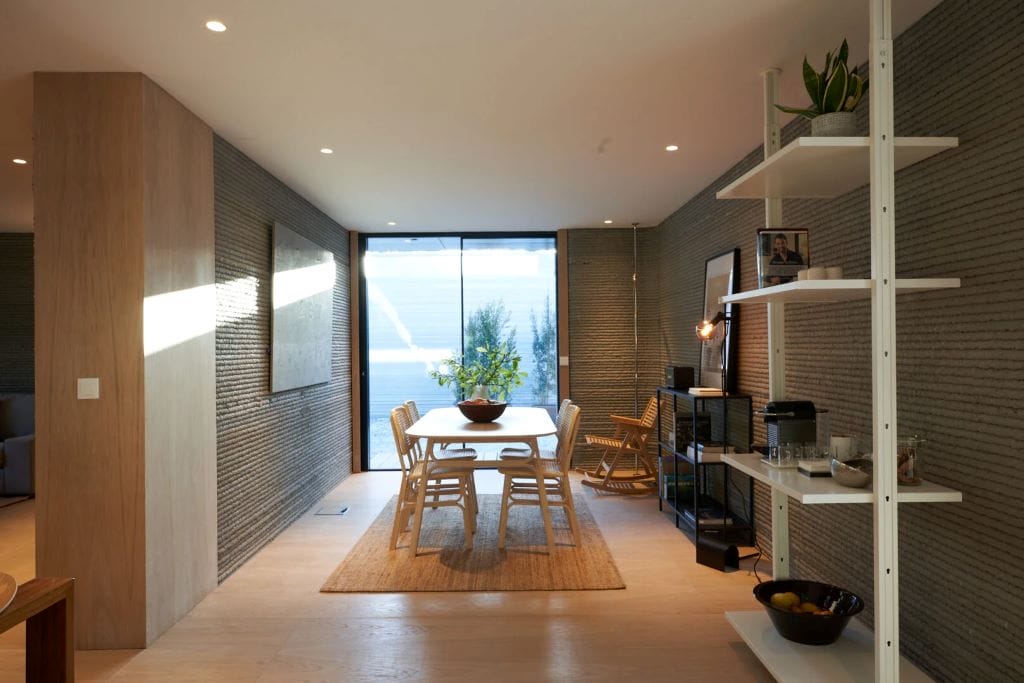
Main Features of the BOD2 Printer
- Modularity: The BOD2 is modular, allowing its size to be configured according to the specific needs of the project.
- Automation: Equipped with an automated system that follows digital plans for material extrusion.
- Speed: Capable of quickly printing structures, significantly reducing construction times.
Steps of the 3D Printing Process
The process of constructing a house with the COBOD BOD2 printer takes place in several key stages:
- Design and Modeling: Before printing, a detailed design of the house is created using specialized software. This model is converted into specific instructions that the printer can interpret.
- Site Preparation: The site must be prepared and leveled. The base on which the printer will operate is installed.
- Printer Assembly: The BOD2 is assembled on-site, configured to fit the project size.
- Printing: The printer extrudes a compound material, similar to cement, in successive layers. The material is deposited following the specified design, constructing the walls and internal structures.
- Post-Printing Installation: Once the main structure is printed, human workers intervene to perform additional installations such as electricity, plumbing, windows, and doors.
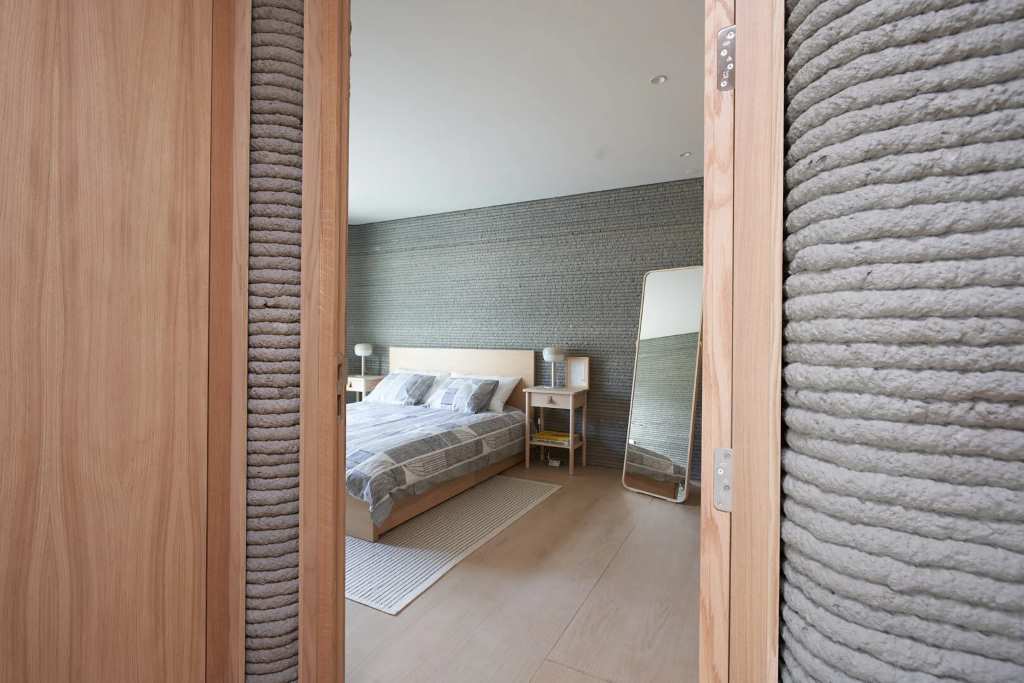
Advantages of 3D Printing in Construction
- Cost Efficiency: Reduces labor and material costs.
- Speed: Accelerates the construction process, allowing projects to be completed in weeks instead of months.
- Customization: Offers design flexibility without significantly increasing costs.
- Sustainability: Minimizes material waste and allows the use of more eco-friendly materials.
Future of Construction with 3D Printing
The use of 3D printers like the BOD2 from COBOD represents a promising future for housing construction, not only for its potential to reduce costs and times but also for its ability to contribute to environmental sustainability. With ongoing developments in materials and techniques, 3D printing is set to play a crucial role in solving the global housing crisis and building more sustainable communities.
This innovative process is not only a testament to technological advances in construction but also offers tangible hope for addressing significant global challenges in the near future.
Source: cobod.com
More Information: havelar.com




Procure por Hom3D.brazil no Instagram e vai encontrar uma empresa Brasileira que já imprime casas.
Qual é a voltagem do trabalho dessa impressora.
Está disponível pras cidades no interior de São Paulo.