






 Portuguese
  Spanish


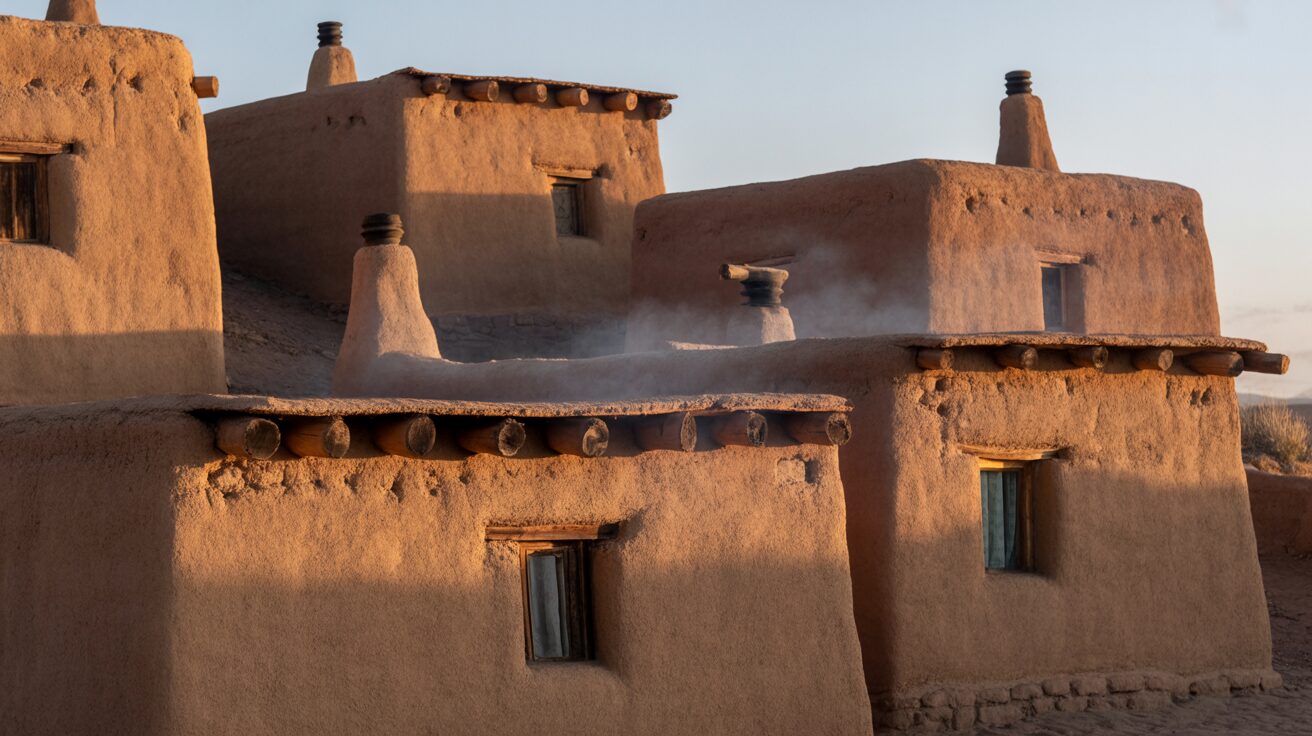

Residents of the US Innovate with Fire-Resistant Houses Made of Clay. Understand How the Material Works and How It Generates Fireproof Homes
With climate change intensifying extreme events, such as prolonged droughts and heatwaves, the risk of losing a home in a wildfire is becoming increasingly real for millions of people around the world — especially in vulnerable communities in the western United States. In this alarming scenario, the idea of investing in fireproof homes ceases to seem exaggerated and becomes an urgent necessity.
As a practical response to this new reality, interest is growing in construction solutions that are more fire-resistant. Among them, an ancient building material has caught attention for its effectiveness: clay. Simple, accessible, and surprisingly heat-resistant, clay is being rediscovered by residents and architects as a viable alternative for building homes with greater protection against wildfires.
In this article, you will understand how clay is becoming an ally in combating the effects of climate change and why this return to origins may represent a step forward in sustainable architecture and home safety.
-
Father and Son Build 97 cm Thick Circular Stone House in Brazil, Inspired by Scottish Architecture, Creating a New Agrotourism Hub

-
Sweden Removes 200-Ton Concrete Gallery to Restore Pjältån River’s Natural Flow in Europe’s Largest Aquatic Restoration Project

-
Key Infrastructure Projects for Brazil’s Next President: Expanding Railways to Cut Transport Costs, Reduce Truck Traffic, Create Jobs, and Boost Industries Nationwide

-
While China Builds Undersea Rail and Mexico Connects Two Oceans, Brazil Struggles with Grain Transport Due to Lack of Railways


Understand How the Idea of Fireproof Homes Emerged in the US
It’s no surprise that extreme weather poses a threat to homes. As hurricanes, tsunamis, and wildfires become more common natural events, communities must adapt to stay safe.
Nowadays, a technique that people are using to stay safe in case of wildfire is to reconstruct their homes using clay, specifically mud, a type of clay.
With a long history worldwide, there are several examples of fireproof houses built with earth that can be found in many cultures, from caves in northern China to mud houses in Sanaa, Yemen.
Thus, in the US, this material has been largely overlooked as a building material in recent decades. However, as the risk of wildfires continues to rise, this is starting to change. In the wake of recent wildfires in the US, many residents have decided to rebuild their homes to be fire-resistant using fireproof earth blocks.
Couple Affected by Fire Has Revolutionary Idea
The couple Matteo Robeschini and Melanie Glover, from Denver, for example, made this decision after their home was destroyed by strong winds and hot flames in December 2021.
As the fire swept through the neighborhood, they were trapped with their children in the front hallway of their home for about half an hour. The house burned around them but fortunately, all family members escaped unharmed when the fire passed. However, the experience left them with lasting trauma.
As a consequence of this terrible event, the couple was willing to rebuild their home, but this time using a material that would resist better in case of fire. Glover’s instinct was to use earth, considering that the material does not burn, and indeed, her instinct was supported by some initial research.
Research suggests that fire-resistant homes built with earth are extraordinarily capable of withstanding high temperatures and can even strengthen after exposure.
Find Out How the Fireproof Homes Were Tested
In 2021, researchers from the University of California, Davis, conducted a series of tests in which they took a blowtorch to a compressed earth block at nearly 1,900° C. This is much hotter than an average wildfire.
After exposure to this incredible heat, the earth blocks hardened and transformed into red clay. The process is similar to what happens with ceramics in a kiln. Although these results are promising, it is important to remember that these earth blocks have not yet been tested in a real fire.
Thus, there are real-life examples of earth houses that withstand fire much better than houses made of other less durable materials. In addition to their durability and resistance, clay houses are also more eco-friendly than houses with traditional materials.


