Portuguese
  Spanish


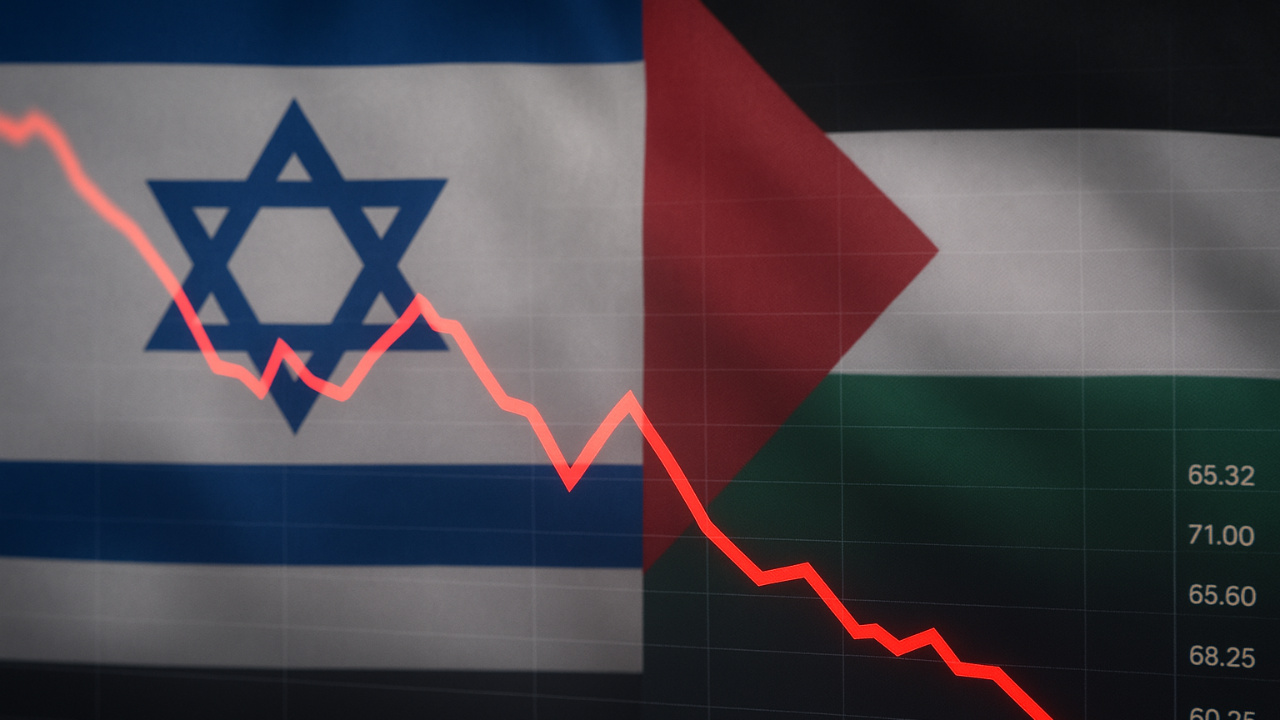

The Peace Agreement Between Israel and Hamas Drives Oil Prices Down to US$ 64 and Reduces Geopolitical Tensions, Opening Space for New Interest Rate Cuts by the Federal Reserve and Global Inflation Relief.
Oil prices saw a sharp decline this Friday (10), following the announcement of a ceasefire between Israel and the Hamas group. The barrel, which had been trading around US$ 70, fell to US$ 64 in just minutes, reflecting the easing of tensions in the Middle East.
The agreement, mediated by the United States, Egypt, and Qatar, reignites hope for a lasting peace in the region — one of the world’s main oil production and export hubs. The news immediately resonated in international energy markets, with investors adjusting supply and demand projections in light of the new geopolitical scenario.
According to analysts, the normalization of routes in the Red Sea and the reduced risk of attacks on oil facilities in Saudi Arabia and Iran signal a structural improvement in global oil flow. This movement alleviates fears of supply shortages and puts downward pressure on prices after months of high volatility.
-
Oil production grows in Rio, but reserve replacement raises a warning sign

-
Petrobras is expected to complete the drilling of the Morpho well in the Foz do Amazonas in August 2026, the first well in the Equatorial Margin, an oil frontier that the ANP estimates at more than 30 billion barrels and could redraw the map of Brazil.

-
Oil returns to the center of concerns with tension between the US and Iran

-
IEA reduces forecast for global oil demand in 2026 after impacts of the Middle East crisis



Global Reaction: Political Stability and Impact on Energy Supply
With the advancement of peace in the Middle East, Arab oil-producing countries are expected to resume investments and gradually increase production. This recovery is likely to expand global supply and reduce the value of future contracts, directly impacting the cost of energy imports in large consuming economies.
In addition to reducing risk premiums, political stability may also restore investor confidence in the energy sector. Oil and gas companies that had suspended projects due to regional uncertainty may resume expansion and infrastructure plans, which reinforces the downward trend in barrel prices.
According to financial market specialists, this trend may extend over the coming weeks, especially if the agreement is solidified with long-term guarantees and international support.
Effects of the Decline in Oil Prices on Global Inflation
The drop in oil prices comes at a crucial moment for the global economy. In the United States and Europe, high energy costs have been one of the main drivers of inflation over the past two years. With cheaper oil, there are expectations of relief in consumer price indexes, which could reduce pressures on central banks.
In the United States, the impact is likely to be significant. The annual inflation rate, currently near 2.9%, has been the main obstacle for the Federal Reserve (Fed) to adopt a softer monetary policy. The decline in oil prices reduces the cost of gasoline and electricity — two decisive components of the price index — and opens the door for new interest rate cuts later this year.
In the September meeting, the Fed lowered the benchmark rate by 0.25 percentage points, bringing rates to the range of 4.00% to 4.25%. Now, with cheaper oil and signs of inflationary slowdown, the market is betting on two more cuts by December.
This potential rate cut has wide-ranging effects: it tends to weaken the dollar, strengthen emerging market currencies, and increase capital flows to developing economies. Furthermore, the global cost of financing may decrease, stimulating productive investment and international trade.
For commodity-dependent countries, such as Brazil, the impact is twofold. On one hand, cheaper oil helps contain domestic inflation; on the other, a weaker dollar favors the appreciation of the real and improves purchasing power in the global market.
A New Equilibrium in the Energy Market
With the ceasefire in Gaza, the oil price scenario takes a new direction. The combination of political stability and increased supply may reshape the balance of the energy sector in the coming months.
While investors monitor the progress of peace negotiations, the market is already pricing in a lower-risk and more predictable environment — essential factors for global economic recovery.
Thus, the truce in the Middle East represents not only a political milestone but also a turning point for the international financial system, which sees oil prices as a key indicator for the behavior of interest rates, inflation, and currencies around the world.