Portuguese
  Spanish



The NASA Contest Aims to Use Artificial Intelligence in Favor of Nature, Using Google Satellites for This
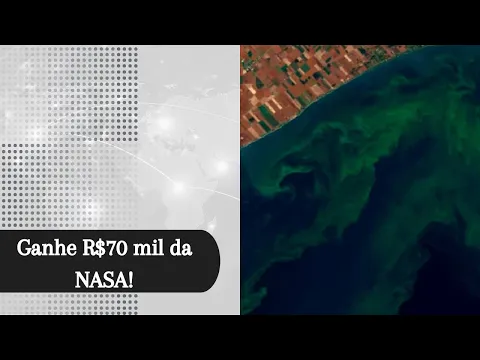
How about winning R$ 70 thousand just by looking at images from Google satellites?NASA has opened a new contest to select scientists who can and want to identify toxic algae from images taken from space by Google. The service consists of looking at satellite images of some bodies of water and observing if there are algae present in them; if so, the selected individuals must classify them according to their severity.
The contest will function in stages of prizes, with the first place receiving US$ 12 thousand (around R$62.3 thousand), the second place receiving US$9 thousand (around R$47 thousand), and the third place receiving US$ 6 thousand (around R$31.1 thousand). In addition to this amount, the winners will also receive a bonus of US$2 thousand (R$10.3 thousand) for the first place and US$1 thousand (R$5.2 thousand) for the second place.
The NASA contest can be participated in by all individuals who reside (legally) in any country in the world that does not have any sanctions applied by the U.S. and who are over 18 years old. Candidates will not need to pay any fee to participate in the NASA contest. The competition ends on February 17th, at 8:59 PM (Brasília time).
-
Internship vacancies in 2026: New selection process by ArcelorMittal Tubarão offers scholarships of up to R$ 1,100 for interns and reinforces investments in talent development for the industry, connecting education, technology, and professional development on a large scale.

-
2,653 job vacancies through Sine-RO, with 419 new opportunities this week, 81 openings for apprentices, and Ji-Paraná leading the list of hires in Rondônia
-
46 job openings are available with salaries up to R$ 2,500, benefits such as meal vouchers, medical assistance, and opportunities with no experience required in Cajamar.
-
642 job openings this Wednesday: candidates need to bring original documents, resume, vaccination certificate, and pay attention to the entry rules at the posts in Manaus.


Entries can be made through the official NASA satellite image contest website.
THE NASA CONTEST THAT PAYS R$ 70 THOUSAND

In Favor of the Environment
According to NASA, the goal of the contest to analyze Google satellite images is to analyze the water quality in different places around the world, discovering whether it is safe for human consumption or not.
This analysis is usually done manually, meaning that algae are collected from watercourses and taken to laboratories. Then, the analysis is performed to conclude whether the water can be consumed or not, but this method is time-consuming and difficult to carry out on a large scale.
Thus, the analyses performed by the participants of the Google satellite image contest will be used to feed an Artificial Intelligence algorithm that will carry out the analysis itself, finding areas that have toxic algae.