Portuguese
  Spanish


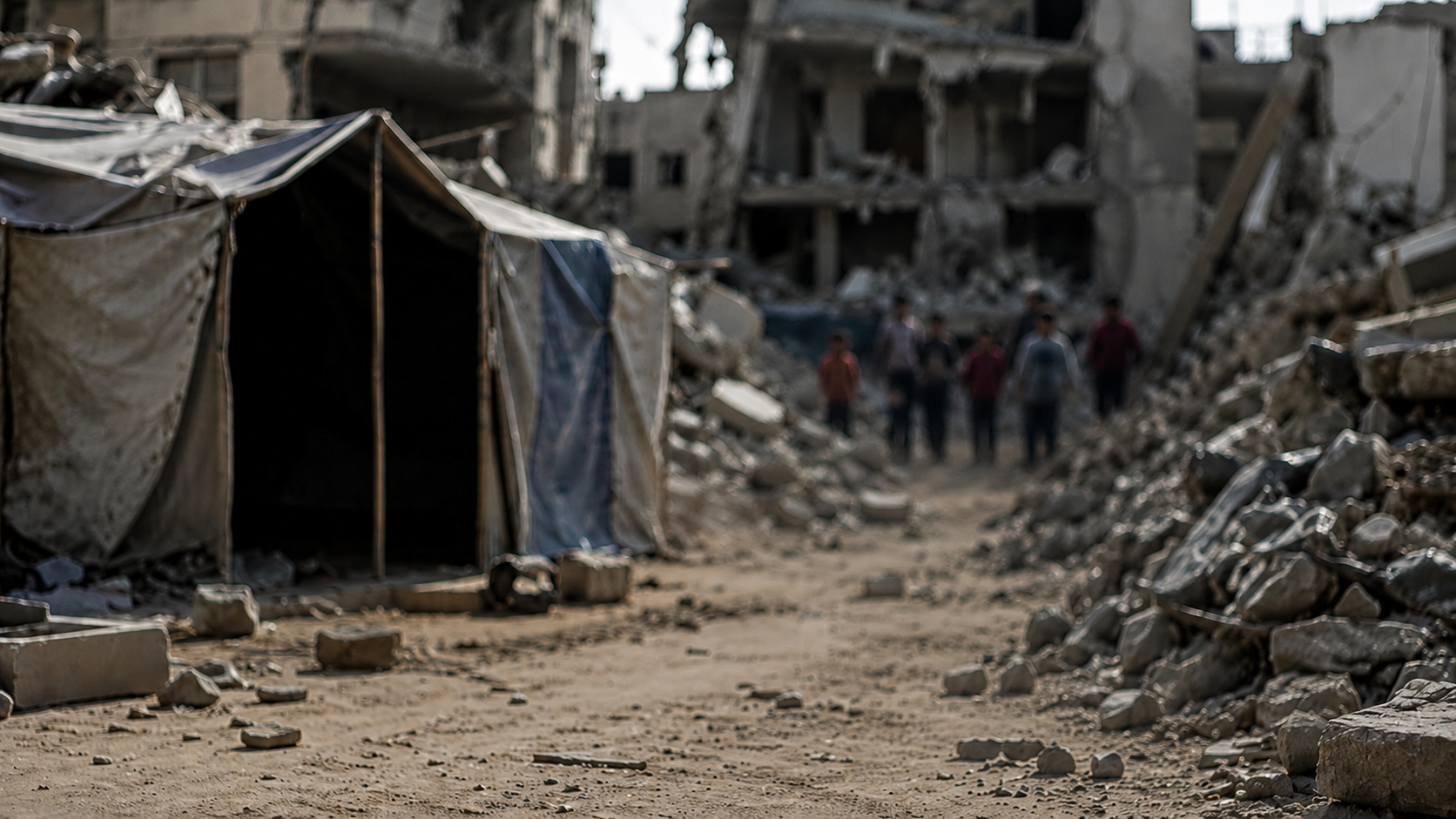

Child marriage is on the rise again in Gaza after years of decline, with girls aged 14 to 16 pushed into early unions amid war, hunger, and displacement.
According to the UNFPA, the war in Gaza has reversed part of a social advancement built over more than a decade. The UN agency reported, in an analysis published on April 6, 2026, that child marriage, which had fallen from 26% in 2009 to 11% in 2022 in Palestine, has sharply increased under the pressure of conflict, displacement, and extreme poverty.
In just four months of 2025, at least 400 girls aged 14 to 16 received marriage authorizations in emergency courts. The UNFPA itself states that this number is likely below reality, because a large part of the marriages now occur informally, without judicial registration and without official documentation amid the collapse of civil systems.
War in Gaza undid a decade of reduction in child marriage in months
According to the UNFPA, the previous trajectory was of consistent decline. Between 2009 and 2022, the rate of child marriage in Palestine fell by more than 50%, a result of years of investment in girls’ education, social protection, and support programs for vulnerable families.
-
400 km² of Greenhouses in Almería, Spain, Astonish American Visitor by Producing Millions of Tons of Produce for Cold-Weather Markets

-
Antarctic Volcano Emits Microscopic Gold Particles That Travel Up to 1,000 Kilometers Across the Continent
-
Little-known Japanese factory is the world’s largest zipper manufacturer, producing 7 billion pieces annually and closing half the world’s pants.

-
Brazilian Factory Recycles One-Third of the Country’s Styrofoam Waste, Matching European Levels with 51,000 Tons Reused Since 2007


The war violently interrupted this process. The analysis indicates that, already in 2024, a survey by the agency found 71% of respondents in Gaza reporting increased pressure to marry off girls under 18. Instead of continued decline, the conflict opened the way for an accelerated reversal.
The data of 400 formal registrations in four months of 2025 is just the visible part of the problem. According to the UNFPA, most marriages now occur outside formal channels, which means that the real scale of the crisis may be significantly larger than documented.
Families have come to see early marriage as a survival strategy
The UNFPA was straightforward in explaining the mechanisms behind this increase. In Gaza, child marriage cannot be treated merely as tradition or custom. The analysis shows that it has come to be used by some families as an economic and social survival strategy in a devastated territory.
With livelihoods destroyed, income vanished, and irregular humanitarian aid, marrying off a daughter can mean one less person to feed within a displaced family. In some cases, it can also represent access to some form of financial arrangement or material support amidst the collapse of domestic routine.
Another logic described by the UNFPA is that of perceived protection. In overcrowded shelters, with increased insecurity and fear of violence, some families have come to believe that marriage offers a way to remove girls from direct vulnerability in these spaces.
Collapse of schools, social services, and courts weakened protection barriers
Under normal circumstances, the marriage of a 14-year-old girl would face several institutional barriers. Schools could notice the student’s disappearance, social services could intervene, protection organizations could act, and courts would have more filters to block early unions.
According to the UNFPA, in Gaza these systems collapsed simultaneously. Schools were destroyed or closed, social services operate at minimal capacity, protection organizations lost structure, and the courts function in emergency mode, pressured by a population needing documentation for multiple urgencies.
The result is that the distance between a family’s decision and the formalization of a child marriage has become much shorter. Even the cases that go through the courts represent only a part of a phenomenon that has largely escaped institutional control.
Increase in teenage pregnancy exposes the direct impact of the crisis on health
The effects are already visible in health data. According to the UNFPA, in December 2025, about 10% of newly registered pregnancies in Gaza were among teenagers, a percentage significantly above the levels observed before the war.
Teenage pregnancy already carries high risks in any context. In Gaza, these risks increase because the health system has been devastated by the conflict, access to prenatal care is limited, and obstetric services operate under extreme pressure, with a lack of medicines, structure, and security.
The same analysis indicates that adolescents accounted for 12% of all documented survivors of gender-based violence in the occupied Palestinian territories in 2025. This shows how early marriage, teenage pregnancy, gender-based violence, and the collapse of health services have come to reinforce each other.
Mental health crisis further exacerbates the vulnerability of girls in Gaza
The UNFPA also describes the situation as a deep mental health emergency. According to the analysis, 96% of children in Gaza reported feeling that death is imminent, a figure that helps gauge the level of collective trauma in which these family decisions are being made.
The program officer for adolescents and youth of the agency, Sima Alami, stated that one million children in Gaza need mental health and psychosocial support. Many of the girls pushed into early marriages are within this universe of trauma, loss, and extreme displacement.
This means that child marriage does not occur in isolation. It is part of an environment where girls already live under constant fear, school disruption, loss of family members, food insecurity, and the collapse of basic protection networks.
UNFPA says reversing the rise in child marriage requires humanitarian aid and social protection
According to the UNFPA, curbing this rise requires a set of measures that are currently not available on a sufficient scale. The agency cites the need for humanitarian access, restoration of health and education services, psychosocial support, and economic programs for families in extreme situations.
The logic is clear. As long as families remain without income, without security, without functioning schools, and without minimum social protection, the marriage of girls will continue to be seen by some as a possible, albeit tragic, way out. Without real alternatives, the pressure will continue.
The UNFPA itself acknowledges that the gap between what is needed and what currently exists in Gaza remains enormous. The progress that took years to reduce the child marriage rate in Palestine is being undone in months, in a context where the systems capable of containing this setback have practically ceased to function.
Child marriage in Gaza has become a brutal portrait of the social cost of war on girls
What happens in Gaza shows that war does not only destroy buildings, hospitals, and schools. It also dismantles social mechanisms that protected girls from decisions imposed by hunger, displacement, and despair. The rise of child marriage has become one of the harshest signs of this collapse.
According to UNFPA, the available formal records already show a worrying acceleration, but the agency itself warns that the reality is probably even worse. When marriages start to occur without documentation, without registration, and without supervision, the crisis ceases to be just large and becomes invisible as well.
At the center of this tragedy are girls aged 14, 15, and 16 who should be in school, under protection, and with a perspective for the future, but who have been pushed into early unions amidst a war that has turned immediate survival into a family decision criterion.