






 Portuguese
  Spanish


YKK turned a penny piece into an industrial empire present in dozens of countries and makes sure to control every step, from melted metal to dyed tape fabric
Look now at the fly of the pants you are wearing. It is almost certain that the zipper has three letters engraved on the slider: YKK. Behind them is the world’s largest zipper manufacturer, a Japanese company that almost no one knows how to pronounce and that, alone, closes nearly half of everything that opens and closes in clothing worldwide.
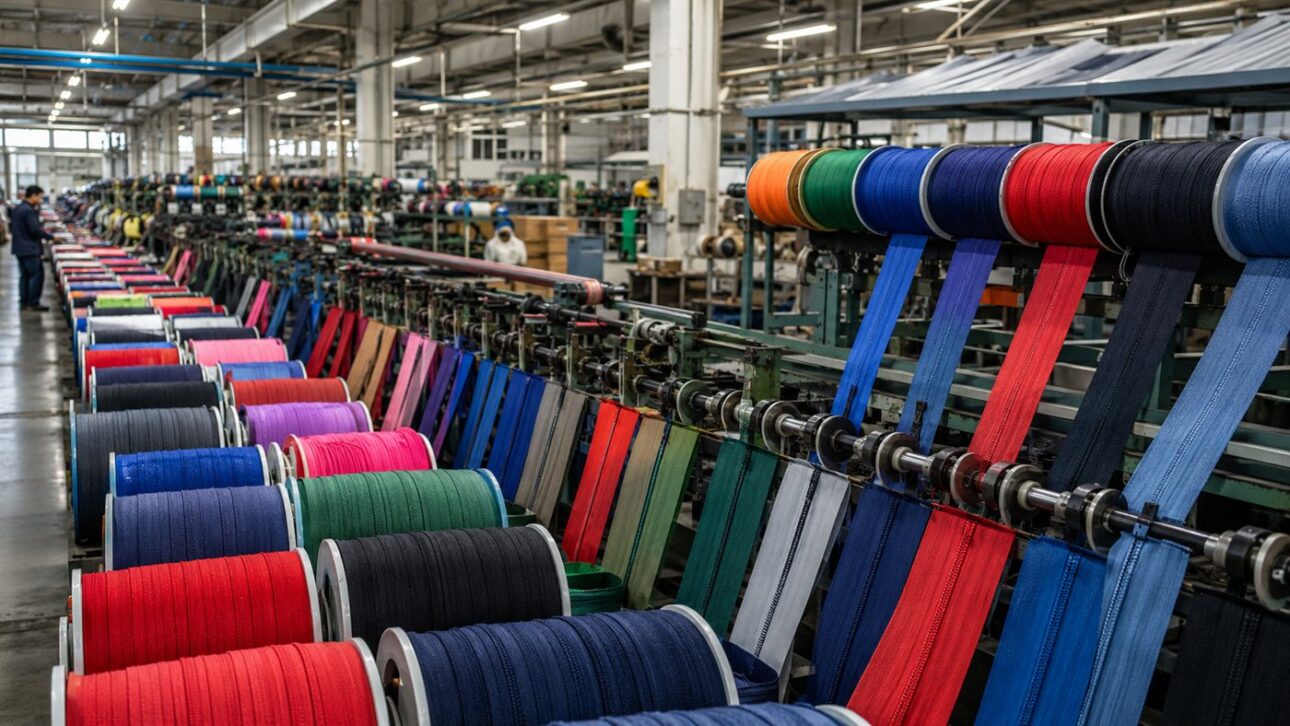
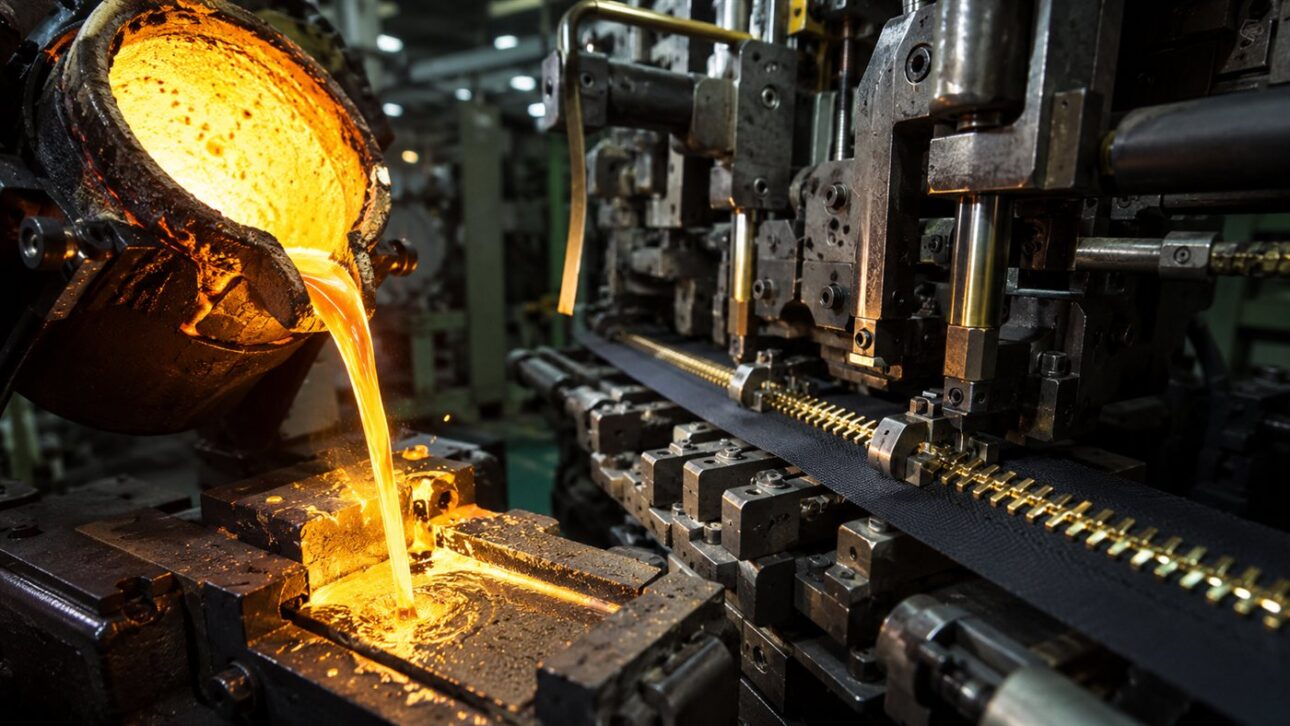
YKK, an acronym for Yoshida Kogyo Kabushikigaisha, produces more than 7 billion zippers per year, according to the Smithsonian Magazine. Alone, the Japanese company accounts for nearly half of all zippers manufactured in the world, and it does so by controlling every step: it melts its own brass, spins its own thread, and weaves its own tapes, without relying on suppliers.
How the world’s largest zipper manufacturer became the owner of an invisible market
The zipper is one of those objects we only notice when they break. It is on the jacket, the backpack, the boot, the camping tent, the pencil case, the suitcase, and even the space suit. Precisely because it is cheap and discreet, no one stops to think about where it comes from, and it is in this invisibility that one of the most silent monopolies of the global industry resides.
-
Brazilian Factory Recycles One-Third of the Country’s Styrofoam Waste, Matching European Levels with 51,000 Tons Reused Since 2007

-
Brazilian Navy Conducts Major Military Exercise with 2,000 Troops, Amphibious Vehicles, and Drones on Lake Furnas in Minas Gerais

-
The World’s Largest Flavor and Fragrance Company You’ve Likely Never Heard Of: Swiss Firm Earned 7.4 Billion Francs in 2024
-
Brazilian Engine Parts Factory Transforms into Electric Battery Recycler, Invests $45 Million in New Plant, Processes 400 Tons Annually with Plans to Scale to 10,000 Tons


While clothing brands fight for attention in shop windows, the piece that keeps everything closed almost always comes from the same source. Being the absolute leader of this market did not give YKK fame, it gave scale, and a scale hard to imagine for an item that costs pennies. At every moment, thousands of zippers leave the company’s lines somewhere on the planet.
From a small shop in Tokyo in 1934 to global dominance
The story begins with a proper name. In January 1934, a young man named Tadao Yoshida set up a small zipper sales business in Tokyo, then an imported product full of defects. According to YKK Americas, it was there that Yoshida launched San-es Shokai, a company that processed and sold zippers, the seed of the global group that exists today.
Yoshida realized early on that the industry’s problem was quality. The zippers jammed, rusted, and lost their teeth. Instead of buying components from third parties, he decided to do everything himself, a path that seemed crazy for a small company and became the backbone of the business. Tadao Yoshida’s obsession with total control would define the company’s destiny.
The secret of the moat: YKK does everything in-house
Here’s the detail that makes the case seem almost unbelievable. YKK hardly outsources any part of the process. According to Smithsonian Magazine, the company melts its own brass, formulates its own polyester, spins and twists its own thread, weaves and dyes the zipper tape fabric, and forges and molds the teeth of the piece, all in-house. Competitors can copy a zipper, but they cannot reproduce an entire chain built over decades.
This radical vertical integration is what ensures an identical standard in a factory in Japan, Vietnam, or the interior of São Paulo. Whoever controls the metal, the thread, and the fabric controls the final quality of each piece that leaves the line, and it is the main reason why luxury brands and technical clothing manufacturers have trusted the brand for decades for the production of zippers for their products.
The “Cycle of Goodness,” the philosophy that sustains the empire
None of this was sold as a market domination strategy. Yoshida summed up his vision in a phrase that became the company’s official motto: the “Cycle of Goodness”, the idea that no one truly prospers without benefiting those around them. For him, taking care of quality, employees, and partners would return in the form of lasting success.
It may sound like corporate rhetoric, but practice followed theory. The company is known for heavily reinvesting in research, maintaining stable jobs, and operating factories in dozens of countries instead of concentrating everything in one cheap place. This culture helps explain why the company has weathered wars, crises, and brutal changes in the fashion industry without losing leadership.
7 billion zippers per year is a number that scares rivals
The numbers of the operation are almost absurd. According to Smithsonian magazine, YKK manufactures more than 7 billion zippers per year and produces about half of all zippers on the planet. The publication of backpacks and equipment Carryology adds that, in markets like Japan, the company’s share reaches nearly 90%.
For comparison, that’s enough zippers to give almost one to every living person on the planet, every year. This gigantic share wasn’t achieved with low prices, but with reliability: when a major brand launches millions of pieces, a failing zipper becomes a recall and a loss. It’s safer to pay a little more and sleep peacefully, and that’s how the company’s zipper production became practically an industry standard.
The YKK zipper has been in Brazil since 1975, in the city of Sorocaba
The dominance is not just a distant Japanese story. According to YKK, the Brazilian subsidiary has been operating in the country since the 1970s and maintains an industrial complex in Sorocaba, in the interior of São Paulo, one of the group’s first operations in Latin America, in addition to a unit in Maracanaú, in Ceará.
In other words, a good part of the YKK zipper that dresses the Brazilian consumer does not come from abroad: it is produced on national soil, employing local people and supplying clothing manufacturers throughout the country. When a Brazilian label puts a YKK zipper on clothing, it is using a silent seal of quality that crosses borders and languages.
Why a piece worth cents matters so much to the fashion industry
It may seem exaggerated to give so much attention to a zipper, but it is a critical point of any clothing. A button that falls off can be sewn back in minutes; a stuck or broken zipper usually condemns the entire piece. In clothing, this small component decides the difference between a jacket that lasts years and one that goes to the trash in the first season.
That’s why brands that charge fortunes carefully choose who supplies the fastener. The zipper is the joint of the clothing, the part that moves the most and suffers the most, and entrusting this joint to those who make billions of tested units per year is an engineering decision, not a fashion one. The production of zippers has ceased to be a detail and has become a competitive advantage.
What the YKK case teaches about obsession with quality
In the end, the lesson from YKK is almost a provocation to common sense. In a world that outsources everything and chases the lowest cost, a company built an empire by doing exactly the opposite: internalizing every step, refusing shortcuts, and treating a mundane object as if it were a precision piece. The result is a dominance that lasts almost a century.
The next time you zip up a jacket, it’s worth noticing the three little letters on the slider and remembering that there’s an entire engineering behind it. Could the secret of industrial success lie not in doing the extraordinary, but in taking the ordinary seriously like no one else does? And you, have you ever stopped to think about where the zipper on your clothes comes from?


