






 Portuguese
  Spanish


Military training at Furnas Lake mobilizes troops, armored vehicles, vessels, and technological systems in Minas Gerais, with activities focused on riverine operations, Civil Defense support, and peace missions.
The “Furnas 2026” Operation mobilizes around 2,000 military personnel of the Brazilian Navy in São José da Barra (MG), around Furnas Lake.
The training, which began on June 22 and is scheduled to continue until July 3, employs armored vehicles, amphibious vehicles, vessels, robots, and drones in exercises for riverine operations, Civil Defense support, and peace missions, according to the Navy News Agency.
Coordinated by the Marine Corps, the activity brings together units of the Fleet Marine Force in a region known as the “Sea of Minas,” a reference used for Furnas Lake.
-
The World’s Largest Flavor and Fragrance Company You’ve Likely Never Heard Of: Swiss Firm Earned 7.4 Billion Francs in 2024

-
Brazilian Engine Parts Factory Transforms into Electric Battery Recycler, Invests $45 Million in New Plant, Processes 400 Tons Annually with Plans to Scale to 10,000 Tons
-
Italian Orphan Turned Entrepreneur Builds World’s Largest Eyewear Company, Owner of Ray-Ban and Oakley, Selling Nearly 1 Billion Lenses and Frames Annually
-
The Transparent Plastic Pen That Sold Over 100 Billion Units, Becoming the Best-Selling Pen in History Across Five Continents


According to the Navy, the environment allows for training with troops, naval means, land equipment, and communication systems in scenarios of displacement, crisis response, and integrated action with other institutions.
The operation takes place during the period when the Brazilian Navy marks 100 years of presence in Minas Gerais.
For the exercise, high mobility operational means, protection equipment, and systems used in risk situations, such as explosive device deactivation and response to nuclear, biological, chemical, and radiological threats, were deployed.
Operation Furnas 2026 gathers troops and technology at Furnas Lake
The structure employed in the “Furnas 2026” Operation includes Amphibious Tracked Vehicles, Light Armored Vehicles on Wheels (JLTV), Special Armored Vehicles on Wheels (Piranha), operational vehicles 5 Ton 4×4 UNIMOG U5000, and Coastal Landing Craft (EDLit), described by the Navy as a new high mobility armored boat.
Drones, optical systems, telescopic cameras, portable X-ray equipment, tactical radios, satellite communications, robots, various detectors, and frequency jammers used in explosive deactivation actions were also mobilized.
The list of equipment was provided by the Navy and indicates the diversity of means employed during the training.
The military personnel participate in exercises focused on riverine operations, Civil Defense support, and peace missions.
In the actions related to Civil Defense, the Navy states that the training involves situations associated with environmental disasters and includes the participation of different agencies.
Meanwhile, the preparation for peacekeeping missions focuses on troops specialized in activities related to the United Nations.
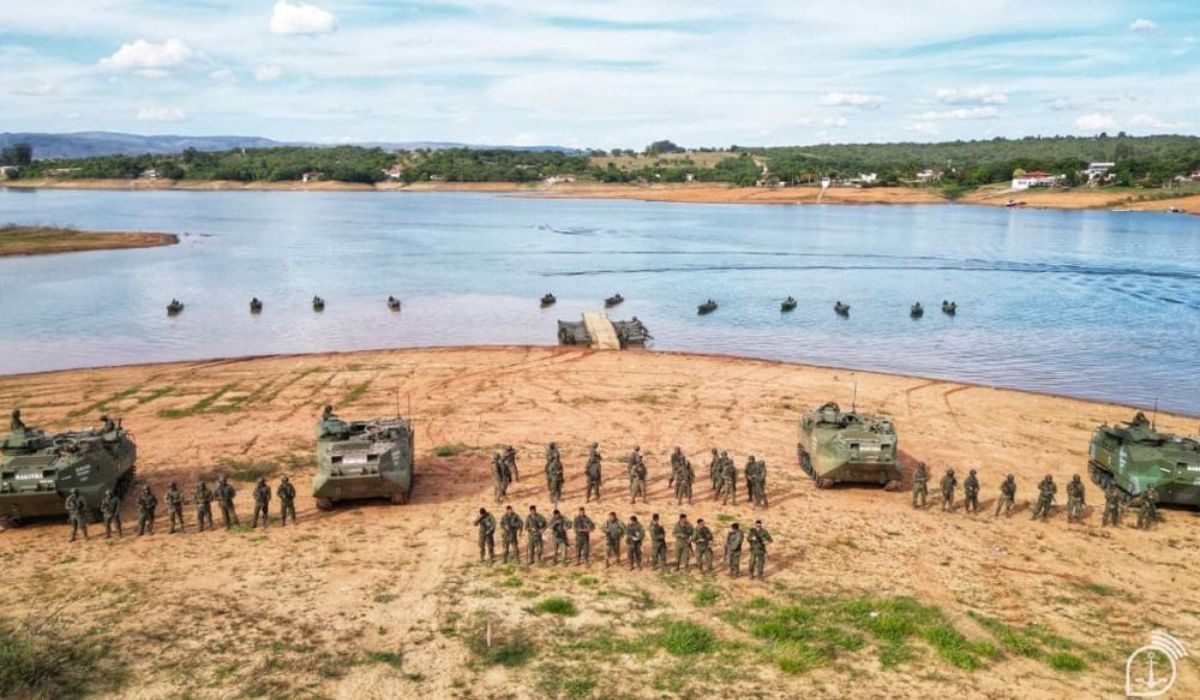
1,000-kilometer Displacement Tests Logistics of the Marine Corps
One of the points highlighted by the Navy is the displacement of troops from Rio de Janeiro to the South of Minas.
The route, of about 1,000 kilometers, was presented by the Force as a demonstration of the expeditionary capability of the Marine Corps, which needs to transport personnel, vehicles, vessels, equipment, and support systems to operate outside its home base.
This type of mobilization requires planning for transportation, installation, communication, and maintenance of the means used in the exercise.
According to the Navy, the integration between land units, air means, and vessels aims to prepare the troop for scenarios where it is necessary to respond to crises, support public agencies, or operate in areas with limited access.
The Fleet Marine Force participates in combined activities with means of the Brazilian Navy in riverine operations, peacekeeping operations, and interagency actions.
The presence of municipal and state agencies integrates the training in situations that require coordination between military and civil structures.
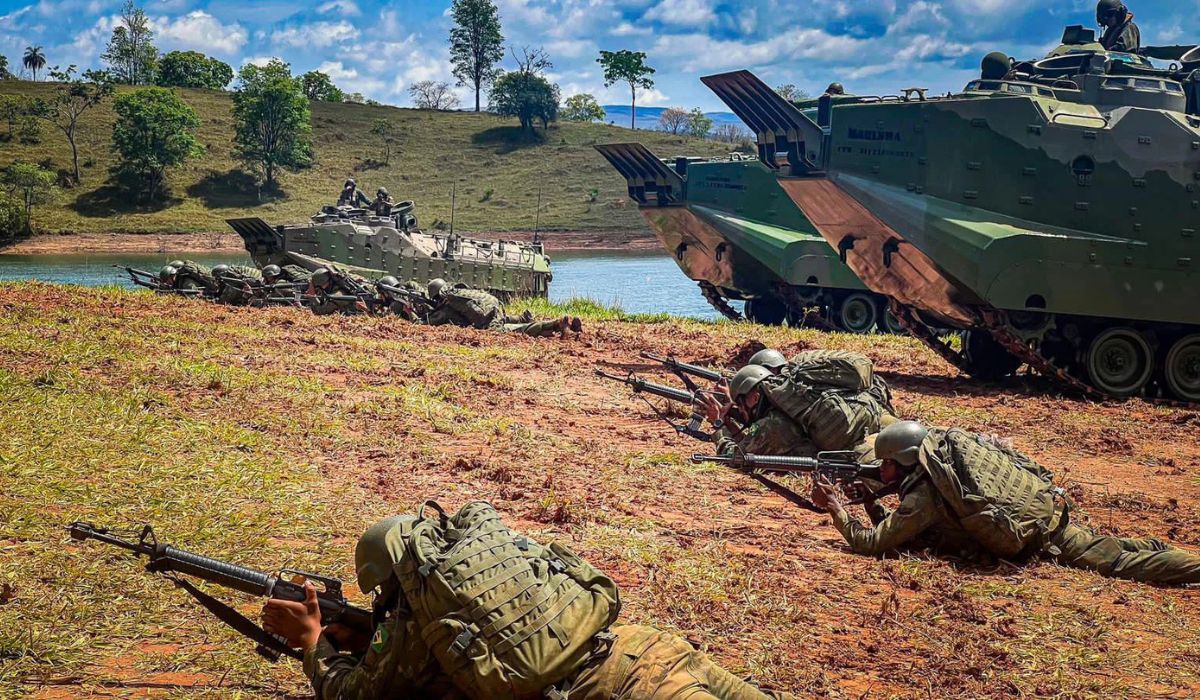
Navy Highlights Coordination and Readiness in Minas Gerais
Captain of Sea and War (Marine Corps) Adilson Cappucci, Chief of Staff of the Riverine Division Command, stated that Operation “Furnas 2026” allows for maintaining trained troops and developing capabilities for crisis management scenarios in Brazil and abroad.
“It is a great honor for all of us, during the period in which the Brazilian Navy celebrates 100 years of presence in the State of Minas Gerais, to carry out this mission. In addition to keeping our troops trained and ready, it represents a great opportunity to project our country abroad, exchange information, and develop capabilities in the context of managing national and international crises,” said Cappucci, in a statement released by the Navy News Agency.
The officer also mentioned riverine activities, support actions for Civil Defense, and exercises focused on peace operations.
Commenting on the operation’s structure, Cappucci stated that the training requires coordination, logistics, and the rapid deployment capability of the Marines.
“As can be observed, it is a quite complex operation that involves a great effort of coordination and logistics, requiring all the expeditionary capacity and rapid deployment of the Marines,” he declared.
Lake Furnas hosts Naval Force activities
The Navy’s presence around Lake Furnas is part of the planning of Operation “Furnas 2026” for training in riverine and lacustrine environments.
According to the Force, the region allows activities with vessels, vehicles, amphibious equipment, and specialized troops.
Besides military actions, the exercise includes interaction with municipal and state agencies in interagency activities.
This format is used in training that simulates crisis situations, where different public structures need to act in a coordinated manner to deploy teams, protect sensitive areas, or support communities affected by emergencies.
Operation “Furnas 2026” also takes Marine units to an area away from the coast.
Although the Navy is often associated with operations in maritime areas, rivers, lakes, reservoirs, and inland regions can also be part of training scenarios, logistical support, and crisis response, according to the Force’s operational organization.
At Lake Furnas, troops, armored vehicles, vessels, robots, and drones are employed in exercises that combine deployment, communication, interagency support, and peace mission simulations.
The program continues until July 3rd, with activities conducted in São José da Barra and around the reservoir.
For the local population, the operation makes visible part of the structure used by the Navy in rapid deployment training.
The exercise also exposes the articulation between technology, troop mobilization, and logistics in an environment different from the coastal areas where the Force is usually more associated.
In a region known for Lake Furnas and its relation to economic, tourist, and infrastructure activities in Minas Gerais, the presence of about 2,000 military personnel draws attention due to the scale of the training and the number of operational means deployed.


