Portuguese
  Spanish


Termotécnica operates in Joinville a plant dedicated solely to recycling styrofoam and places Brazil on a European level of reusing a material that most swear is eternal waste
The recycling of styrofoam seems a contradiction to most people, who throw the material away certain that it never decomposes or is reused. But a factory in Santa Catarina disproves this myth every day: Termotécnica, in Joinville, alone recycles about one-third of all post-consumer EPS in Brazil.
EPS, expanded polystyrene, is the technical name for styrofoam. And the numbers are impressive: through the company’s program, more than 51,000 tons of the material have already been given a destination since 2007. One of the symbols of waste that nobody wants has become raw material reused on an industrial scale.
The material that most think is not recyclable
Styrofoam carries a terrible reputation. Light, bulky, and ubiquitous in packaging, it is seen as the villain that clogs landfills and floats in rivers for centuries. Few people know that it is, in fact, 100% recyclable.
-
400 km² of Greenhouses in Almería, Spain, Astonish American Visitor by Producing Millions of Tons of Produce for Cold-Weather Markets

-
Antarctic Volcano Emits Microscopic Gold Particles That Travel Up to 1,000 Kilometers Across the Continent
-
Little-known Japanese factory is the world’s largest zipper manufacturer, producing 7 billion pieces annually and closing half the world’s pants.

-
Brazilian Navy Conducts Major Military Exercise with 2,000 Troops, Amphibious Vehicles, and Drones on Lake Furnas in Minas Gerais


The problem was never technical, but logistical and cultural. Styrofoam is almost all air: about 98% of its volume is gas and only 2% is plastic, which makes it too light to justify transportation if no one compacts it. That’s why it ends up in the trash, even though it is reusable.
Overcoming this barrier is what Termotécnica does, proving that the material considered non-recyclable can return to the production cycle when there is infrastructure to collect and process it.
The recycling of styrofoam for one-third of the country in one factory
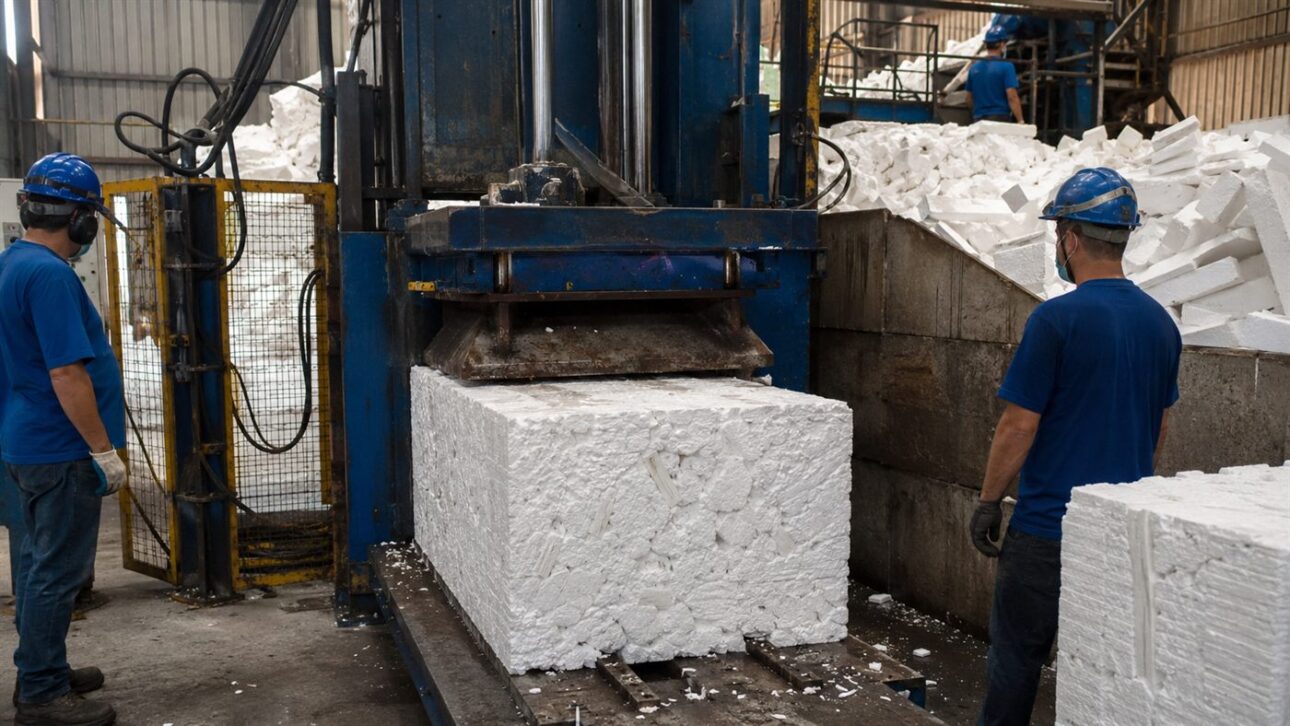
The most surprising fact is the concentration. A single company, in Joinville, is responsible for recycling about one-third of all post-consumer EPS in the country. It is a volume that would normally require a huge network of recyclers.
Being a Latin American reference in styrofoam recycling gives the company and Brazil a rare prominence. Concentrating one-third of the national recycling of a material in a single operation shows both the strength of the initiative and the size of the space that still exists for growth. The model needs to be multiplied.
According to Termotécnica, the company maintains a structure dedicated to the circularity of EPS, transforming used packaging into new products instead of letting them become waste.
51 thousand tons since 2007
The trajectory gives the dimension of the impact. Through the Reciclar EPS program, the company has already processed more than 51 million kilos, or over 51 thousand tons of styrofoam, since 2007. It’s nearly two decades of constant collection and reuse.
According to Exame, the company has maintained the styrofoam recycling program for over a decade, with results measured year by year. Each ton of this is styrofoam that did not go to the landfill, did not clog drains, and did not pollute rivers. Removing 51 thousand tons of a bulky material from circulation is a huge relief on the urban environment. And it is raw material returned to the industry, closing the cycle.
Maintaining a program for so long shows that styrofoam recycling is not a one-off marketing action, but a structured and continuous operation, with goals and results measured year by year.
Brazil at the European level
Perhaps the most counterintuitive data is the national one. Brazil recycles about 34% of the styrofoam it consumes, a rate comparable to the main European countries, world references in recycling. In a material that almost no one thinks is recycled, the country is among the best.
This number contradicts the image Brazilians have of their own country in recycling. In a specific item, styrofoam, Brazil not only recycles but is at the forefront globally. It’s an achievement that deserves to be known and expanded to other materials.
A good part of this rate is due to the structure set up by companies like Termotécnica, which created the logistics and market necessary for recycled EPS to have a destination.
How styrofoam is recycled
The process solves the volume problem. The collected styrofoam is first compacted or ground, drastically reducing its size, as most of it was air. Then, it is transformed into granules or mass that serve as raw material for new products.
This reuse results in items such as profiles, moldings, baseboards, soles, and even new construction products. What was discarded packaging becomes useful plastic input, in a cycle that dispenses with virgin plastic. It is circular economy applied to a material considered lost.
The key is compaction: transforming bulky styrofoam into something dense and transportable is what makes the entire chain economically viable.
More than 1,000 points and 100 cooperatives
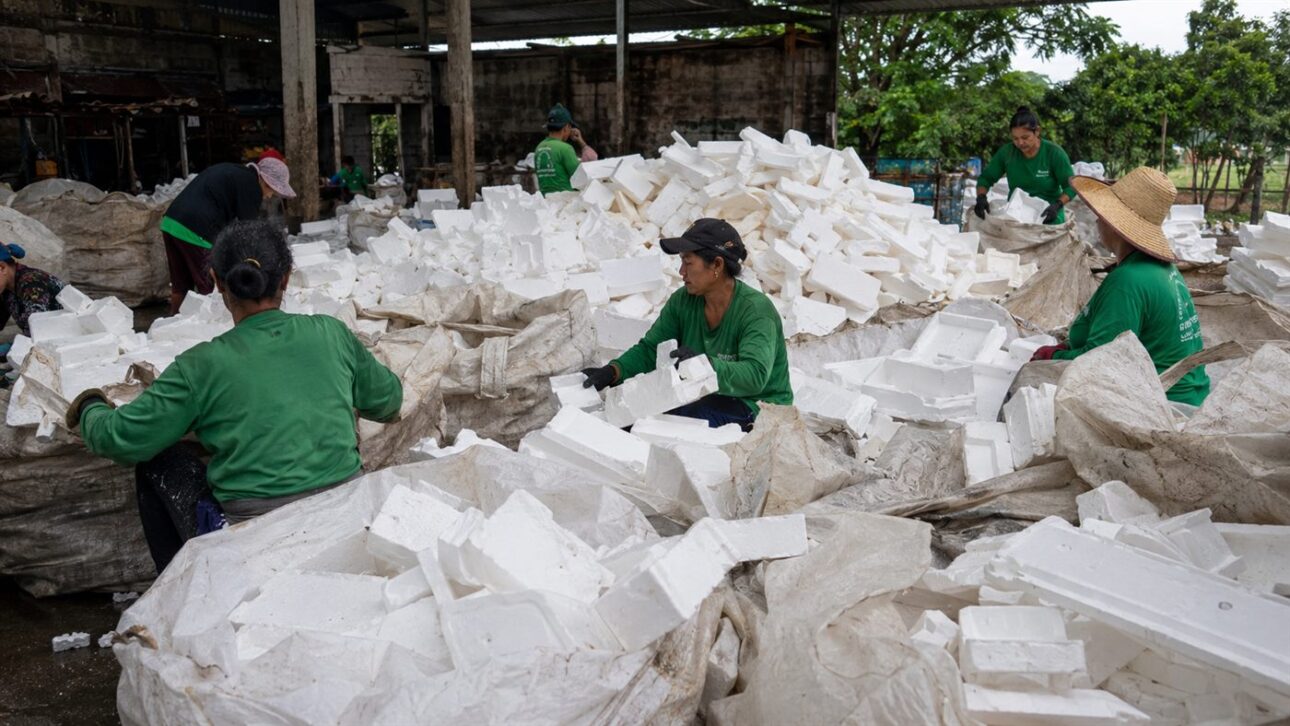
Logistics is the heart of the system, and it has a strong social component. The program relies on more than a thousand collection points spread across the country and about 100 cooperatives of waste pickers, who gather the discarded styrofoam and send it for recycling.
This means income and inclusion. An organized network of waste pickers transforms waste that no one valued into a source of work and raw material. It is circular economy that generates employment at the base, not just environmental gain at the top.
This social link is what enables the collection of such a widespread and lightweight material, precisely solving the bottleneck that causes styrofoam to end up in the trash in most parts of the world.
Why this matters for Brazil
The case breaks a stereotype and points a way forward. If Brazil already recycles a third of its styrofoam through a structured operation, the same model can be applied to other difficult materials, transforming waste management in the country.
There is also the lesson that recycling depends on logistics and market, not just goodwill. Recycling styrofoam on a large scale proved that, with organized collection and a buyer for the material, almost everything can return to the cycle. The bottleneck is structure, not technology.
Multiplying such initiatives would help Brazil reduce pressure on landfills, generate income for waste pickers, and decrease dependence on virgin raw materials in various sectors.
The challenges of recycling styrofoam
None of this is trivial. The biggest challenge remains collection: since styrofoam is light and bulky, gathering and transporting it without compaction is expensive and unattractive, which leads many people to still throw everything in the regular trash.
Expanding recycling requires more collection points, more consumer education, and economic incentives to make it worthwhile to collect the material. As long as it is more rewarding to throw away than to recycle, much of the styrofoam will continue in the landfill. Overcoming this is a matter of logistics and policy.
Even so, the message is powerful and counterintuitive: the material that almost everyone swears is eternal waste is already recycled in Brazil at a European level, with one factory handling a third of the total. If it's possible to recycle even styrofoam, what excuse is left to bury the rest?