Portuguese
  Spanish


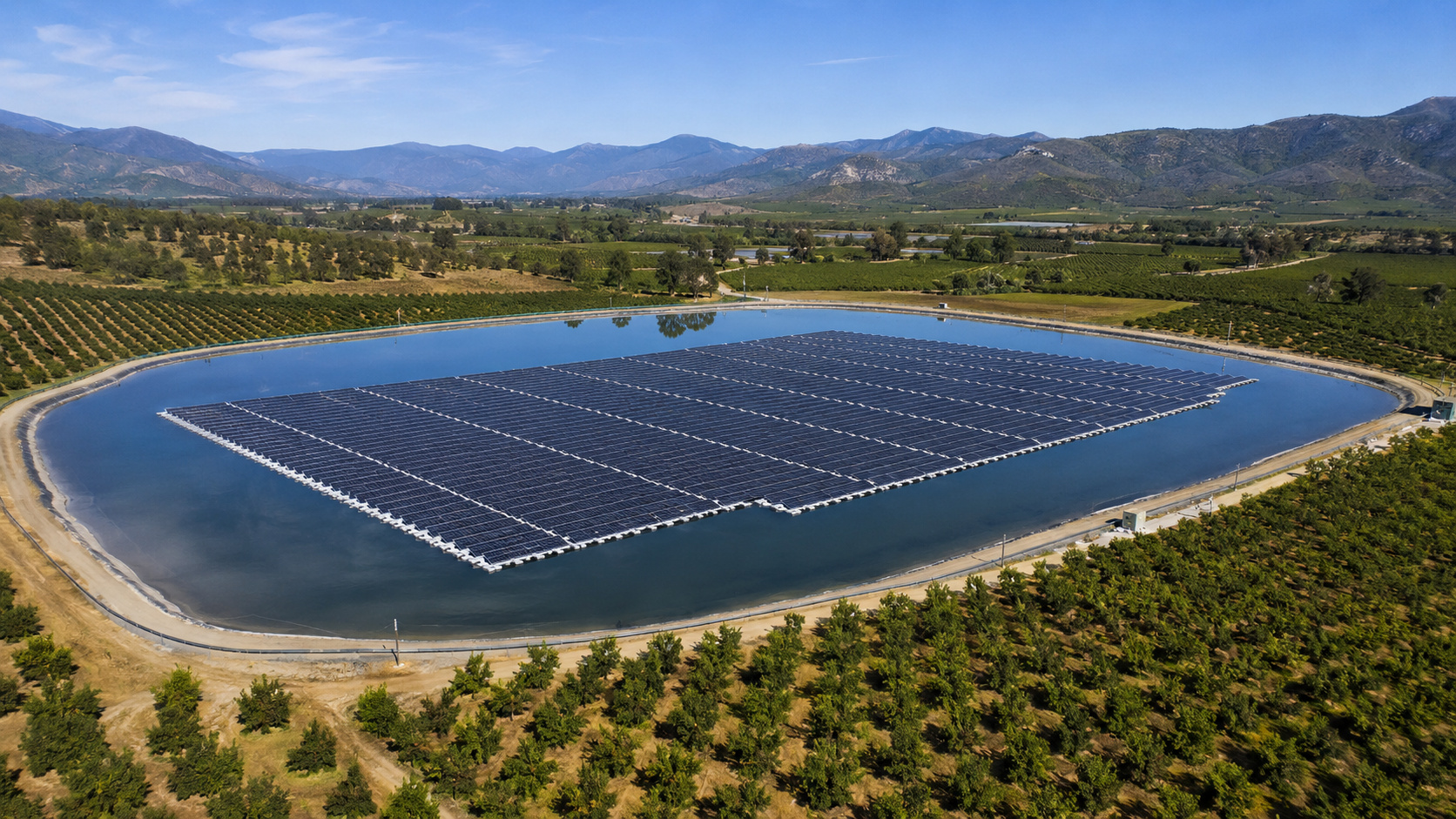

The floating solar plant utilizes an irrigation reservoir in Chile, generates energy for agricultural production, and preserves orchard area in Valparaíso
A Chilean farm swapped land for water by installing a floating solar plant in an irrigation reservoir. The project is located in the Valparaíso region and was designed to generate energy for its own agricultural production.
The information was released by Hortifrut, a fresh fruit producer and exporter. The plant occupies approximately 1,500 m² on the water and was described as the first grid-connected floating photovoltaic plant in Chile.
In practice, the solution stands out for a simple reason: the farm uses the reservoir that was already part of the irrigation system and avoids occupying orchard space. Thus, solar energy in agriculture gains a direct function within rural operations.
-
Eight Artists Secretly Lived in a Hidden 70m² Apartment Inside a Shopping Mall in Brazil for Four Years

-
Artist Lives in Giant Wooden Egg Over a UK River to Observe Tides and Environmental Changes
-
Over 20 Metal Drums Repurposed into School Transport Train Boost Attendance in Australian Aboriginal Community

-
Abandoned Coal Crane at Copenhagen’s Old Port Transformed into Luxury Waterfront Retreat with Spa and Ship Views




Irrigation reservoir becomes space for generating solar energy on the farm
The irrigation reservoir ceased to be merely a structure for storing water. It also began to serve as a base for a floating solar plant, installed on the reservoir’s surface.

This model helps solve a common question in the field: where to place solar panels without reducing planting area. On a fruit farm, every space used by the orchard has value for production.
By placing the structure on the water, the property utilizes an area that already existed within the farm. As a result, solar energy generation does not need to compete for space with plants.
Floating solar plant occupies approximately 1,500 m² on the water
The plant occupies approximately 1,500 m² on the water, a size that shows the dimension of the project within the agricultural operation. The use of the reservoir allows this area to have a dual function.
It remains connected to irrigation and also contributes to electricity generation. For the rural producer, this type of solution shows how existing infrastructure can gain new uses.
Floating solar energy works with panels installed on a base on the water. These panels capture sunlight and help transform that light into electricity for the operation.
Hortifrut details solar energy project in Chilean agriculture
Hortifrut, a fresh fruit producer and exporter, detailed the central points of the project. The installation is located on a farm in the Valparaíso region and was aimed at the energy consumption of the agricultural operation itself.
The main point lies in the intelligent use of space. The farm did not need to remove orchard area to install the solar structure. Instead, it utilized the surface of the irrigation reservoir.
This choice makes the project more interesting for the agricultural sector. The floating solar plant shows a way to produce energy without giving up land used for fruit production.
First grid-connected floating photovoltaic plant in Chile draws attention
The project was described as the first grid-connected floating photovoltaic plant in Chile. This detail increases the importance of the initiative because it links floating solar technology to real-world use within agriculture.
Photovoltaic is the technology that transforms sunlight into electricity. Instead of being on rooftops or on the ground, the structure sits on the water, supported by its own base.
For those who work in the field, the idea is easy to understand. The farm uses the sun, utilizes the reservoir, and keeps the orchard free for its main function: producing fruit.
Farm preserves the orchard by moving solar panels to the water
The main consequence of the project is the preservation of the productive area. The farm can generate energy for its own operation without occupying the space used by the orchard.
This is important because many solar projects require land. In the case of the Chilean farm, the alternative was to use water as a base for the installation.
The measure shows that clean energy and agricultural production can go hand in hand when the solution utilizes structures already present on the property. The reservoir now plays a dual role within the farm.


Floating solar energy shows a new path for rural properties
The experience in Valparaíso shows a practical path for properties with irrigation reservoirs. Floating solar energy can utilize water areas without directly affecting cultivation space.
The case also reinforces an important change in agriculture. Rural production needs energy, water, and land, and each resource needs to be utilized carefully.
By transforming the reservoir into a base for electricity generation, the farm shows that innovation in the countryside doesn’t have to start from scratch. Often, it arises from the best use of what is already on the property.
The Chilean farm showed that an irrigation reservoir can become a floating solar power plant without taking up space from the orchard. With approximately 1,500 m² over the water, the project combines solar energy, agricultural production, and more intelligent use of rural infrastructure.
Do you think Brazilian farms with irrigation reservoirs should follow this path to generate energy without reducing planting areas? Share your opinion.