Portuguese
  Spanish


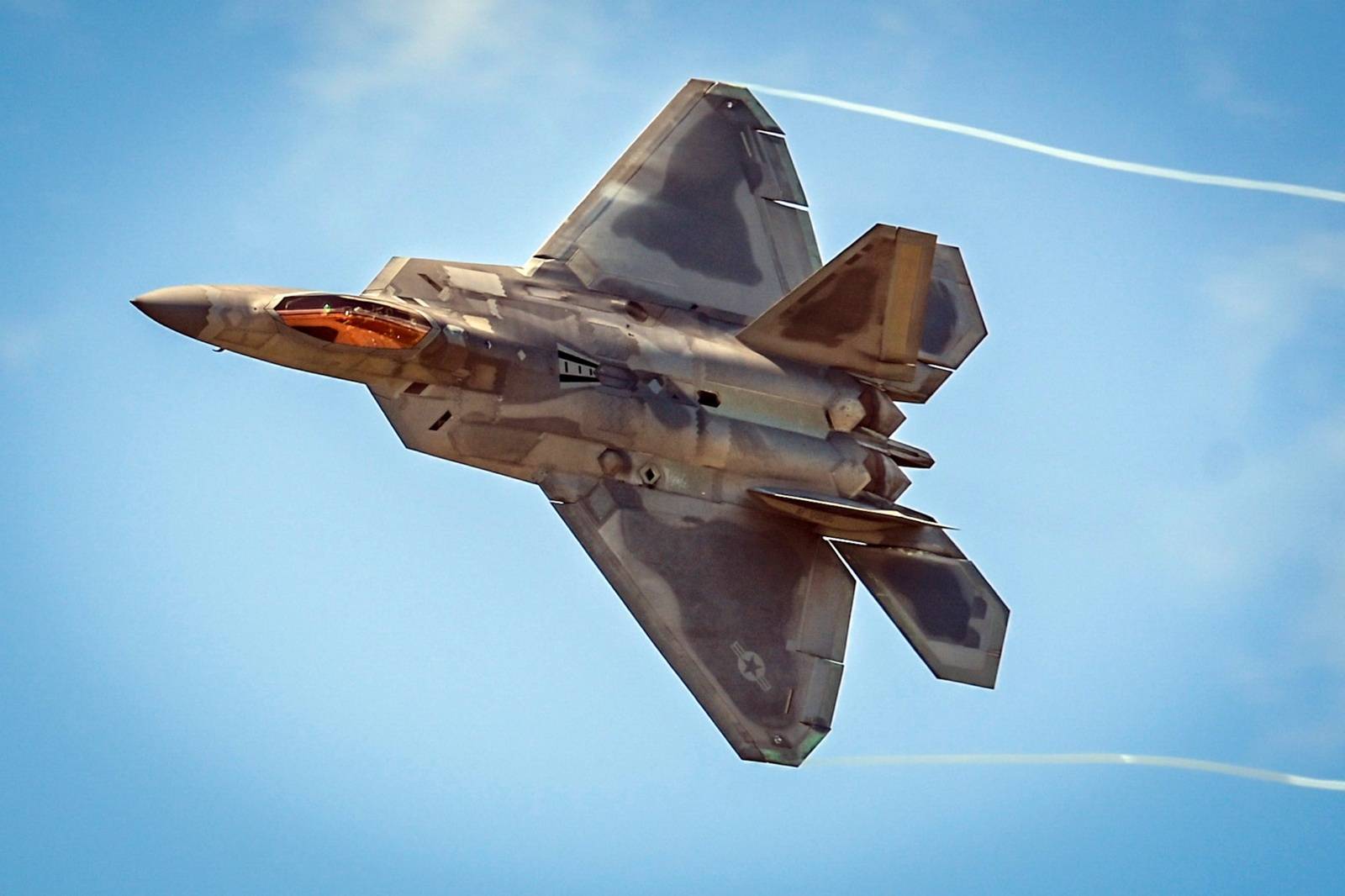


Beijing Claims to Have Developed the First Ultra-Low-Noise Single-Photon Detector in the World, Technology That Could Revolutionize Radars and Reveal the Position of Invisible Fighters Like the F-22 and the F-35.
China claims to have taken a decisive step in the military technological race by starting mass production of a photon detector that could revolutionize the way stealth aircraft are tracked.
The device, developed by the Quantum Information Engineering Technology Research Center in Anhui Province, is described as the world’s first ultra-low-noise single-photon detector with four channels — and its impact could extend to both communication and defense.
Unprecedented Advance in Quantum Detection
The new detector is capable of detecting even a single particle of light, a feat likened to the ability to distinguish the sound of a single grain of sand falling during a storm.
-
Iraq floats and sinks under an arm of the Euphrates 10 giant concrete boxes of 46,000 tons and 125 meters each to assemble a 2.4 km submerged tunnel and open a new land route between Asia and Europe.

-
Scientists use more than 20,000 artificial birds and solar speakers to “trick” seabirds, reactivate nesting routes, and revive a colony on an island that seemed abandoned.

-
She spent 73 years breathing inside an iron lung, survived the aftereffects of polio, and became the last woman in the United States dependent on the equipment before dying at 78 years old.
-
Brazilian students created a $1 filter using pine bark, cotton, and 3D-printed parts to clean cassava wastewater, reduce the toxicity of a hazardous waste, and transform contaminated water into biofertilizer.




This extreme sensitivity represents a milestone in the field of quantum technology, as it allows for the identification of tiny and nearly invisible signals.
According to a report from the South China Morning Post (SCMP), the mass production of the device brings Beijing closer to self-sufficiency in essential components for quantum information technology. This capability is considered crucial for the development of more precise and efficient radar and communication systems.
Quantum Radars and the Threat to Stealth Fighters
Stealth jets like the F-22 and F-35 from the United States were designed to evade traditional radars through special coatings and internal compartments that reduce their signature.
However, quantum radars operate differently and can overcome these defenses.
These systems send photons whose properties change when they collide with the aircraft’s surface. Even false signals emitted by airplanes cannot reproduce these properties, allowing the radar to accurately identify and locate the aircraft.
When the photons return to the radar after interacting with the target, scientists can analyze their properties to determine the position of the stealth jet.
Moreover, quantum radars promise to consume less energy and be easier to install on different platforms, enhancing the detection of targets with low radar signatures.
Greater Range and Greater Efficiency
China had already developed a quantum radar system with a range of approximately 100 kilometers.
Now, with the new four-channel single-photon detector, these capabilities can be significantly expanded.
The new system allows for the detection of signals from multiple light sources simultaneously and generates images much more quickly and accurately.
Another highlight is the energy efficiency: in addition to consuming less power, the system emits less radiation than conventional radars, making its own detection more challenging.
Beijing further claims that the new detector is only one-ninth the size of existing single-channel devices, which broadens its potential for use in various military and civilian applications.
Technical details about the innovation were published in the Science and Technology Daily, a newspaper affiliated with China’s Ministry of Science and Technology.
According to the scientists, the goal is to expand the use of the detector for quantum communication networks and other strategic applications in the future.
U.S. Reaction and the Race for Air Superiority
As China advances in the field of quantum radars, it is accelerating the development of its own next-generation jets.
The U.S. Navy has been authorized to begin production of a sixth-generation fighter, while the Air Force intends to bring the F-47 — also a sixth generation — into operation by 2028. Boeing is already working on the project.
These new aircraft are expected to be even faster, larger, and stealthier, capable of operating virtually invisibly to existing detection systems.
However, the evolution of Chinese quantum technology may pose a significant challenge to this plan.
If Beijing’s claims are confirmed, quantum radars could alter the global strategic balance, undermining the advantage of invisible fighters and forcing military powers to rethink their air superiority strategies.
The mass production of the new photon detector represents, therefore, not only a technological advancement for China but also a clear signal that the race for superiority in air defense is entering a new era — an era in which even the faintest light can reveal what was once invisible.