Portuguese
  Spanish


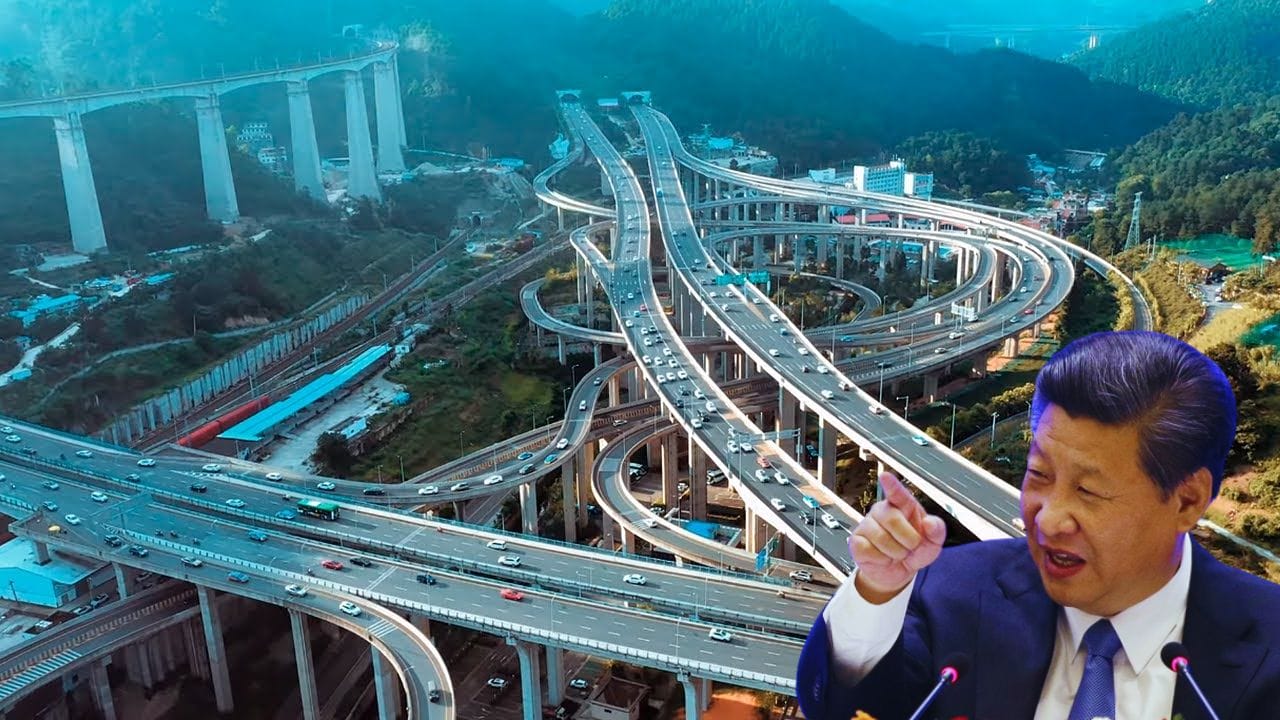

China, Known for Its Giant Leaps in Infrastructure, Just Added Another Pearl to Its String of Achievements: the Yaxi Expressway.
With more than 9,59660 square kilometers, China not only stands out as the third largest country in the world, but also as the second largest global economy.
And when it comes to population, its more than 1.4 billion inhabitants make it the most populous country on the planet, a position that is expected to be surpassed by India in 2023.
Located in Sichuan province, in southwestern China, the region is marked by rugged terrain that challenged engineers to create a true serpent of the sky.
-
28-meter, 156-ton titans traveled 20,000 km from China to the port of Santa Catarina: Portonave received 7 fully electric megacranes, part of a R$ 210 million package, to double container handling.

-
They exchanged the idea of a large house for a 35 m² warehouse, spent US$ 12,000 on the structure, and created a tiny house in Colorado with space to live and work.

-
A newly opened terminal in the middle of the Amazon has begun transporting soy and corn through Amapá, eyeing the queue of ships that is congesting the ports in the South.

-
Goodbye to old tiles: renovation technique without construction transforms bathrooms in a few hours, eliminates debris, and reduces costs with coverings using special paints, high-resistance adhesives, and modern finishes that completely renew the space.



The Yaxi Expressway, an integral part of the Beijing-Akumi Expressway, is an impressive highway that winds through mountains and valleys, overcoming extreme elevations and seismic zones.
With a length of 240 km, the Yaxi Express Railway is a masterpiece of modern engineering, featuring an impressive 270 viaducts and 25 tunnels, totaling 41 km in length.
Challenges and Solutions: Chinese Engineering in Action


In the face of adverse geological conditions, such as earthquakes, landslides, and severe weather conditions, the Yaxi Expressway is a testament to the skill of Chinese engineering.
The project, initiated in 2007 and opened to drivers in April 2012, overcame extraordinary challenges, including geological risks such as gas emissions, water jets, faults, and rock instability.
The Construction of the Yaxi Expressway Was Not Only a Technical Feat but Also a Strategic Move to Boost Economic Growth in the Resource-Rich Region
The improvement in connectivity facilitated trade and tourism, turning the highway into a tourist attraction in its own right.
However, concerns about the earthquake resistance of the highway arose, especially after a magnitude 7 earthquake struck Lushan in 2013, highlighting seismic risks in the area.
The future of the Yaxi Expressway encompasses several dimensions, from ongoing maintenance to ensure safety to exploring its tourism potential.
As China continues to expand its infrastructure, the Yaxi Expressway remains a symbol of its ability to overcome challenges and connect people, regardless of natural barriers.