Portuguese
  Spanish



The Journey Of Switzerland To Become A Leader In Transportation Infrastructure. Switzerland, Known For Its Robust Economic Development, Rich Culture, And Breathtaking Landscapes, Is Not Just A Landmark In The Financial And Tourism Sectors.
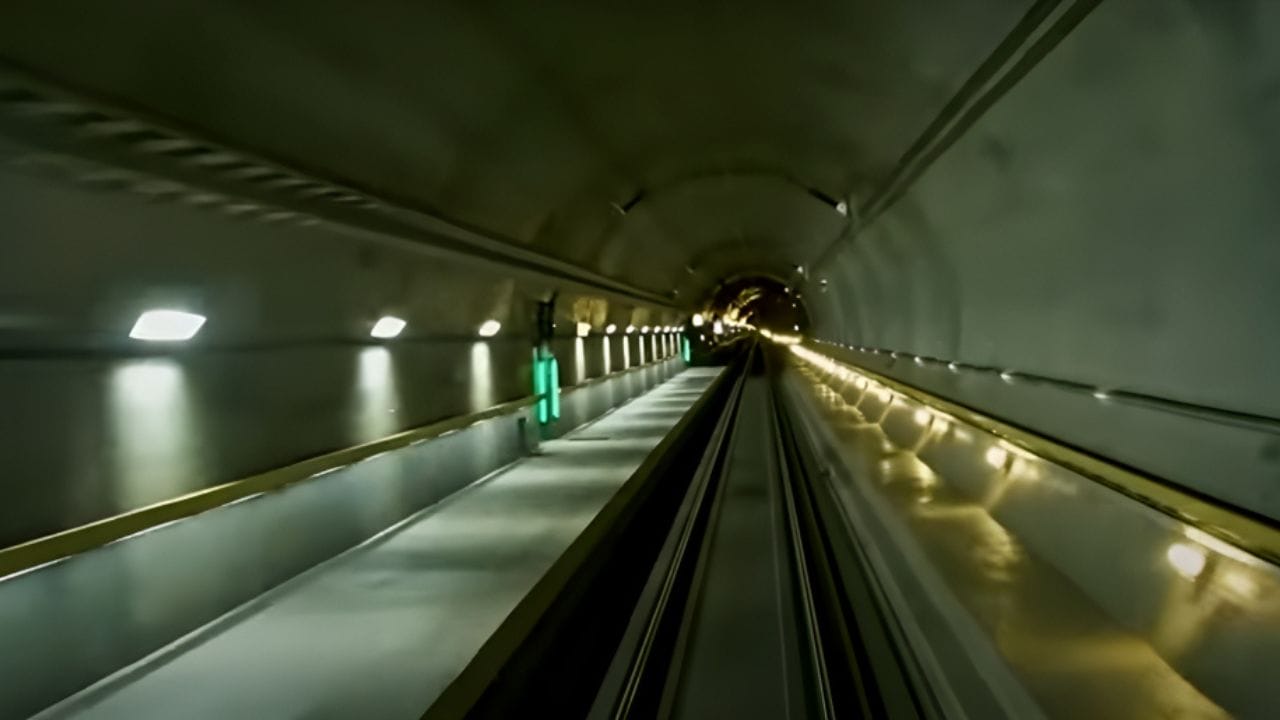
The country also stands out in innovation and technology, now having in its resume the largest tunnel in the world: the Gotthard Base Tunnel.
Located in the heart of the Alps, Switzerland has always faced geographical challenges in transporting goods and people. The Gotthard Base Tunnel was designed to solve these problems.
One of the main motivations for the construction of the tunnel was to increase efficiency in transportation, both for freight and passengers, improving connectivity between Switzerland’s different language regions. In addition, the intention was to minimize road accidents and environmental impacts.
-
28-meter, 156-ton titans traveled 20,000 km from China to the port of Santa Catarina: Portonave received 7 fully electric megacranes, part of a R$ 210 million package, to double container handling.

-
They exchanged the idea of a large house for a 35 m² warehouse, spent US$ 12,000 on the structure, and created a tiny house in Colorado with space to live and work.

-
A newly opened terminal in the middle of the Amazon has begun transporting soy and corn through Amapá, eyeing the queue of ships that is congesting the ports in the South.

-
Goodbye to old tiles: renovation technique without construction transforms bathrooms in a few hours, eliminates debris, and reduces costs with coverings using special paints, high-resistance adhesives, and modern finishes that completely renew the space.



Massive Project And Challenges In Construction In Switzerland


Built at a colossal cost of US$ 12 billion, the project began in 1999 and lasted almost two decades. Coordinated by various engineering and technology companies, the tunnel faced several obstacles.
Excavations revealed 73 distinct types of rocks, from the most resilient to the most fragile, something like “cutting sugar“, to use a popular expression.
The construction of the tunnel was a precise engineering feat. Only an 8 cm deviation horizontally and 1 cm vertically was recorded, which is vital when it comes to a structure of this magnitude. The tunnel has 176 cross galleries for various purposes, including emergency and ventilation systems.
Environmental And Social Impact
Switzerland left no stone unturned to ensure that the project had the least possible environmental impact. The tunnel was also constructed with modern safety technologies, although, unfortunately, nine workers lost their lives during construction.
Inaugurated on June 1, 2016, the Gotthard Base Tunnel is not just a victory for Switzerland, but for the entire European continent, improving logistics and mobility. Passenger trains reach speeds of up to 250 km/h, significantly shortening travel time.
The Gotthard Base Tunnel Is Not Just A Testament To Swiss Engineering And Innovation, But Also An Example Of How Massive Investments In Infrastructure Can Benefit Both The Economy And Society In General.
Now, the world turns its eyes to Switzerland, which once again shows that size is not a document when it comes to making history.
In a recent incident scenario, such as the derailment that occurred in August of this year, the alert remains for the ongoing need for investment in safety and maintenance.
Even being a masterpiece of engineering, there are still challenges to be faced to ensure the safe and efficient operation of this subterranean giant.