Portuguese
  Spanish


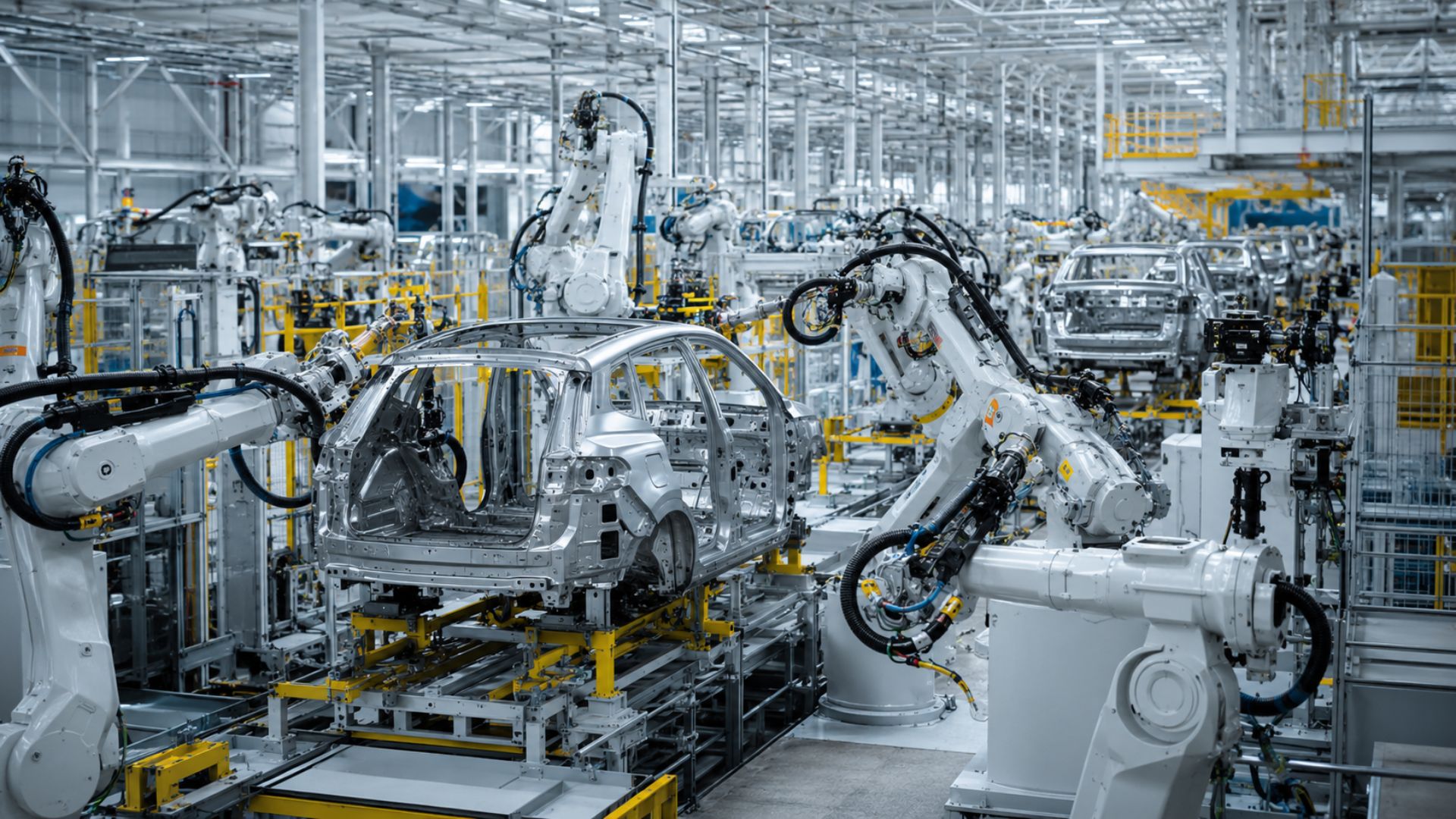

The Chinese giant Omoda Jaecoo, belonging to the Chery group, announced that it will install a factory in Argentina with operations expected to start in the second half of 2027 and, simultaneously, will take over the Jaguar Land Rover plant in Itatiaia, Rio de Janeiro, with a capacity for 24 thousand vehicles per year. According to information released by the NSC portal, the Chinese giant’s offensive in Mercosur includes a commercial launch in Argentina in the fourth quarter of 2026, importing vehicles from China before starting local production of the SUVs Omoda 4 and Omoda 5. The Omoda and Jaecoo brands are already present in 64 countries.
A Chinese giant is setting up an industrial clamp over Mercosur. Omoda Jaecoo, the electrified vehicle arm of the Chery group, announced that it will open a factory in Argentina and simultaneously take over an industrial plant in Rio de Janeiro, surrounding the largest commercial block in South America with its own production in its two largest markets. Caesar Huang, deputy general manager of the Chinese giant for Latin America, confirmed in an interview with Autoblog Argentina that the factory in the neighboring country is expected to start operations in the second half of 2027, producing the SUVs Omoda 4 and Omoda 5.
In Brazil, the Chinese giant is negotiating the transfer of the Jaguar Land Rover factory in Itatiaia, Rio de Janeiro. The British unit was inaugurated in 2016 after an investment of about R$ 1 billion and has the capacity to produce up to 24 thousand vehicles per year, but operates with idleness. The British group would have already signed a commitment term to transfer the operation to the Chinese automaker, and national production should start with the Omoda 4, the brand’s highest-selling compact.
The Chinese giant’s plan for Argentina
The exact location of the factory in Argentina has not yet been disclosed, but Omoda Jaecoo has already defined the models that will be produced: the Omoda 4, a compact SUV aimed at high volume, and the Omoda 5, which operates in a higher segment. Before local production, the Chinese giant intends to launch commercial operations in the fourth quarter of 2026, importing vehicles directly from China.
-
28-meter, 156-ton titans traveled 20,000 km from China to the port of Santa Catarina: Portonave received 7 fully electric megacranes, part of a R$ 210 million package, to double container handling.

-
They exchanged the idea of a large house for a 35 m² warehouse, spent US$ 12,000 on the structure, and created a tiny house in Colorado with space to live and work.

-
A newly opened terminal in the middle of the Amazon has begun transporting soy and corn through Amapá, eyeing the queue of ships that is congesting the ports in the South.

-
Goodbye to old tiles: renovation technique without construction transforms bathrooms in a few hours, eliminates debris, and reduces costs with coverings using special paints, high-resistance adhesives, and modern finishes that completely renew the space.


The first model planned for the Argentine market is the conventional hybrid Omoda 5, followed by the Omoda 7 and the Jaecoo 7. The Omoda 4 will be for a later stage due to high global demand, especially in Europe, where the Chinese giant competes with established brands. The decision to produce locally in Argentina meets Mercosur regulatory requirements, which impose high tariffs on vehicles imported from outside the bloc.
The British factory that the Chinese giant will inherit in Brazil
The Itatiaia plant was built by Jaguar Land Rover with an investment of R$ 1 billion and a capacity for 24,000 vehicles annually, but it never operated near its full capacity. The transfer to the Chinese giant Omoda Jaecoo means that a factory designed for British luxury SUVs will start producing Chinese electric and hybrid volume vehicles, a symbolic transformation of the Brazilian automotive market.
Production is expected to start with the Omoda 4, a model that the brand positions as its highest global scale product. The factory in Itatiaia gives Omoda Jaecoo access to national production, which reduces import costs and allows it to compete more favorably with automakers already manufacturing in Brazil, such as Volkswagen, Stellantis, and GM.
What Omoda Jaecoo already sells in Brazil

The Chinese giant is not waiting for the factories to be ready to compete. In Brazil, Omoda already markets the Omoda E5, Omoda 5 HEV, and Omoda 7 PHEV models, while Jaecoo sells the Jaecoo 7 PHEV and is preparing for the arrival of the Jaecoo 5 and Jaecoo 8 models in the coming months. The dealership network is expanding, with recent investments in Santa Catarina.
Created by the Chery group in 2023, the Omoda and Jaecoo brands were developed with a focus on electrified vehicles and international markets. They are currently present in 64 countries in South America, Europe, Asia, and Africa. The speed of expansion of the Chinese giant is impressive: in less than three years since the creation of the brands, the company is already planning local production in two Mercosur countries.
What the Chinese giant’s offensive means for Mercosur
The decision to install factories in Brazil and Argentina simultaneously is not casual. With production in the two largest markets of Mercosur, Omoda Jaecoo will be able to export vehicles between the countries of the bloc with zero tariff, taking advantage of trade agreements that eliminate barriers for products manufactured within the bloc.
This strategy creates direct pressure on traditional automakers already operating in Mercosur and on other Chinese brands that still depend on importation. The Chinese giant is not just entering the market; it is building industrial capacity that can permanently alter automotive competition in South America starting in 2027.
Did you know that a Chinese giant will have factories in Brazil and Argentina at the same time? Do you think Omoda Jaecoo will be able to compete with Volkswagen, Toyota, and BYD in Mercosur? Tell us in the comments.