






 Portuguese
  Spanish


Brazil Negotiates Sale of Stake in Port Operator Company to Chinese Giant. What Does This Mean for Oil Export and the National Strategic Security?
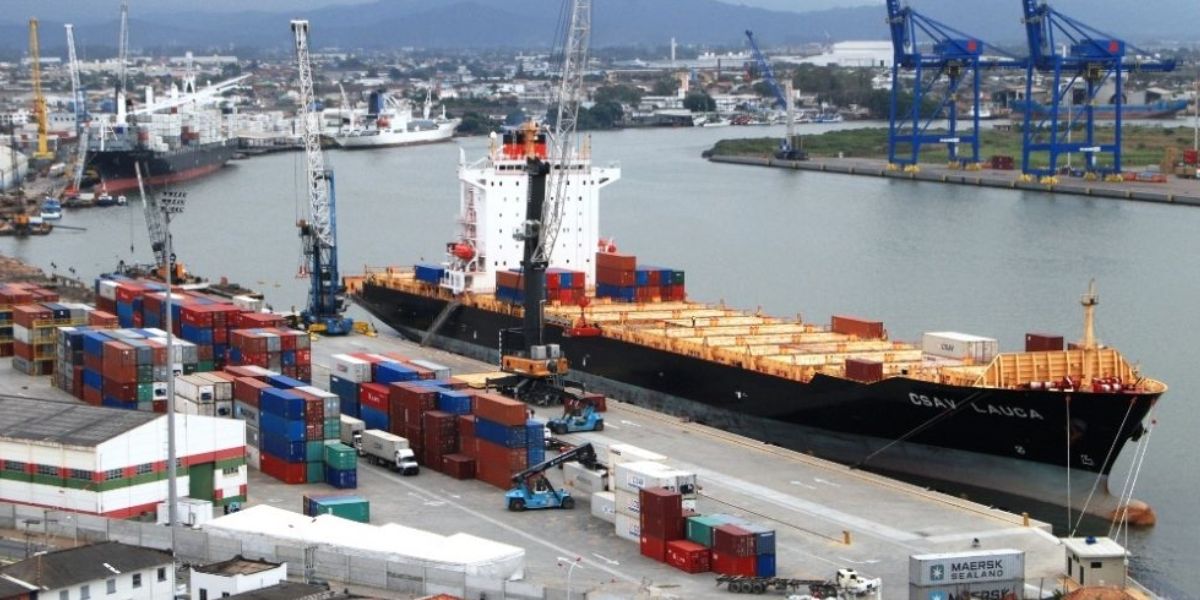
Imagine the following scenario: a foreign power begins to control part of a company linked to the strategic infrastructure of oil export in your country. It sounds like fiction, but this is what is happening in Brazil with China. The Asian giant has been aggressively expanding its presence in South American ports, and has now acquired a stake in Vast Infrastructure, one of the operator companies of the Porto do Açu, in Rio de Janeiro.
Although the move does not mean the sale of the Porto do Açu as a whole — a complex that houses 28 companies and 11 private terminals — the transaction has raised concerns in sectors related to national sovereignty. After all, we are talking about a terminal that handles a significant portion of Brazilian oil exports.
What Is at Stake with the New Chinese Acquisition
The operation takes place through China Merchants Port Holdings (CMPORT), a branch of the state-owned China Merchants Group (CMG). At the end of February, CMPORT announced the signing of a contract to acquire a stake in Vast Infrastructure, a company controlled by Prumo Logística, the holding company responsible for developing Porto do Açu.
-
Petrobras Explores Entry into Corn Ethanol Market, Aiming to Become a Biofuel Giant

-
Brazil’s $8.5 Billion Auction Secures New Power Plants to Prevent Peak Hour Energy Shortages
-
Why Gasoline Prices Remain Stable: How Petrobras’ Subsidies and Pricing Policies Control Fuel Costs in Brazil
-
SpaceX Plans 13 km Pipeline to Reduce Truck Reliance and Speed Up Starship Rocket Launches in the U.S.


The negotiation still depends on the approval of regulatory bodies, but it is already causing a stir. The reason is simple: the terminal operated by Vast is the only one in South America capable of receiving VLCC (Very Large Crude Carrier) ships, essential for handling large volumes of oil.
Currently, Porto do Açu handles about 560,000 barrels per day, with a licensed capacity of up to 1.2 million barrels daily. Although Vast is just one of the companies in the complex, it plays a strategic role in the national oil export infrastructure.
Prumo Logística clarified the operation in an official statement:
“Prumo Logística and China Merchants Port have finalized the terms for a potential sale of equity stake in Vast Infrastructure, a subsidiary of Prumo, which owns the oil terminal at Porto do Açu. The conclusion of the transaction is subject to precedents. The transaction aligns with Prumo’s strategy to establish partnerships with global players for the joint development of businesses at Porto do Açu. A subsidiary of China Merchants Group, China Merchants Port is a leading global developer, investor, and port operator, which includes major hubs along the coast of China.”
Systematic Expansion of China in South American Ports
The purchase of a stake in Vast is part of a broader strategy by China to consolidate its presence in regional ports. In 2018, CMPORT had already acquired the Paranaguá Container Terminal, the largest in South America. Additionally, the group is involved in projects at the Port of Santos and in the construction of a new terminal in Maranhão.
According to Professor Marcos Pedlowski of the State University of Northern Rio de Janeiro Darcy Ribeiro, this is a coordinated move:
“The cases of Chancay [recently inaugurated Chinese megaport in Peru], Paranaguá, and now the stake in Vast, in Açu, are examples of the penetration of Chinese companies into port areas and other commodity handling structures in South America,” he stated in an interview with Diálogo.
Pedlowski warns that such investments create risks for national sovereignty and complicate the monitoring of goods transit by host countries.
Fears Behind Chinese Advancement: Debt Trap Diplomacy
The activity of the CMG group in global ports has already raised suspicions in other countries. The most emblematic case is that of the Hambantota Port, in Sri Lanka. In a classic example of “debt trap diplomacy”, the Asian country’s government, unable to pay Chinese loans, handed over 80% control of the port to CMG, along with a 99-year lease contract.
Even though the port was conceived for civilian purposes, China sent a military research vessel to Hambantota in 2022, highlighting the potential for strategic use of the facilities.
Impacts for Brazil: Risks of “Sinicization” of Port Infrastructure
Although the acquisition does not involve Porto do Açu as a whole, the presence of a Chinese state-owned enterprise in a company responsible for such a sensitive terminal raises alarms. According to Pedlowski, Porto do Açu already faces difficulties in oversight by Brazilian authorities. With CMPORT’s entry, there is a risk that access to information and operations of Vast may become even more restricted.
“I see no reason why the current situation would be minimized with Chinese control. On the contrary, the trend is for monitoring to become stricter,” the professor warns.
He also points out that the acquisition of Vast may be just an initial step in a larger process of “sinicization” of parts of Brazilian port infrastructure — a strategy already observed in other countries in the region.
The Challenge for National Sovereignty
The entry of China into critical sectors of Brazilian infrastructure reignites debates about the limits of foreign participation in areas considered strategic. Although Brazil has benefited from foreign investments, the case of Vast Infrastructure shows that there are risks when state-owned enterprises control sensitive assets.
As Pedlowski highlights:
“The control of strategic areas by Chinese state-owned companies in another country creates a series of difficulties regarding national sovereignty and the exercise of national authority over the acquired area.”
It is now up to Brazilian authorities to carefully evaluate the implications of this operation. The debate is not only economic: it concerns the future of national control over key sectors like port infrastructure and oil export.





Um país com políticos Leza pátria .
Temos que mandar estes chinas, de volta para casa, ou para o inferno.
Como se soberania nacional fizesse alguma diferença. Entregaram a Eletrobras, o REGIME DE ÁGUA DO PAÍS. Uma refinaria inteira para um Sheik árabe…. um terminal de porto é fichinha