






 Portuguese
  Spanish


Modernization of Nestlé’s first factory in Brazil includes new extraction tower, industrial automation, near real-time monitoring, and expansion of Nescafé exports to about 60 countries
Nestlé will allocate around R$ 1 billion to the modernization and expansion of the Araras factory, in the interior of São Paulo, by 2028, in one of the company’s largest recent bets on the coffee business in Brazil. The unit, inaugurated in 1921, is the first factory of the Swiss multinational in the country and in Latin America, besides occupying a strategic position in the production of soluble coffee, Nescafé, Nescau, Nesquik, Nutren, and Puravida products.
The investment is part of the R$ 7 billion cycle announced by Nestlé for Brazil until 2028, according to information released by the company and reported by InfoMoney. With this, the Araras plant will receive a new extraction tower, more digitalization, industrial automation, and an increase of approximately 10% in soluble coffee production capacity.
Currently, the unit produces about 40 thousand tons per year, but the expectation is to reach 44 thousand tons after the completion of the planned improvements. In addition, the factory will continue to be responsible for the production of several relevant brands in the company’s portfolio in the Brazilian market.
-
France Revamps 530 Social Housing Units with Large Balconies and Glass Facades Without Demolishing Existing Buildings

-
10-Year-Old Max Makes History with Paris Fashion Show, Launches Own Brand, Hires Staff, and Sets World Record as Youngest Runway Designer

-
Bolivian Female Construction Workers Form Association to Combat Discrimination and 38% Pay Gap in the Industry
-
Near Amsterdam, residents buy land and discover they must also build streets, manage drainage, handle waste, and grow food on half their plot.




Artificial intelligence starts to anticipate operational deviations
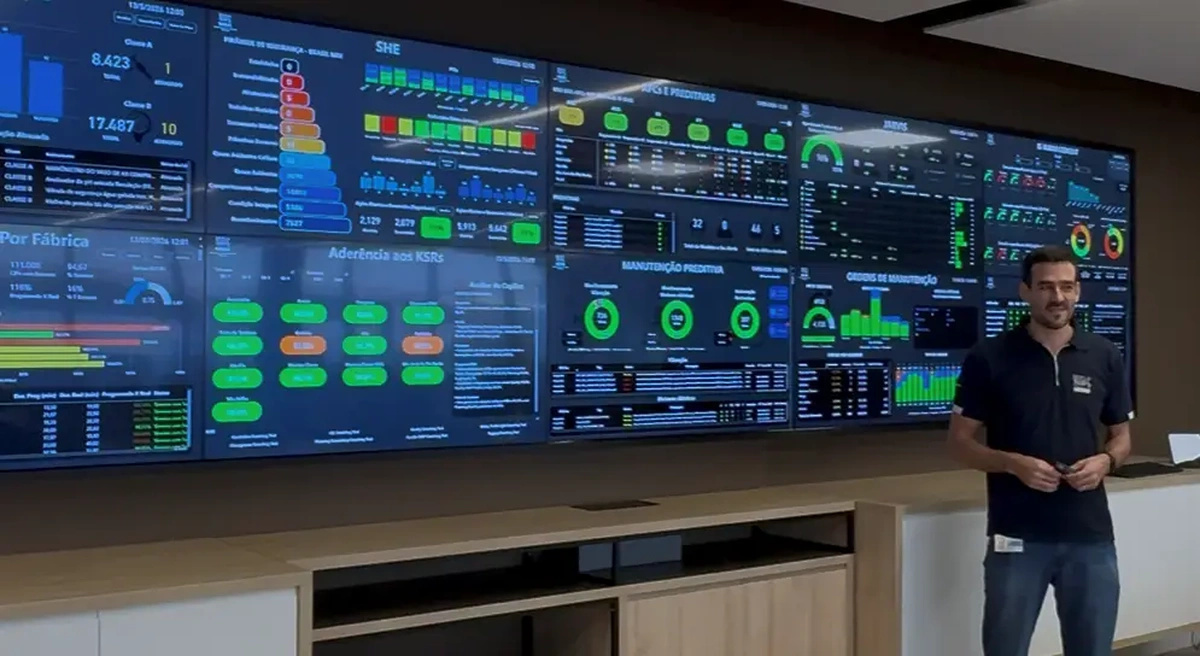
In addition to physical expansion, Nestlé intensifies its strategy of digital transformation through the use of artificial intelligence and advanced data analysis. In Araras, specialists monitor, in near real-time, information from the 16 factories of the company in Brazil.
In this monitoring center, teams analyze indicators related to safety, maintenance, energy efficiency, quality, and operational performance. In this way, the company seeks to identify risks before they impact production.
Moreover, the company has started using generative artificial intelligence to summarize operational events, identify trends, and produce automatic reports in natural language. Subsequently, this information is sent to factory leadership, allowing faster responses to possible deviations.
According to Gustavo Moura, executive manager of digital transformation at the Araras factory, the technology functions as a support tool. However, he emphasizes that transformation depends mainly on people and collaboration with external partners.
According to the executive, Nestlé’s strategy is based on three main pillars: people, external collaboration, and business focus. Therefore, the company intends to expand partnerships with startups, research centers, and innovation institutions.
Araras concentrates history, exports, and Nescafé expansion
The importance of the unit helps explain the priority given to investments. Inaugurated in 1921, the Araras factory was Nestlé’s first industrial operation in Brazil and throughout Latin America.
Today, the industrial complex occupies approximately 1.2 kilometers in length, comprises three production areas, and plays a significant role in the company’s global coffee supply. Additionally, the unit exports its production to approximately 60 countries.

According to Fabio Kuhn, director of the Araras factory, the plant produces nearly 29 thousand tons of coffee. Part of this volume supplies the domestic market, while another portion goes to different international markets.
Additionally, the unit produces about 28.5 thousand tons of Nescafé per year and works with more than 110 SKUs related to the coffee segment. Simultaneously, the factory also produces all the lids and can bottoms used by Nestlé in Brazil.
Coffee gains global priority within Nestlé
The coffee segment has taken on a strategic position within Nestlé’s global structure. Currently, it is part of the company’s four priority pillars, alongside PetCare, Health and Nutrition, and Food and Snacks.
In this scenario, Brazil plays a fundamental role. After all, the country is currently Nestlé’s third largest market in the world, as well as representing one of the main growth fronts for the coffee category.
According to Valeria Pardal, Business Executive Officer of Nescafé Brazil, the coffee business has more than doubled in size over the past five years. Furthermore, the executive highlighted that the company will continue investing in the combination of quality, innovation, and sustainability.
By 2026, the expectation is for a 27% growth in soluble coffee exports. Thus, the expansion of the Araras factory should support the increase in production, strengthen the company’s international presence, and further consolidate the strategic importance of the centennial unit.
In light of billion-dollar investments, the advancement of artificial intelligence, and the expansion of production capacity, could the historic Araras factory become one of Nestlé’s main global references in the soluble coffee market?


