






 Portuguese
  Spanish


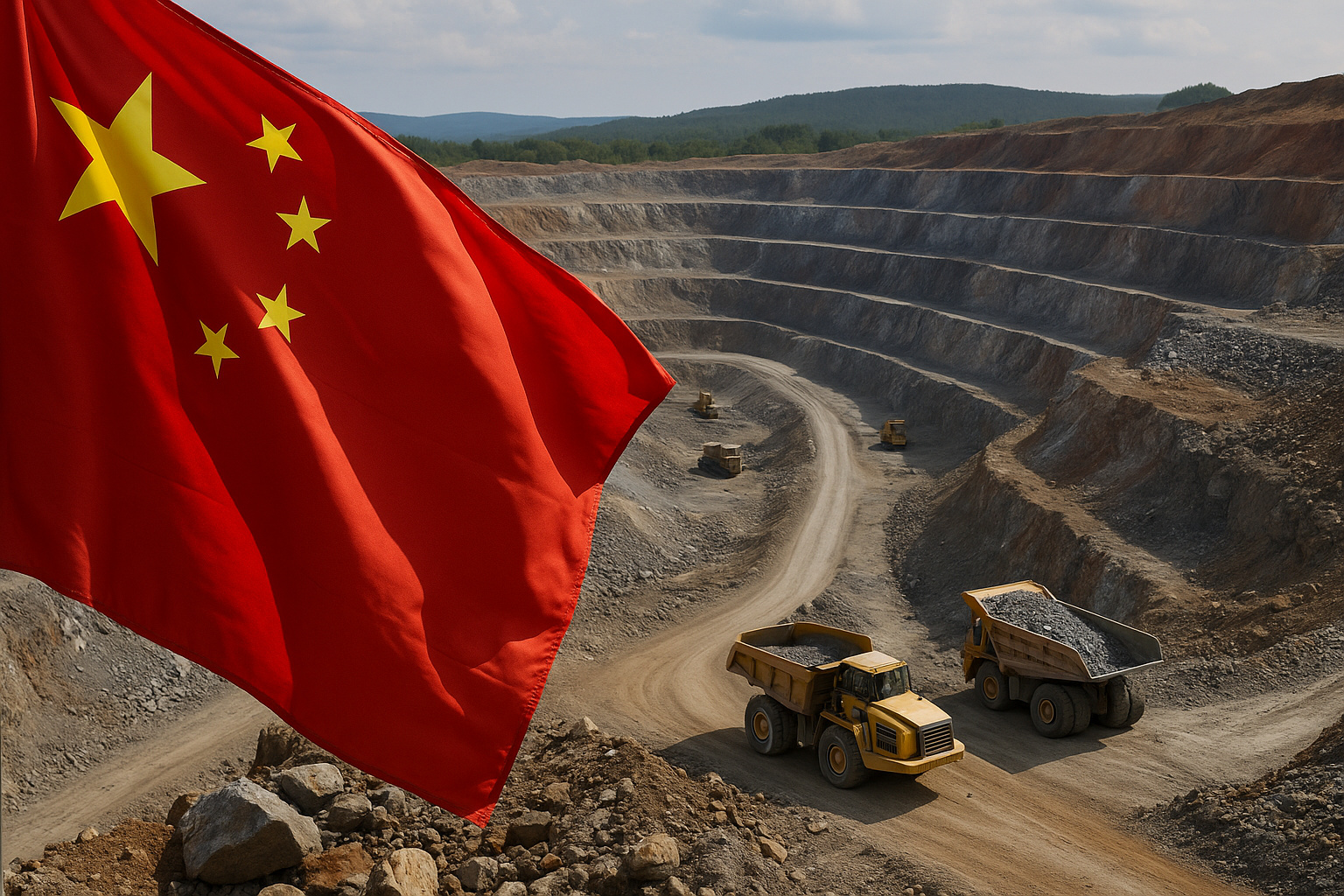

China Consolidated Control Over Critical Minerals
For a long time, China has viewed rare earths as a “strategic resource”. The country has consolidated global dominance in the mining and refining of these essential minerals.
According to the International Energy Agency (IEA), by October 2025, the high market concentration leaves strategic sectors — such as energy, defense, and technology — more vulnerable to disruptions.
Currently, the Asian country controls 70% of global extraction and 90% of global processing. This power results from two decades of continuous investments and aggressive industrial policies.
Furthermore, Chinese leadership directly interferes with the global economic balance, impacting everything from electric vehicle manufacturing to wind turbine production.
Exports Under Control and New Chinese Restrictions
Starting from December 1, 2025, the Chinese government will require mandatory licenses for companies exporting products with rare earths of Chinese origin.
This rule will also affect goods produced with technology developed in China, which broadens the scope of the restrictions and intensifies global tensions.
The United States responded by expanding trade sanctions against Chinese semiconductor companies, causing a new escalation in bilateral disputes.
As a consequence, rare earth magnet exports fell by 6.1% in September, according to Reuters. This decline signals the first effects of the restrictive policy.
Authorities in Washington and Brussels classified the measure as “aggressive and disproportionate”, reinforcing the perception that China is using minerals as a geopolitical weapon.
ARTICLE CONTINUES BELOWSee also
The Arctic is no longer just a frozen region and is becoming a new military board with the opening of maritime routes, expansion of bases, nuclear icebreakers, and competition among Russia, NATO, the United States, and China.

U.S. Dismisses Brazilian Foreign Ministry’s Military Risk Warning as “Absurd,” Cites Brazilian Criminal Gangs Operating in the U.S. Since May 2026
Ukraine War Impacts Brazilian Fuel Supply: Russian Diesel Imports Drop 65% in June, Brazil Turns to US and India Amid Market Concerns

Chinese Nuclear Submarine Launches Simulated Warhead Missile in Pacific, Heightening Regional Tensions Amid Naval Drills with Russia Near Qingdao; New Zealand and Papua New Guinea Warn of Persistent Chinese Military Presence


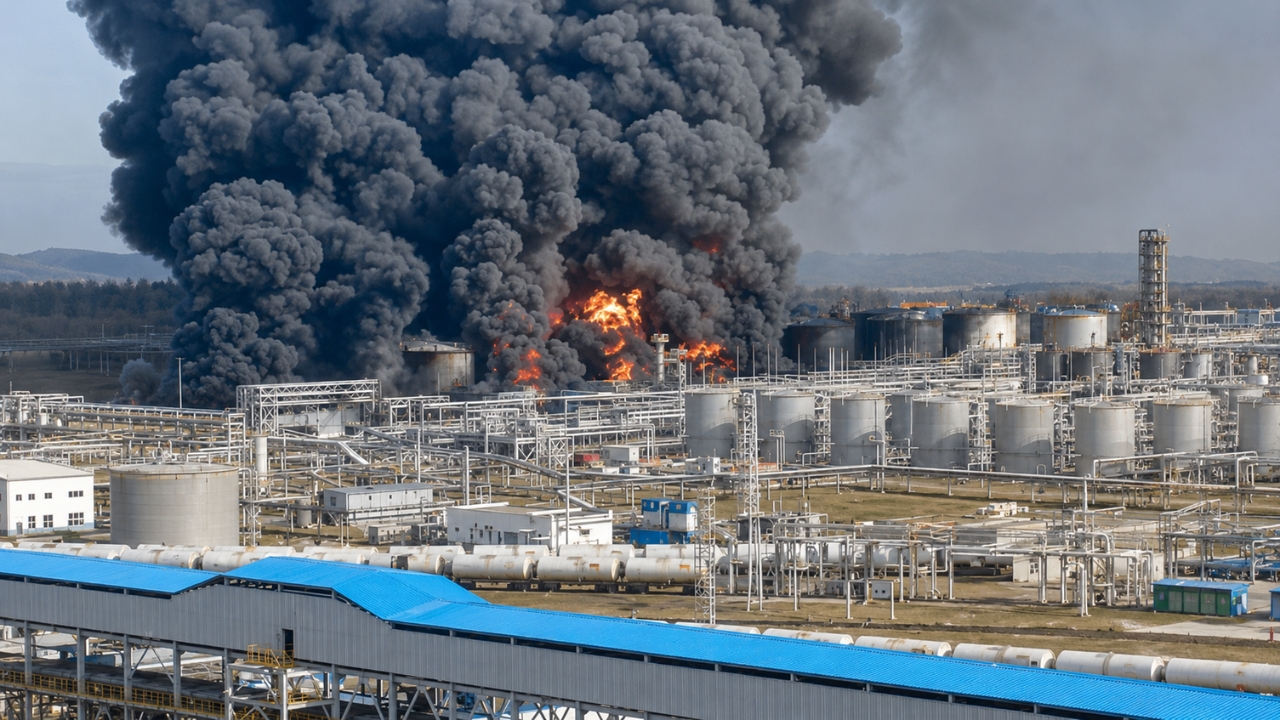

Strategic Importance of Critical Minerals
Rare earths sustain the modern technological base. They drive wind turbines, electric vehicles, smartphones, and satellites, ensuring efficiency and high performance for these systems.
These minerals have unique magnetic and chemical properties, essential for the production of high-output permanent magnets.
Although they are not geologically rare, economic extraction requires complex processes, as ores appear in very low concentrations.
The separation method, known as solvent extraction, demands high precision and large volumes of water and energy, which makes refining expensive and time-consuming.
According to the Center for Strategic and International Studies (CSIS), China maintains an unparalleled technological advantage due to accumulated experience and a consolidated industrial ecosystem.
The Western Challenge in Refining and Processing
The United States and allies aim to reduce dependence on China, although they face significant bottlenecks in processing and refining.
Expert Karl Friedhoff from the Chicago Council on Global Affairs explains that the challenge lies in the “midstream”, that is, the intermediate stage between mining and final product.
“We have raw minerals, but we still send them to China for refining,” the analyst emphasizes, indicating the urgent need for productive autonomy.
However, building refineries outside of China requires high investments, strict environmental compliance, and social acceptance, as the process consumes a lot of energy and water.
Additionally, it generates radioactive waste, which increases resistance from local communities.
Therefore, Western progress occurs slowly, even with economic incentives and public policies.
Paths to Autonomy and the Future of the Sector
To weaken Chinese dominance, Western countries need to open new mines, install processing plants, and train a skilled workforce.
It is also essential to offer cheap energy, modern infrastructure, and tax incentives, creating a competitive environment.
According to the Global Critical Minerals Outlook 2025 report from the IEA, China will continue to control 80% of global refining by 2035.
Without coordinated and immediate action, the West may lose the chance to balance the sector, consolidating structural dependence on Beijing.
Today, rare earths have ceased to be merely mineral resources and have become strategic weapons in the new global geopolitics.
In light of this, the question remains: can the West react before time runs out?






