Portuguese
  Spanish


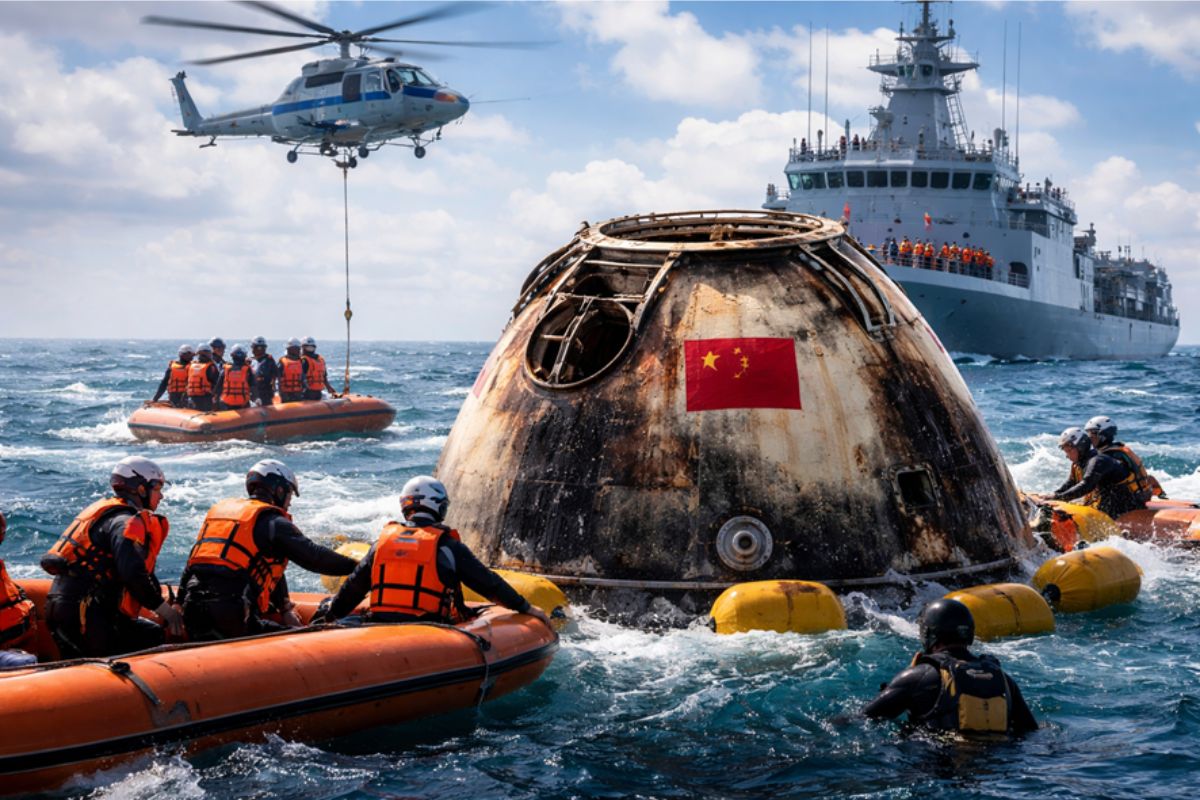


In The City Of Beijing, The Chinese Manned Space Agency Conducted The First Maritime Recovery Of A Crewed Capsule, After Flight Test Of The Long March 10 To Validate Safety And Prepare Moon Missions
China has taken a step that changed the pace of its manned space program. For the first time, the country executed a maritime search and recovery operation for a crewed spacecraft return capsule.
The procedure took place on Wednesday (02/11), following a critical test of the new spacecraft Mengzhou. The detail that caught the most attention was the success of the recovery at sea, something essential for future large scale missions.
This milestone involves not only technology. It signals real preparation to send astronauts to the Moon and strengthen operations of the Chinese space station.
-
She spent 73 years breathing inside an iron lung, survived the aftereffects of polio, and became the last woman in the United States dependent on the equipment before dying at 78 years old.

-
Brazilian students created a $1 filter using pine bark, cotton, and 3D-printed parts to clean cassava wastewater, reduce the toxicity of a hazardous waste, and transform contaminated water into biofertilizer.

-
Astronaut from Artemis II steps down after mission to the Moon and decision surprises after a record of 406,771 km, a historic 10-day journey, and an unprecedented achievement for Canada.

-
A fossil kept for years in a small museum in Montreal concealed 450-million-year-old soft tissue, a discovery that has only happened once before in history.


What Happened In The Mengzhou Spacecraft Test And Why It Became An International Highlight

The operation was conducted by the Chinese Manned Space Agency during an in-flight abort test under maximum dynamic pressure conditions. This type of test simulates one of the most critical phases of a launch.
Maximum dynamic pressure occurs when the rocket experiences the greatest aerodynamic stress during ascent. It is a decisive moment for any crewed mission.
After the test, the return capsule of the Mengzhou performed a controlled landing at sea. At 12:20 Beijing time, the team successfully completed the recovery.
What seemed impossible a few years ago has now become a procedure executed with precision.
How The Operation Functioned At Sea After The Long March 10 Rocket Flight
The trial occurred during a low-altitude demonstration and verification flight of the Long March 10 rocket.
The capsule was designed to separate and initiate emergency protocols if necessary. In the test, this system was put to the test.
After the controlled descent into the ocean, search and rescue teams located the module and performed the maritime recovery.
This type of operation requires synchronization between launch, monitoring, and recovery. The impact was immediate on the level of confidence in the Chinese space program.

The Numbers From The Test And What They Reveal About China’s New Space Generation
The official time of the recovery was recorded at 12:20 in Beijing.
The test was conducted under maximum dynamic pressure conditions, considered one of the most demanding phases of any space flight.
The rocket involved was the Long March 10, a model that is part of China’s new strategy for longer-range crewed missions.
The Mengzhou spacecraft represents a new generation of spacecraft. The return capsule was developed for multiple uses, increasing operational efficiency.
Every detail confirms that China is structuring a reusable and technically robust system.
The Direct Impact For The Chinese Space Station And The Lunar Plan
According to the Chinese space agency, the operation provides essential experience for future activities of the country’s space station.
But the impact goes beyond Earth orbit. The Mengzhou was primarily developed for China’s crewed lunar exploration program.
Validating emergency procedures under critical conditions is crucial before any mission to the Moon.
This technical advancement brings the country closer to its strategic goal of sending astronauts to the lunar surface in the coming years.

What May Happen Now In The Chinese Manned Space Program
With the maritime recovery validated, China is expanding its capacity to operate more complex missions.
The reusability of the return capsule is expected to reduce costs and increase the frequency of missions, although there is no official number released regarding future schedules.
Experts point out that mastering operations at sea is a crucial step for lunar flights and longer-duration missions.
The result surprised with its efficiency and reinforces China’s position as a protagonist in the new space race.
The first maritime recovery of a crewed capsule marks a concrete turning point in China’s space program. The test at 12:20 in Beijing validated safety, efficiency, and technical capability. It is a step that draws global attention and brings the country closer to sending astronauts to the Moon.
What do you think of this advancement of China in the space sector? The competition for the next phase of lunar exploration is more intense than ever. Share your opinion in the comments.