Portuguese
  Spanish


Method brought from Europe, automotive industry-style workstations, and complete modules with furniture, stove, and refrigerator: this is how Rio Grande do Sul industrialized the housing response to its largest flood
Modular houses became Rio Grande do Sul’s bet to rebuild housing at an industrial pace. In July 2024, a factory located in Ivoti, in the metropolitan region of Porto Alegre, began producing 500 temporary housing units for families affected by the floods of May that year, according to the Government of RS. The contract for the temporary houses amounts to R$ 66.7 million, with another R$ 56.4 million allocated for permanent housing.
The executor is Visia Construção Modular, which organized serial production with specific workstations, in the same model as an automotive industry assembly line. Each house comes off the line with 27 m², a bedroom, bathroom, and living room with a combined kitchen, ready to be transported and installed.
The factory that copies the automotive industry
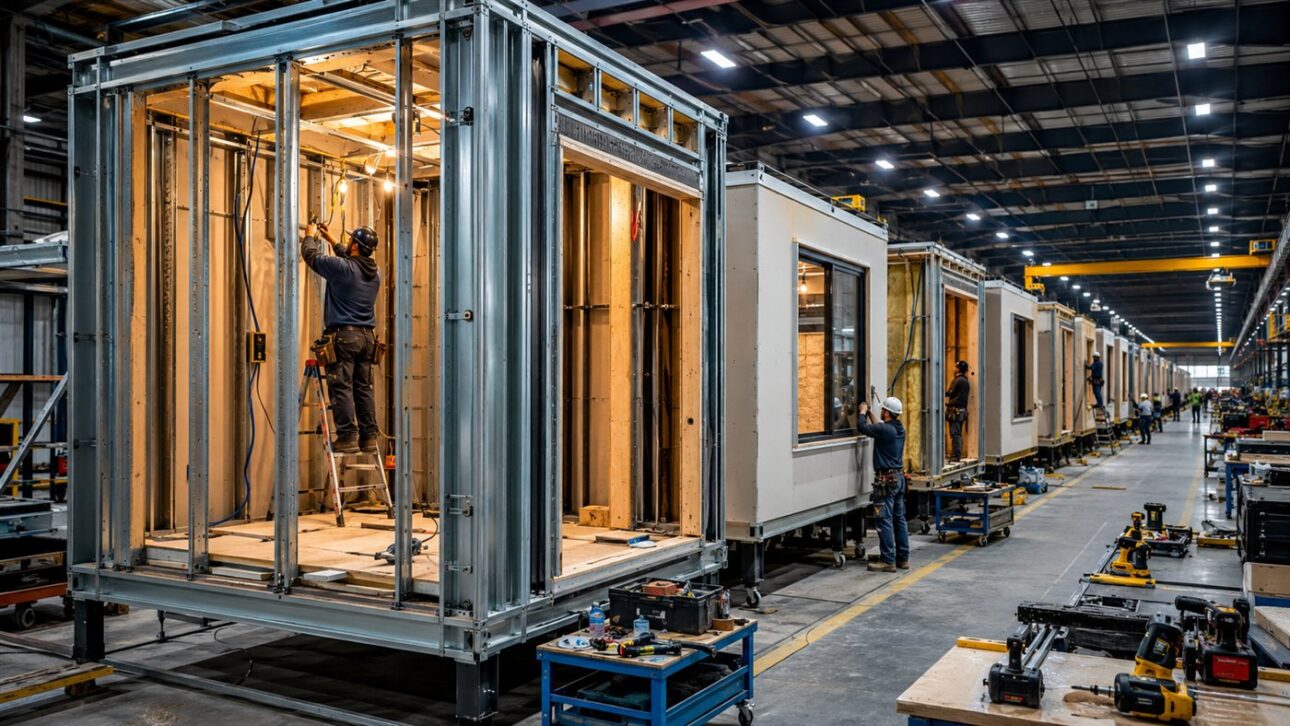
The heart of the operation is the method. Instead of taking bricklayers, bricks, and concrete mixers to hundreds of different sites, the Ivoti factory concentrates everything in a warehouse: the house progresses from station to station, like a car on an assembly line, receiving structure, walls, electrical and plumbing installations, and finishing in a standardized sequence, according to the Government of RS.
-
Detroit Microhouse Village Offers Former Homeless Residents Ownership After 7 Years: First 3 Tenants Receive Deeds

-
Brazilian Startup Develops Recycled Plastic Bricks, Cutting Construction Costs by 40% and Speeding Up Building by 90%

-
Tarcísio Opens New São Paulo Metro Line After 18-Year Wait, Offering Free Rides at 6 Stations and Aiming to Cut Commute to 23 Minutes for 633,000 Daily Passengers
-
Facing a housing shortage, Hong Kong uses prefabricated concrete modules to construct a 12-story public building with the help of massive cranes and trucks.



Visia was not improvising: the company brought the method from Europe and, according to the Government of RS, had already delivered 8,000 modules in the country before the contract in Rio Grande do Sul. The difference is that this time, industrialized construction was called upon as an emergency public policy, an entire production line dedicated to replacing the roofs that the water took away.
What fits in the 27 m² that come off the line
Each unit delivers, in 27 m², a bedroom, bathroom, and living room with a combined kitchen. And the package goes beyond the walls: according to the Government of RS, the modules include custom furniture, stove, and refrigerator, arriving at the site ready to live in, something unimaginable at the pace of conventional construction.
The concept is that of dignified transitional housing: the affected family leaves the collective shelter and gains a complete private space while waiting for the permanent house. The head of the Department of Housing and Land Regularization, Carlos Gomes, summarized the goal when delivering the first units: it is about directing families to a dignified space while they await the permanent units.
Galvanized steel and concrete with fiberglass: the recipe for the walls
The technical sheet dispels the prejudice that a quick house is a fragile house. According to the Government of RS, the structure of the units is made of galvanized steel, and the external walls use a special concrete reinforced with imported fiberglass. The CEO of Visia, Alexandre Soares, defined the standard: the house has the best in terms of technology, with a galvanized steel structure and external walls of a special concrete.
It is the same family of materials that the market uses in high-standard industrialized constructions: galvanized steel resists corrosion for decades, and concrete with fiberglass combines lightness for transport with structural resistance. The module needs to withstand the truck journey, hoisting, and years of use, all without cracking, a requirement that forced engineering to go beyond the traditional emergency house.
Encantado received the first 30
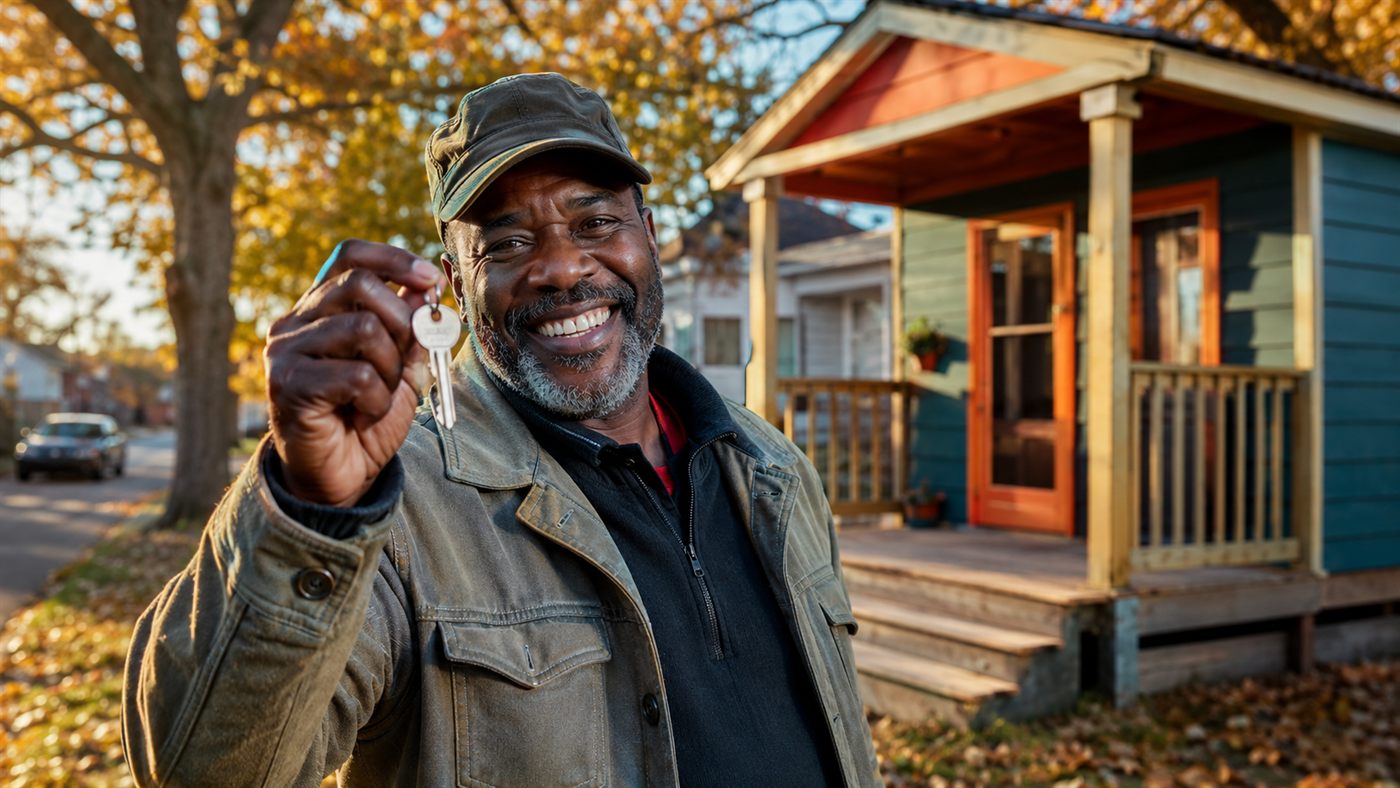
The tip of the operation appeared shortly thereafter. On August 1, 2024, the State began the installation of temporary houses in Encantado, in the Vale do Taquari, with 30 units: 5 modules in the Palmas neighborhood and 25 in the São José neighborhood, according to the Government of RS.
The selection of families was the responsibility of the city hall, with criteria defined locally. From the factory line to the urbanized land, the module arrives ready: it’s about positioning, connecting water, electricity, and sewage, and handing over the key. The construction site, which in a common construction lasts months, practically disappears.
The distribution map through Vale do Taquari and beyond
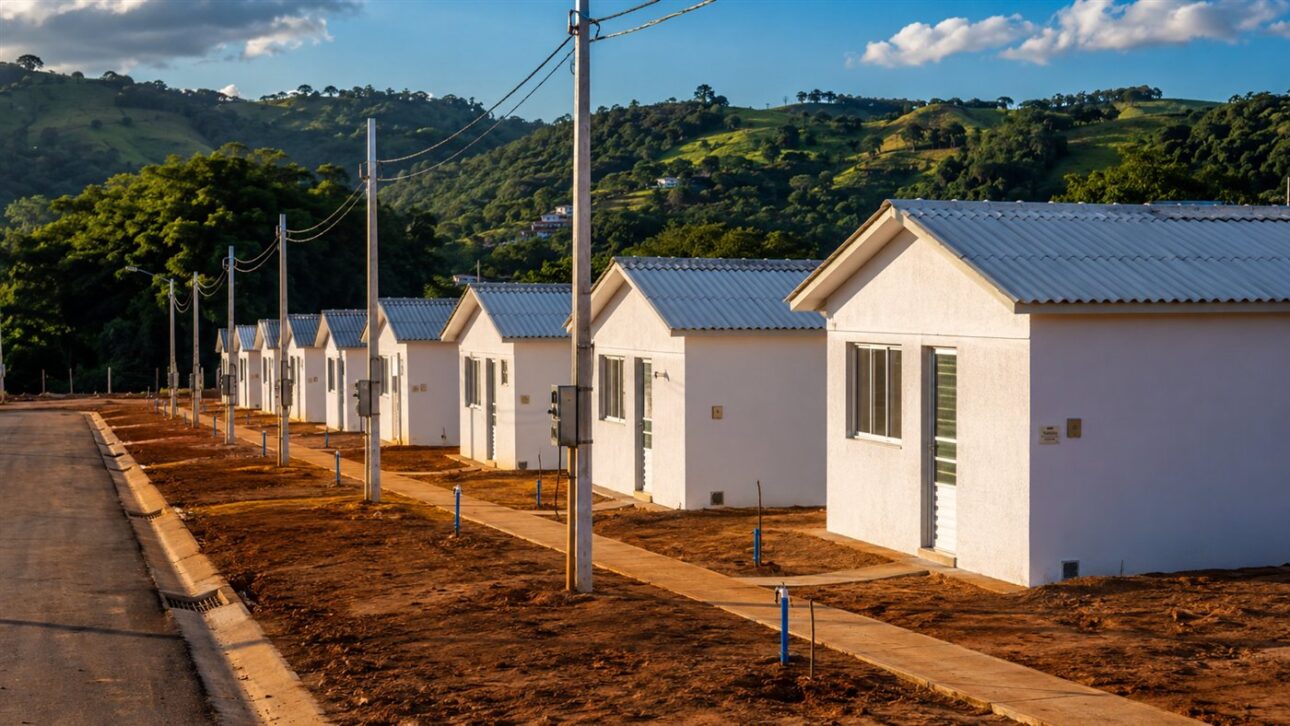
The plan for 500 modular houses was designed to cover the most affected municipalities. According to the Government of RS, besides Encantado, Cruzeiro do Sul, Estrela, and Triunfo already had confirmed plots, while Eldorado do Sul, Lajeado, and Arroio do Meio were finalizing the definition of the areas.
The list reflects the geography of the flood: municipalities in Vale do Taquari and the metropolitan region where the water rose faster and destroyed more homes. Delivering the ready-made house to where the demand is, instead of setting up construction sites in each city, is exactly the logistical advantage of the industrialized model.
The cost: R$ 123 million in two contracts
The housing package totals R$ 66.7 million for the 500 temporary houses and another R$ 56.4 million for permanent housing, according to the Government of RS, a total of around R$ 123 million funded by the state treasury.
With a simple division, each temporary unit costs about R$ 133,000, including factory, high-standard materials, furniture, appliances, transportation, and installation. It’s the price of speed: transforming a homeless family into a family with an address in weeks, not years, while the permanent program advances in parallel.
Eight times less water and construction without debris
The industrialized construction also delivers an environmental bonus. According to the Government of RS, the factory process consumes 8 times less water than traditional construction methods and does not generate construction waste at the installation site.
It’s not a minor detail: conventional construction sites are among the major waste generators in Brazilian cities. A closed assembly line controls every kilo of material, reuses leftovers, and sends only the final product to the site, which makes a difference when talking about 500 units at once.
Why modular houses change the game in disasters
The classic housing response to a disaster always hits the same trio: slow bidding, lengthy construction sites, and scarce labor spread across dozens of cities. The modular house factory tackles all three at once, concentrating production, standardizing quality, and decoupling the construction pace from each municipality’s pace.
The case in Rio Grande do Sul became, in practice, a real-scale stress test for the model in Brazil. If a factory can supply half a dozen municipalities with complete housing in a matter of weeks, the same reasoning applies to housing deficits, student housing, and accommodation for large projects.
There is also the effect on the workforce. Conventional construction relies on finding available masons, electricians, and plumbers in each affected city, precisely when all cities in the region are competing for the same professionals to repair what the water damaged. In the factory, a fixed and trained team produces for all municipalities at the same time, without competing with the private reconstruction happening in the streets.
The model also makes it easier to oversee public money: instead of hundreds of small scattered projects, with measurements and add-ons difficult to track, the contract boils down to identical units coming from a single address, with a quality standard verifiable piece by piece before delivery.
What remains of this model for the rest of the country
Rio Grande do Sul turned an emergency into the largest showcase of modular homes in the country, with a dedicated factory, public contract, and auditable delivery. The learning, from materials to logistical flow, is documented for the next state that needs to respond quickly.
The question this case leaves is straightforward: if it’s possible to produce decent housing on an assembly line, with stove and refrigerator included, why does Brazil still treat housing as an artisanal work? Tell us in the comments: would you live in a house that came off an assembly line?