Portuguese
  Spanish


The country takes advantage of the sun and wind of the Kalahari and Northern Cape to build plants, electrolyzers, and a deep-water port, like the Boegoebaai complex by Sasol. The goal of becoming a major exporter of green hydrogen, however, is a long-term projection, aiming for 2050.
South Africa is investing billions of dollars to transform the Kalahari Desert into a major green hydrogen production hub. According to Xataka, the country is building solar plants, wind farms, electrolyzers, and port infrastructure to manufacture the fuel on a large scale, aiming to become one of the world’s leading exporters. The movement gains prominence at the same time South Africa appears at the opening of the 2026 World Cup.
According to the report, the country’s energy transition is aligned with its Hydrogen Society Roadmap, initially launched in 2021, and has been gaining progressive strength over the last decade, serving as a viable alternative to decarbonize the economy and attract international investments. The country wants to take advantage of some of the best sun and wind conditions on the planet to occupy almost uninhabited areas with clean energy. The goal is to supply international markets, especially in Europe and Asia, and compete for a significant space in the global green hydrogen trade. It is, however, a long-term ambition, with projects still under construction and in the planning phase.
The Kalahari Desert becomes a green hydrogen hub
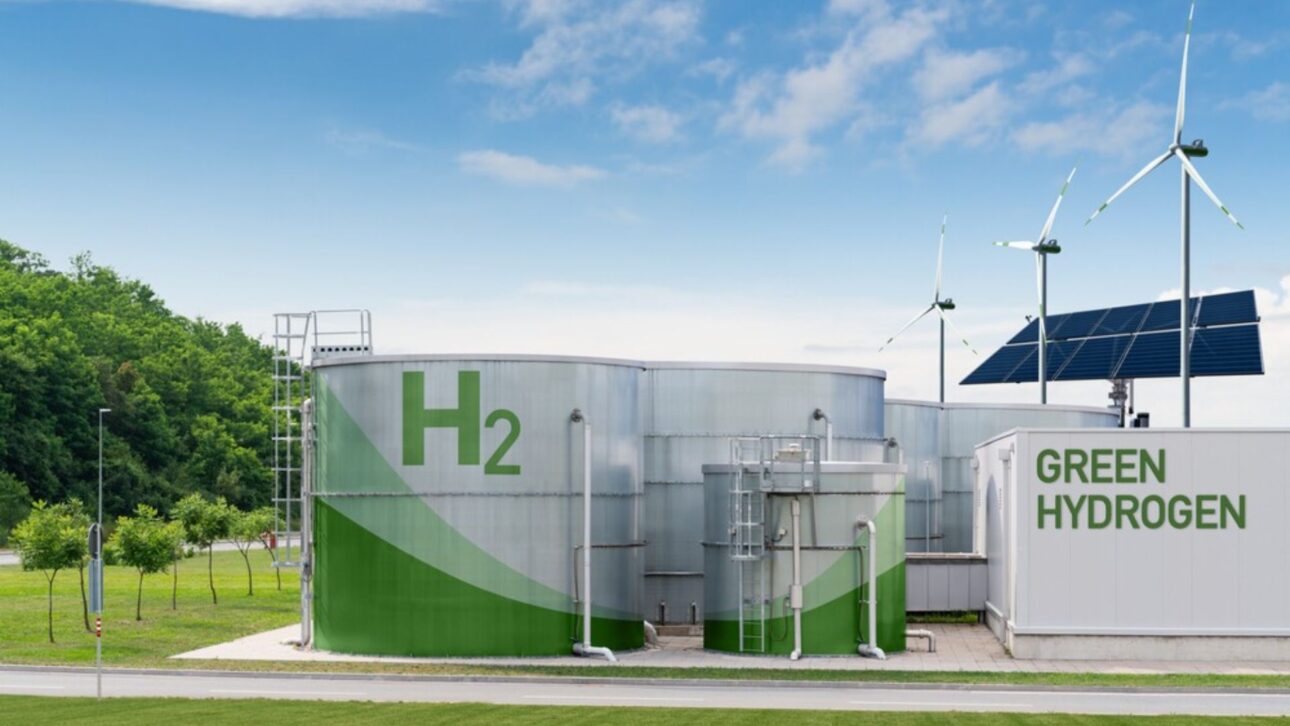
The Kalahari Desert brings together a rare combination: plenty of sun, favorable winds for much of the year, and large free areas to install infrastructure. According to the material, what for decades was seen only as an arid and little-explored region is now at the center of a billion-dollar strategy by South Africa to grab a slice of the global green hydrogen market. The proximity to maritime routes completes the picture.
-
Brazil Unveils Innovative Monitoring System to Prevent Abandonment of Public Works, Boosting Efficiency and Reducing Waste in Infrastructure Projects

-
AI Video Generator Automatically Creates Subtitles and Animated Captions

-
São Paulo Unveils Latin America’s Largest Underground Reservoir, Holding 900 Million Liters, in the Greater São Paulo Area

-
Chinese Teen Wins Gold in Germany for Invention Turning Air Moisture into Underground Irrigation in Drought-Stricken Areas





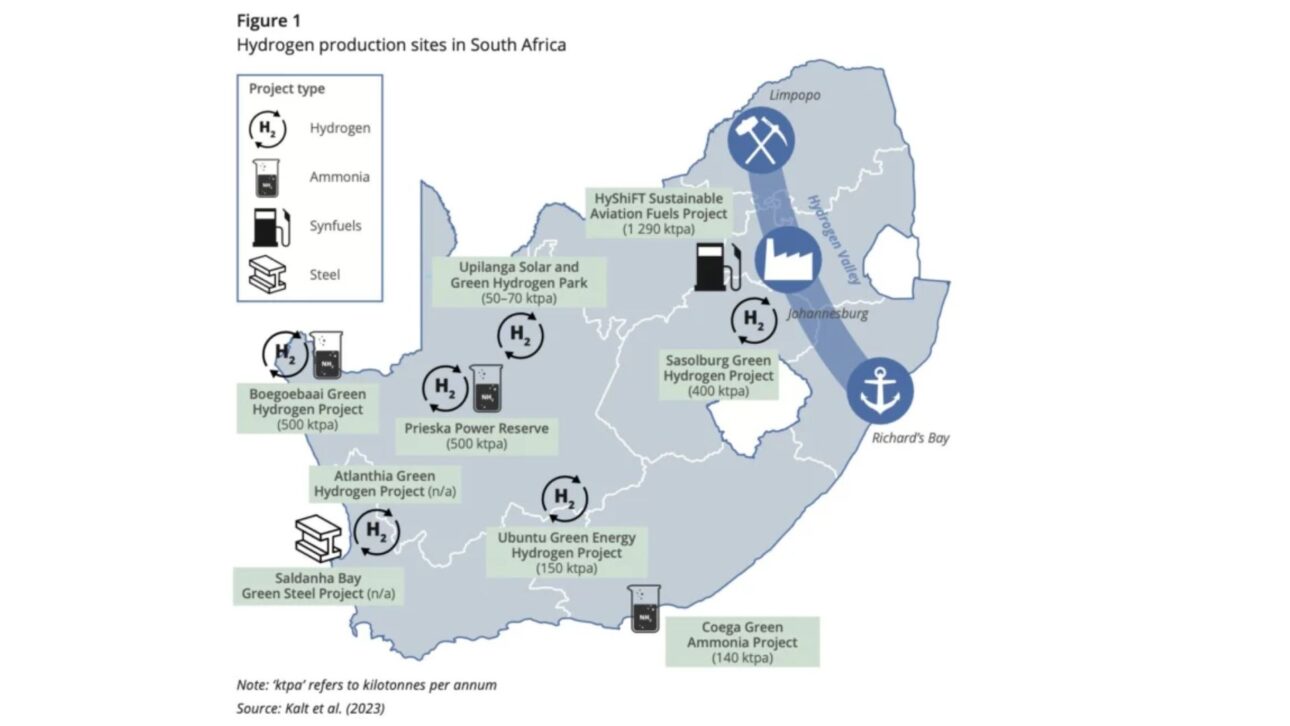
This combination of factors has transformed the north of South Africa into one of the most promising places in the world to produce large-scale renewable energy. According to the report, it is there that billion-dollar projects focused on green hydrogen and green ammonia are emerging, substances seen as important for reducing the world’s dependence on fossil fuels. For now, however, much of this infrastructure is still in the implementation phase.
Boegoebaai, by Sasol, and the new deep-water port
Among the most ambitious projects is the Boegoebaai complex, led by the petrochemical company Sasol, from South Africa. According to the material, the initiative foresees the installation of dozens of gigawatts in solar and wind generation, as well as a huge electrolysis structure to produce hydrogen derivatives mainly for export. The project also includes the construction of a new deep-water port to export the production to other continents.
The Sasol complex is not alone. According to the report, other regions of the Northern Cape are also receiving investments in energy infrastructure to feed future green fuel plants, forming an industrial corridor focused on the green hydrogen economy. It is worth remembering that these are developing enterprises, with much of the production still projected for the coming years.
Platinum and the bet to boost the economy
South Africa’s bet goes beyond generating clean energy. According to the material, the country’s government sees the green hydrogen industry as a chance to boost the national economy, attract foreign investment, and create a new industrial chain based on technology. A differential lies in the reserves of platinum group metals, an essential input for manufacturing the electrolyzers that produce the fuel.
This allows South Africa to participate not only in the generation of green hydrogen but also in the manufacture of strategic components of the chain. According to the report, the fuel is also seen as an important piece to reduce dependence on coal, which still plays a central role in the country’s energy matrix.
Hard-to-decarbonize sectors, such as steel, chemical industry, fertilizers, and heavy transport, are among the main candidates to use the new fuel in the coming years.
The projections and what is still ambition
The most optimistic estimates place South Africa as a future green hydrogen powerhouse. According to the material, the most optimistic projections indicate that the country could produce millions of tons of fuel per year by 2050, mainly supplying markets in Europe and Asia. These are significant numbers, but they depend on a decades-long horizon.
Therefore, it is worth separating ambition from what already exists. The Kalahari megaprojects are still under construction and planning, and both the position of a major exporter and the volumes projected for 2050 are optimistic goals and projections, not guaranteed results.
The potential is real, with sun, wind, and platinum in favor, but the outcome will depend on the projects coming to fruition and the global green hydrogen market, still forming and costly, indeed growing.
South Africa is betting billions to transform the Kalahari Desert into a green hydrogen export hub, combining sun, wind, and platinum reserves to its advantage. For now, it is an ambitious and long-term plan, with works underway and projections aiming at 2050, whose success will depend on execution and global demand for the fuel. If the strategy succeeds, the arid country could become a significant piece of the global energy transition.
And you, do you believe that South Africa will manage to establish itself as one of the major green hydrogen exporters? Share your thoughts on this plan and exchange ideas with other readers about the future of green fuels.