






 Portuguese
  Spanish


According to a new report from the Chinese government, the country operated 167 desalination projects in 2025, transforming about 3.1 million tons of seawater per day into fresh water. The volume supplies heavy industry, islands with water scarcity, and even tourism in coastal regions.
China is transforming seawater into drinking water on an increasingly large scale. In 2025, the country reached 167 desalination projects spread across ten coastal regions, capable of processing about 3.1 million tons of seawater per day, according to a new official report.
The data is included in the National Report on the Utilization of Seawater 2025, released by the Ministry of Natural Resources on World Oceans Day. All this fresh water helps supply heavy industry, remote islands with water shortages, and tourism in the country’s coastal areas.
How China uses seawater on an industrial scale
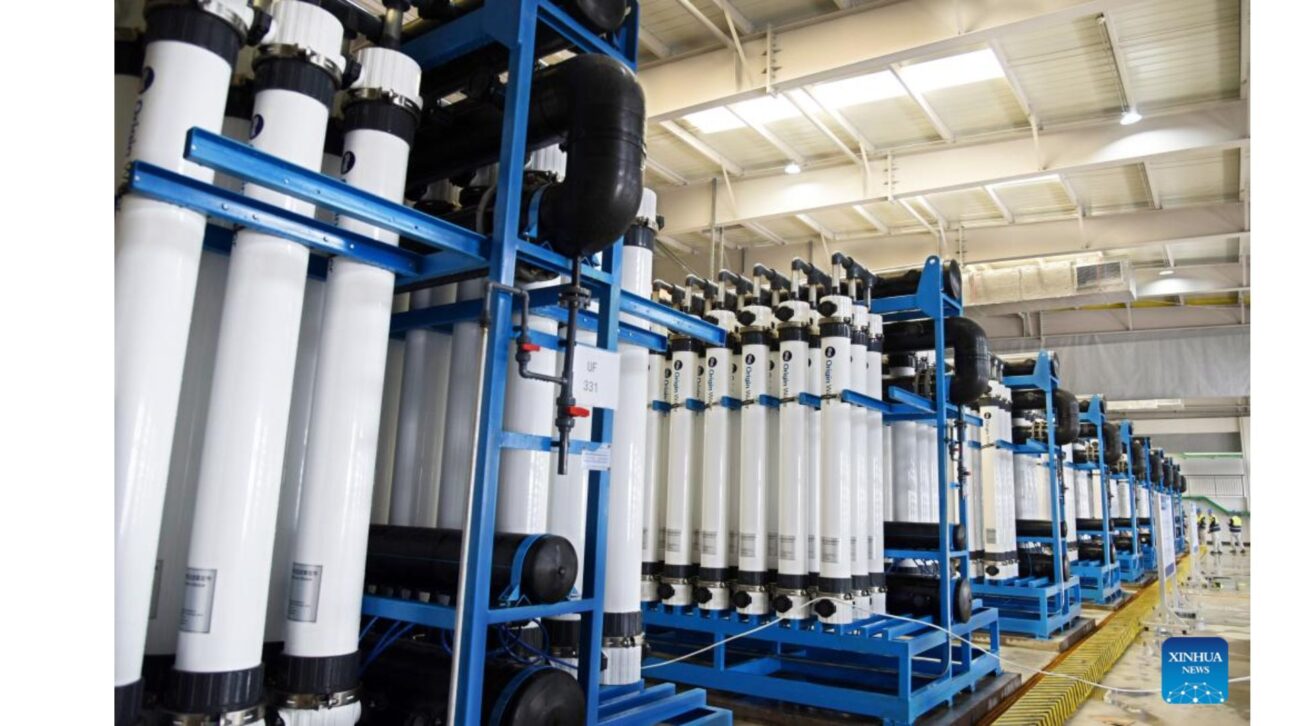
The numbers give the scale of the operation. According to the report, China maintained 167 desalination projects in ten provincial-level coastal regions, such as Liaoning, Tianjin, Hebei, Jiangsu, Shandong, Zhejiang, Guangdong, and Hainan. Together, they processed about 3.1 million tons of seawater per day, an increase of 221,000 tons compared to 2024, a volume equivalent to the domestic water needs of approximately 15 million people.
-
Brazilian undergraduate builds eco-friendly weed-killing robot, wins $50,000 and starts own startup after beating 95 teams

-
Fervo Energy Adapts Oil Drilling Techniques to Develop Universal Geothermal Energy Solution

-
Brazilian Teen’s Jute Hydro-Sponge Removes 80% of Tire Pollutant Killing Salmon, Wins $75,000 at U.S. Science Fair
-
New Zealand Drills Geothermal Well with Steam Exceeding 400 Degrees, Potentially Revolutionizing Clean Energy


But desalination is just one part of the use. Seawater is also directly captured for cooling industrial plants, and this consumption reached 193.36 billion tons in 2025, an increase of 5.02 billion compared to the previous year. Seven regions, including Shandong, Zhejiang, and Guangdong, used more than 10 billion tons each just for cooling equipment, highlighting the weight of industry in this system during the 14th Five-Year Plan, concluded in 2025.
From steelmaking to waterless islands: what is desalinated water used for
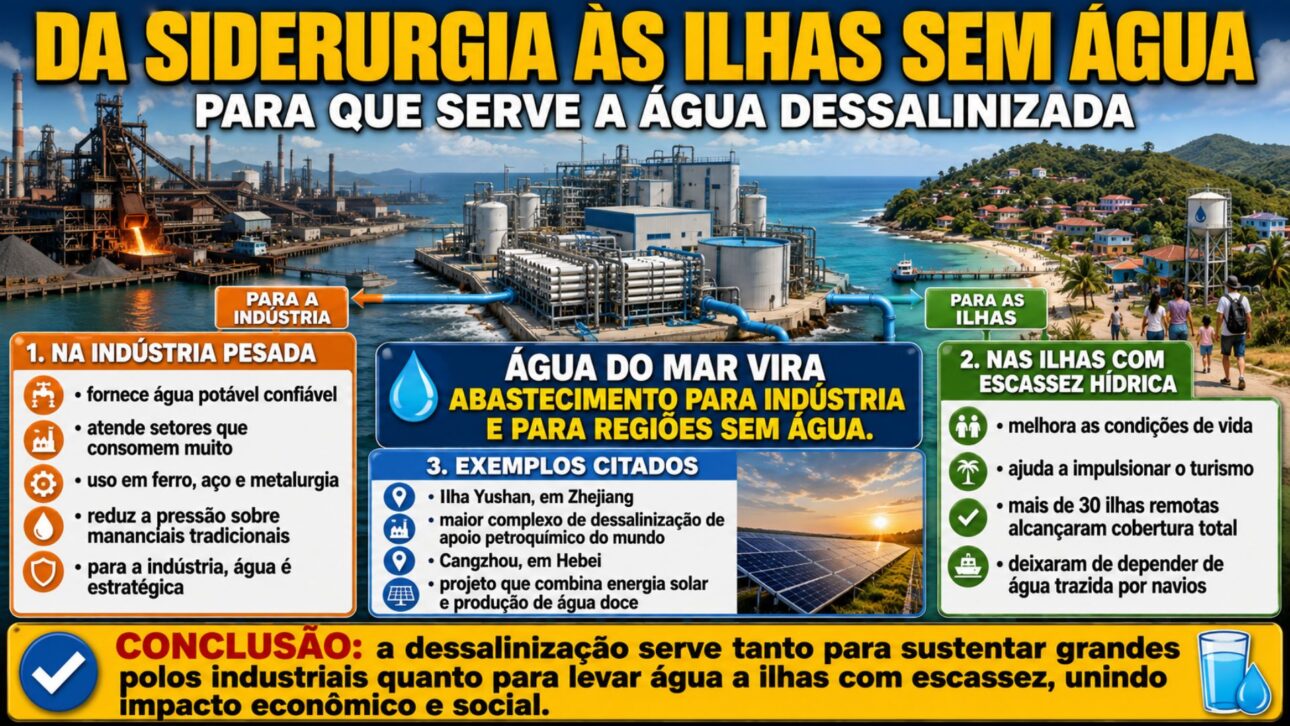
In practice, this water has very varied destinations. In industrial parks by the coast, new desalination projects have started to reliably supply potable water to high-consuming sectors such as iron, steel, and metallurgy, reducing pressure on traditional water sources. For the heavy industry, ensuring high-quality water in large quantities is as strategic as the raw material itself.
On islands with water scarcity, the effect is more social. Facilities that convert seawater have improved living conditions for residents and helped boost tourism, with more than 30 remote islands achieving full supply coverage and no longer relying on water brought by ships. Highlights include the world’s largest petrochemical support desalination complex on Yushan Island, Zhejiang, and a project in Cangzhou, Hebei, combining solar energy and fresh water production.
Lithium, uranium, and deuterium: the sea as a strategic mine
The report goes beyond water and shows another interest of China: extracting minerals from the ocean. Projects have advanced in obtaining lithium, uranium, and deuterium from seawater, and the document highlights that kilogram-scale uranium products have already been extracted from real marine environments. To give an idea of the potential, dissolved uranium reserves in the oceans are estimated at about 4.5 billion tons, more than a thousand times what is known on land.
This movement connects desalination to a resource security agenda. According to Xiang Wenxi, director of the Institute of Seawater Desalination and Multipurpose Utilization in Tianjin, the sector is steadily growing. By targeting elements such as lithium, linked to batteries, and uranium, used in nuclear energy, China treats seawater not only as a source of water but as a potential mine of strategic inputs for the industry.
The challenges: energy, cost, and brine disposal
Despite impressive numbers, it is important to remember that these are official data from the Chinese government and that the technology has limitations. Desalination is still energy-intensive, as reverse osmosis plants consume a lot of electricity for each cubic meter of fresh water produced, which makes the process expensive and can increase emissions, depending on the energy matrix used.
There is also a little-remembered environmental effect: the disposal of brine, the super-salty water that remains after separation, can harm marine ecosystems if returned to the sea without care. To reduce these impacts, China has been testing zero discharge systems and utilizing residual heat. With the 15th Five-Year Plan, which runs until 2030, the country intends to expand desalination in cities, islands, and industrial parks, betting on seawater as a part of its water security.
Transforming seawater into fresh water to supply industry, isolated islands, and tourism shows how China views the ocean as a strategic resource.
Tell us in the comments if you think desalination could be a way to tackle water scarcity in Brazil as well.


