






 Portuguese
  Spanish


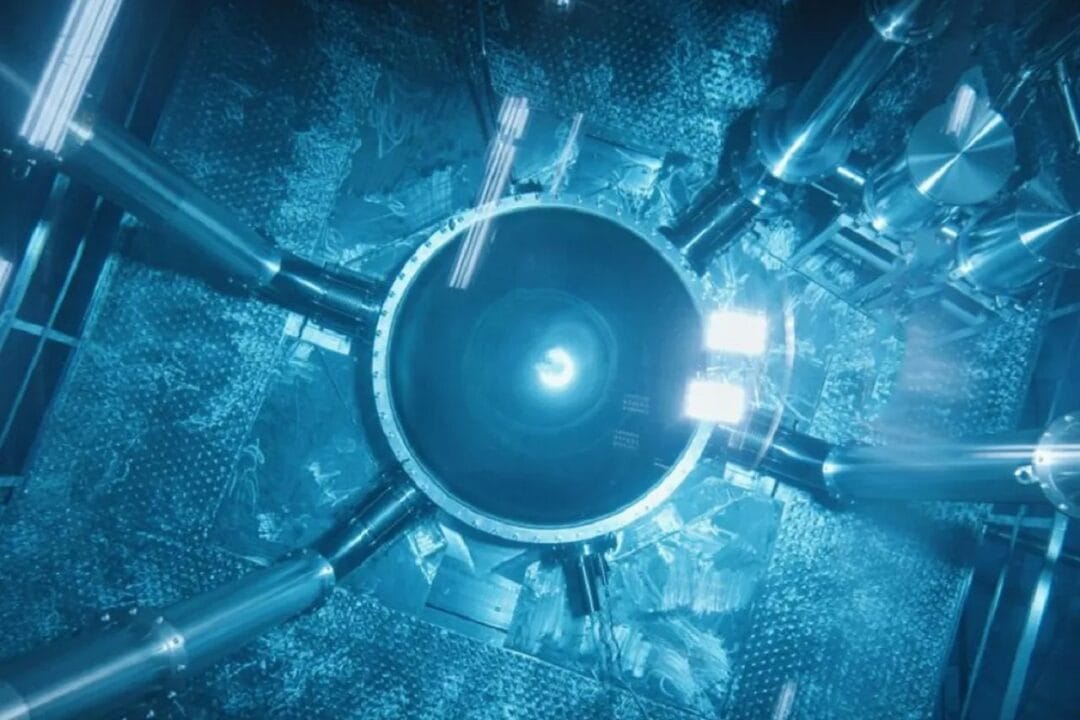

China Inaugurates Mega Underground Laboratory More Than 2 Kilometers Deep, Aiming for Advanced Research in Energy and Dark Matter.
The Universe is a vast and intriguing mystery, composed of planets, galaxies, stars, dust, gases, and a variety of celestial bodies. However, surprisingly, all these observable components make up only about 5% of the Universe. Most of it, around 95%, is made up of two mysterious entities not yet fully understood: dark energy, which accounts for 68%, and dark matter, which corresponds to the remaining 27%. To deepen the understanding of dark matter, China has undertaken the construction of an advanced underground laboratory dedicated to studies in this area.
Chinese Scientists Seek to Directly Observe Dark Matter
Scientists recognize the existence of dark energy and dark matter due to a peculiarity observed in the expansion of the Universe. According to the laws of physics applied to conventional matter, the expansion of the Universe should be decelerating due to the gravitational force, which tends to attract and condense matter.
However, the opposite is observed: the expansion is accelerating. The inclusion of dark energy and dark matter in cosmological equations seems to resolve this paradox. Despite their indirect presence, no one has yet managed to directly observe these entities. The China Dark Matter Experiment (CDEX) is among the efforts to detect hypothetical particles, such as axions, neutralinos, and Kaluza-Klein particles, that could compose dark matter.
-
2,000-Year-Old Gold Rings Found with Human Bones in Thailand Reveal Rare Burial and Feature Ancient Indian Inscription

-
Lenovo Unveils Legion Y700 Tablet with RGB Backlighting, 5G, and SIM Card Support

-
World’s First Nuclear Hydrogen Unit Begins Operation: Copper-Chlorine Technology with Initial Capacity of 150 Liters per Hour, Aiming for 3,000 Liters per Hour
-
Mechanics Retrofit Old Fiat Uno with BYD Electric Motor for Silent, Low-Voltage Operation Reaching Nearly 60 km/h in Home Test



Launched in 2010, CDEX has yet to yield conclusive results but is poised to receive a significant boost. An expanded and more advanced version of the project will be installed in the new extension of the China Jinping Underground Lab II (CJPL-II), the world’s deepest laboratory, which was recently inaugurated in China.
This expansion is 50 times larger than the original structure, built in 2010 in the Jinping Mountains in Sichuan, southwestern China. Located 2.4 km below the surface, this laboratory, specialized in dark matter, takes advantage of the protection of the mountain rocks for its experiments.
Laboratory Receives 99% Less Cosmic Radiation Than Gran Sasso
The rock of the mountain that protects the laboratory in China is made of marble, an extremely insulating material, which virtually blocks cosmic rays reaching Earth.
This shields CDEX from interference and allows it to attempt to detect even the slightest indication of dark energy and dark matter. This also applies to the sensors of the PandaX experiment, which is being conducted in the underground laboratory and also seeks dark matter.
According to Chinese scientists, the Jinping laboratory receives 99% less cosmic radiation than the Gran Sasso laboratory in Italy, which used to be the world’s largest underground research center.
The Chinese laboratory took advantage of the construction of a hydroelectric plant, Jinping II, which required the excavation of seven tunnels in the mountains (for water drainage and machinery transport). Scientists from Tsinghua University in Beijing had the idea to set up a research center inside the seventh tunnel, which has now been extensively expanded.
Understand More About Dark Matter
Dark matter is a hypothesis that may explain the existence and shape of galaxies, as without the presence of additional mass, galaxies would not exist as they are. Dark matter is a term given to a large amount of matter of unknown nature, where its effect gravitationally influences the dynamics of galaxies and the Universe itself.
The expectation is that dark matter could be composed of compact, supermassive objects, such as primordial black holes or hypothetical and nearly undetectable particles known as inert neutrinos.
About 95% of all the matter that makes up our universe is apparently made of something we do not know and cannot observe directly. Furthermore, one-third of all this unknown matter does not interact electromagnetically, meaning it cannot emit or absorb any type of radiation.


