Portuguese
  Spanish


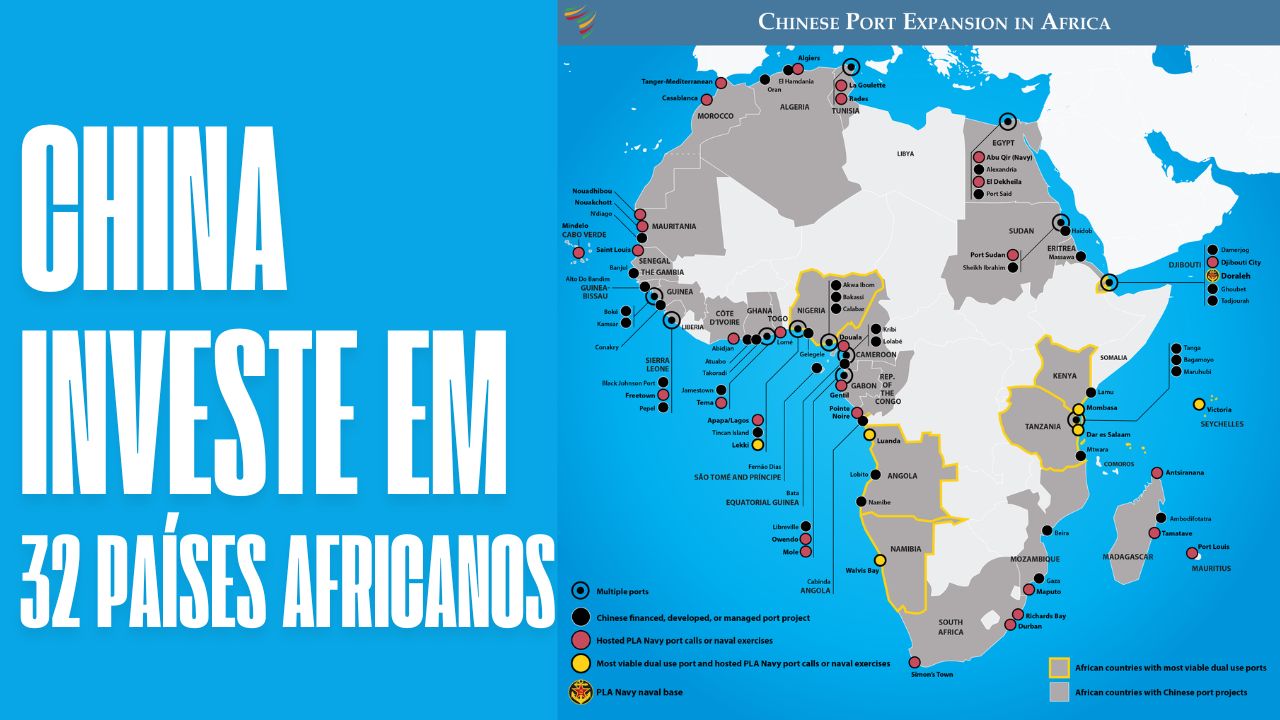

China’s Presence Now Covers 78 Ports in 32 African Countries, Impacting Global Trade and Geopolitics
China continues to expand its presence in Africa through the development of port infrastructure. Currently, Chinese state-owned enterprises are involved in the construction, financing, or operation of at least 78 ports spread across 32 African countries, representing about one-third of the continent’s port projects, according to a survey by the Africa Center for Strategic Studies. China’s investments in African ports have been a key component of its economic and geopolitical expansion strategy in the region.
Major Port Projects by China in Africa
The distribution of China’s investments in African ports on the continent follows this division:
- West Africa: 35 ports
- East Africa: 17 ports
- Southern Africa: 15 ports
- North Africa: 11 ports
Among the most relevant projects are:
-
MIT Scientists Develop Method to Transform CO₂ into a Construction Ally, Boosting Cement Strength by 13% in 24 Hours for More Sustainable Infrastructure

-
Canadian City Builds 8 Tiny Homes in 72 Hours for Homeless Youth, Plans 40 Affordable Houses for Female-Led Families Amid Housing Crisis

-
45-year-old Brazilian mother of 9 and grandmother of 12 receives 27 m² house made from recycled plastic, built in 15 hours with interlocking blocks and a recycled roof.
-
Ireland Installs 654 Modular Homes to Shelter 2,640 Ukrainian War Refugees, Offering a 60-Year Guarantee and a Model for Future Housing Crises


Port of Bagamoyo, Tanzania
The Port of Bagamoyo in Tanzania was designed to be one of the largest ports in Africa, with initial Chinese investment worth billions of dollars. The project, however, was halted in 2019 due to contractual disputes between the Tanzanian government and Chinese companies. In 2022, Tanzania announced plans to resume negotiations and enable the completion of the project, according to BBC Africa. This is one of the most emblematic examples of China’s investments in African ports.
Port of El-Hamdania, Algeria
Another significant project is the Port of El-Hamdania in Algeria, a deep-water terminal valued at US$ 3 billion, which was being developed with participation from Chinese companies. However, after nine years of planning, the Algerian government canceled the project, as reported by AGBI. This cancellation reflects the challenges faced by megaprojects in infrastructure on the continent and the impact of China’s investments in African ports.
Geopolitical Impact and International Response
Chinese presence in African infrastructure has generated reactions from the international community. To counterbalance this influence, the United States has intensified its economic presence in the region. Recently, President Joe Biden visited Angola, where he announced a robust investment for the Lobito Railway Corridor, an initiative seen as an attempt to offer alternatives to the Chinese model of financing, according to AP News.
China has also reinforced its commitment to Africa by signing a financing package of US$ 51 billion for infrastructure investments and job creation over the next three years. The country has also entered into strategic agreements with Nigeria for partnerships in nuclear energy and economic cooperation, as reported by Reuters. These developments are part of China’s long-term strategy for investments in African ports, consolidating its influence over the region’s maritime trade.