






 Portuguese
  Spanish
  5 min of reading
  0 comments


With 315 meters of concrete erected in a gorge at 3,244 meters of altitude, the Shuangjiangkou dam surpasses the record holder by 10 meters and will generate 2 GW — enough to supply 3 million homes and save 3 million tons of coal per year
If you placed the Eiffel Tower next to it, the dam would be just 9 meters shorter.
The Shuangjiangkou, in Sichuan province, China, is 315 meters high.
It’s the equivalent of a 100-story skyscraper.
-
To halt the advance of the Sahara, the 8,000 km Great Green Wall in the Sahel relies on reforestation to combat desertification, but by 2026 it remains far behind the goal of 100 million hectares.

-
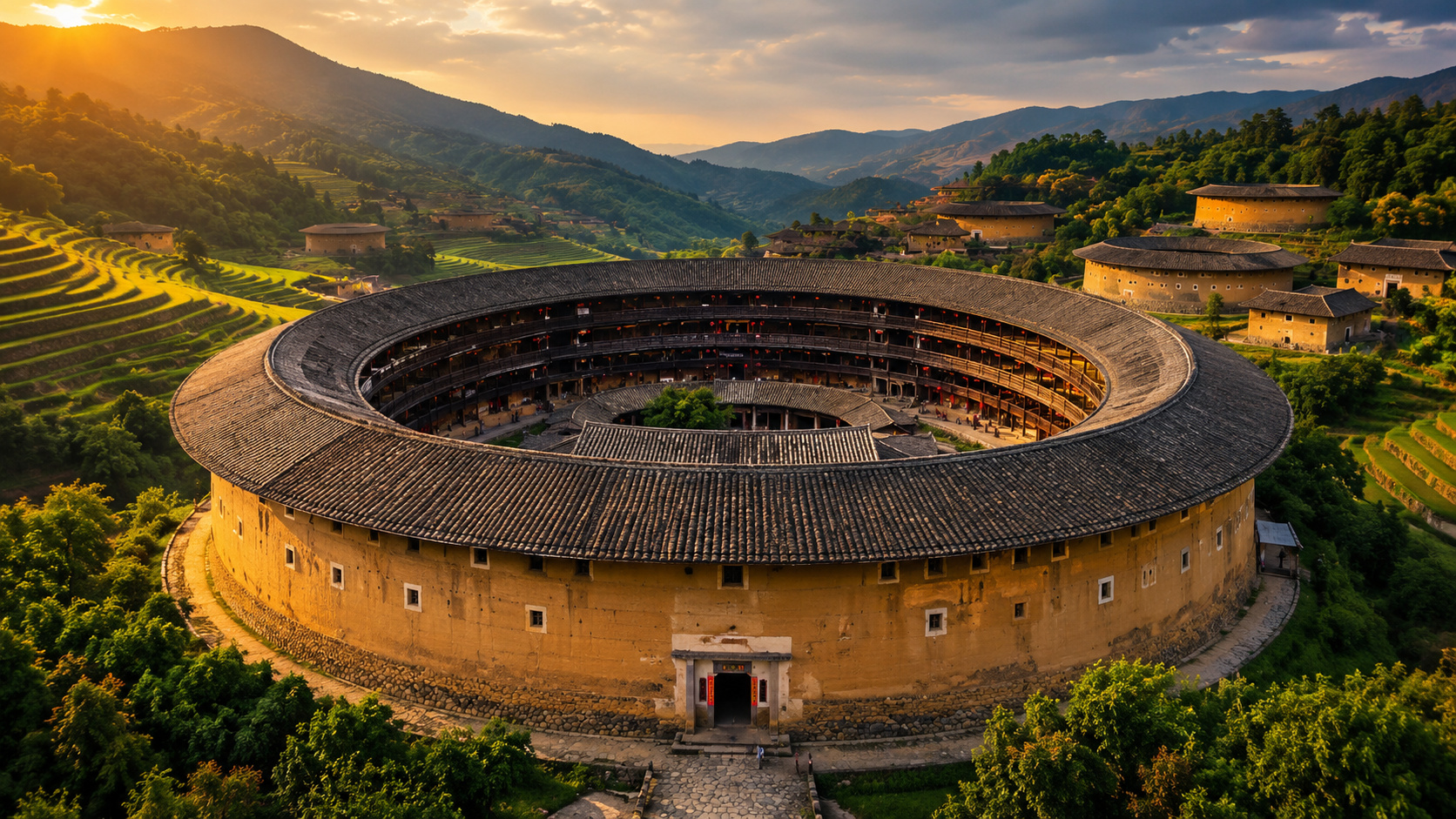
Long before sustainable construction became a trend, China built earthen fortresses with multiple floors, a central courtyard, and the capacity to house up to 800 people living in a community.

-
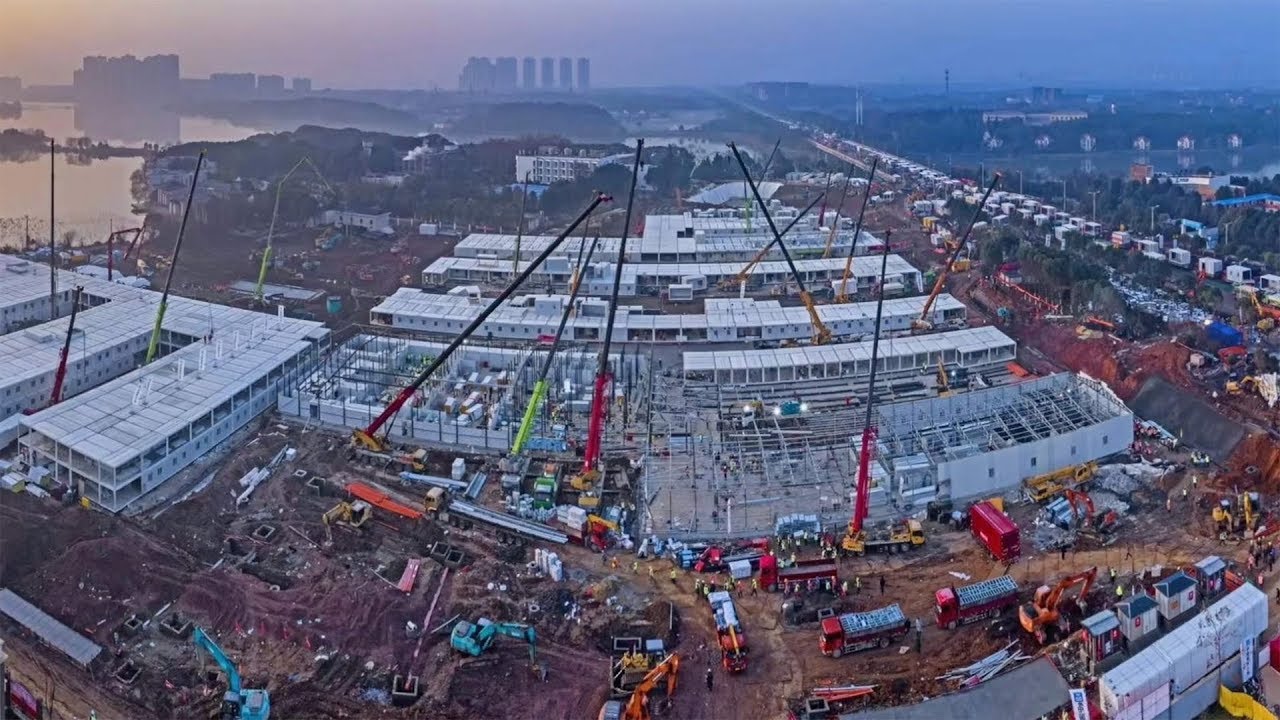
While in the rest of the world building a hospital takes years from design to inauguration, China erected the Huoshenshan Hospital from scratch in just 10 days, with 1,000 beds, foundation, structure, electrical installations, plumbing, and oxygen system ready to receive patients, mobilizing 7,000 workers.

-
Without mortar, grout, or traditional construction: the ClickBrick system assembles brick facades with ceramic pieces held by metal clips, eliminating the need for glue, speeding up installation, and even allowing everything to be dismantled later without turning the construction into expensive permanent debris.


And it is being built not on a plain, but in a gorge at 3,244 meters of altitude, high up on the Dadu River, in the Aba Tibetan and Qiang Autonomous Prefecture.
On May 1, 2025, PowerChina began filling the reservoir — marking the start of the final phase of a project that took over a decade.

The numbers that impress by scale
The dimensions of Shuangjiangkou are difficult to imagine without comparisons:
- Height: 315 meters — surpasses the record-holder Jinping-I (305 m) by 10 meters
- Length at the top (crest): 650 meters — more than 6 football fields side by side
- Width at the base: more than 300 meters — an entire neighborhood would fit in the foundation
- Width at the top: just 16 meters — as narrow as a two-way street
- Installed capacity: 2,000 MW (2 GW)
- Annual generation: 8,341 million kWh
- Reservoir: 110 million m³ of water
- Current water level: 2,344 meters above sea level — 80 meters above the original riverbed
To get an idea of the volume, the reservoir stores almost 8 times the volume of Hangzhou’s West Lake, one of China’s most famous.
How a 315-meter hydroelectric power plant works
The water accumulated in the reservoir creates enormous pressure due to the height of the water column.
When the gates open, this water flows down through penstocks to the turbines located at the base of the dam.
The force of the falling water spins the turbines, which drive electric generators.
The greater the height of the fall, the more energy each liter of water generates.
With a 315-meter drop, Shuangjiangkou has one of the largest falls in the world.
This allows it to generate 2 GW with a relatively modest volume of water — it is more efficient per liter of water than lower dams like Itaipu, which compensates with a much larger volume.
Saving 3 million tons of coal per year
When fully operational, the plant will save 2.96 million tons of coal per year.
In addition, it will avoid the emission of 7.18 million tons of CO₂ annually.
For comparison, this is equivalent to taking about 1.5 million cars off the roads for an entire year.
The energy generated will be enough to supply over 3 million homes in southwestern China.
Therefore, Shuangjiangkou is not just an engineering feat — it is a central piece in China’s energy transition, replacing coal-fired power plants with clean hydroelectric energy.

Building at 3,244 meters with earthquakes
The location is an engineer’s nightmare.
The zone has high seismicity — earthquakes are frequent in the Sichuan region.
In 2008, the Wenchuan earthquake, just a few kilometers away, killed over 69,000 people and damaged hundreds of dams.
The soils are fractured and unstable.
Climatic conditions are extreme, with temperatures that can drop well below zero in the Tibetan plateau’s winter.
Therefore, safety standards needed to be raised far beyond the usual.
Each concrete block was designed to withstand not only water pressure but also potential large-magnitude seismic shocks.
From 2008 to 2025 — almost two decades of construction
The timeline shows the project’s complexity:
- 2008: start of preliminary work and geological studies
- 2013: approval by China’s Ministry of Environmental Protection for the superstructure
- 2015: start of main construction with heavy machinery on the Tibetan plateau
- May 1, 2025: start of reservoir filling with 110 million m³
- End of 2025: forecast for start of generation with the first turbine
It’s almost 17 years from the first study to power generation.
However, the scale and geological complexity justify the timeframe — few projects in the world face such extreme challenges simultaneously.
Half of the world’s large dams are Chinese
China has built over 22,000 dams above 15 meters since the 1950s.
This represents half of all large dams on the planet.
Shuangjiangkou is the latest and tallest on this impressive list.
The previous record holder, Jinping-I, is also in Sichuan, at 305 meters.
Therefore, China not only holds the world record — it competes with itself to surpass it with each new project.
To compare with Brazil
Brazil’s largest dam, Itaipu, is 196 meters high — 119 meters shorter than Shuangjiangkou.
In terms of capacity, Itaipu generates 14 GW against the Chinese dam’s 2 GW — seven times more powerful.
However, Itaipu was built on a plain on the banks of the Paraná River, under much more favorable geographical conditions.
Erecting 315 meters of concrete in a gorge at 3,244 meters of altitude, in a seismic zone, is an unparalleled engineering challenge.
While Itaipu compensates with water volume, Shuangjiangkou compensates with fall height — each liter generates more energy by falling from a greater height.

It’s not just energy — flood control
In addition to generating electricity, Shuangjiangkou also serves for flood control on the Dadu River.
The region suffers from seasonal floods that cause severe damage to riverside communities.
The 110 million m³ reservoir can absorb flow peaks, releasing water in a controlled manner throughout the year.
Thus, the dam protects lives and property while generating clean energy — a dual function that justifies the project’s complexity and cost.
Caveats
There are variations in height data between sources (312 to 315 meters), although most confirm 315 meters.
There is no public data on total project costs, social impacts, or population displacements.
Construction in a seismic zone requires permanent monitoring, and future events are a risk that cannot be completely eliminated.
Mega-dams face global criticism for environmental impacts — alteration of ecosystems, flooding of areas, and changes in river regimes.
Still, filling the reservoir of a 315-meter dam at over 3,000 meters of altitude is a demonstration of engineering that few countries would attempt — and which China is completing while the world watches.






-

-

-

-

-

31 people reacted to this.