






 Portuguese
  Spanish


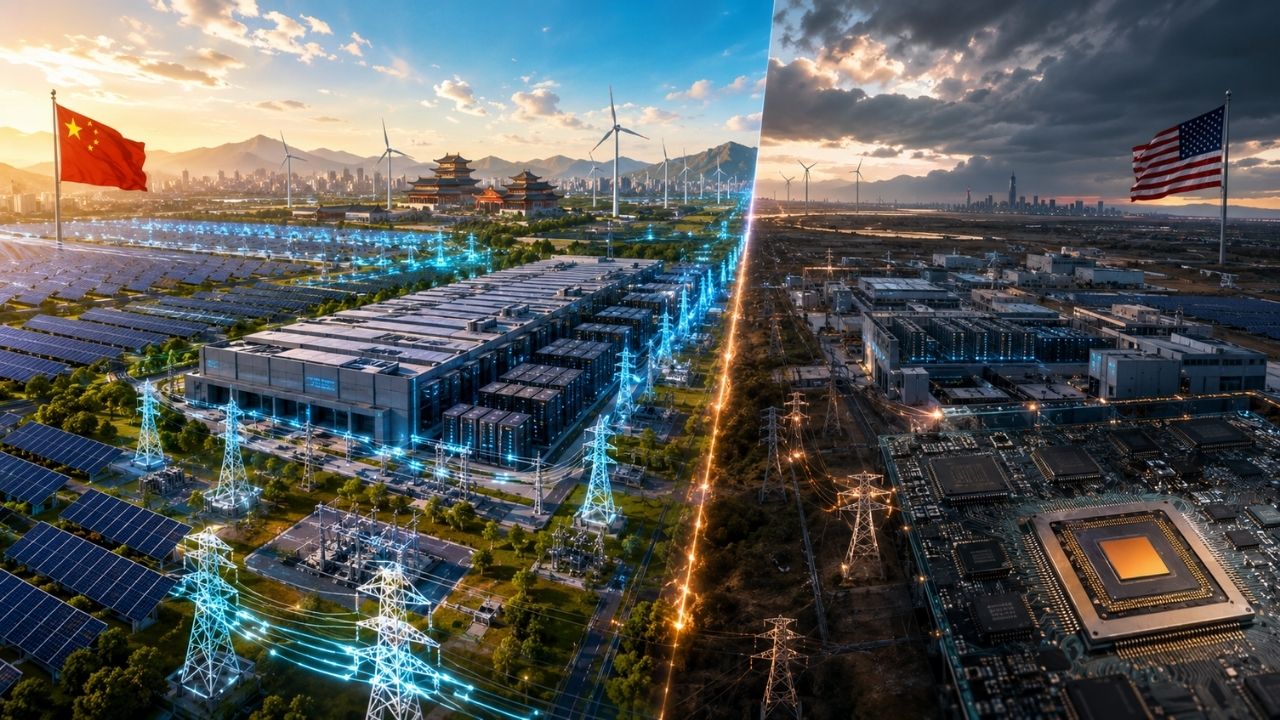

In the race for artificial intelligence, China expands electricity, renewable energy, solar, wind, and transmission network, while the USA focuses on chips and faces growing demand from data centers. The debate shows how electricity generation and energy planning can weigh as much as semiconductors in the global technological dispute between rival powers.
Artificial intelligence has become one of the main fields of dispute between the United States and China, but the fight may not depend solely on advanced chips. While Washington tries to protect its advantage in semiconductors, the electricity to power data centers and the expansion of renewable energy may define part of the race.
The central argument is simple: according to data collected by Bloomberg, AI models require enormous computational capacity, and this capacity needs continuous energy. In this scenario, China advances with electricity generation, solar energy, wind energy, and transmission network on a historic scale, while the USA faces growing demand, pressured prices, and difficulty for utilities to meet new projects.
Chips remain important, but energy has become a central piece of the dispute
The rivalry between the USA and China in artificial intelligence is usually explained by the race for chips. Whoever controls advanced semiconductors has an advantage in training models, operating large systems, and sustaining the next generation of digital applications.
-
China Launches 40,000-Ton Amphibious Carrier with Electromagnetic Catapult for Drones, Enhancing Naval Power in the Pacific.

-
Brazilian School Turns Coffee Grounds into 3D Printer Material for Cost-Effective, Coconut Fiber-Reinforced Roof Tiles

-
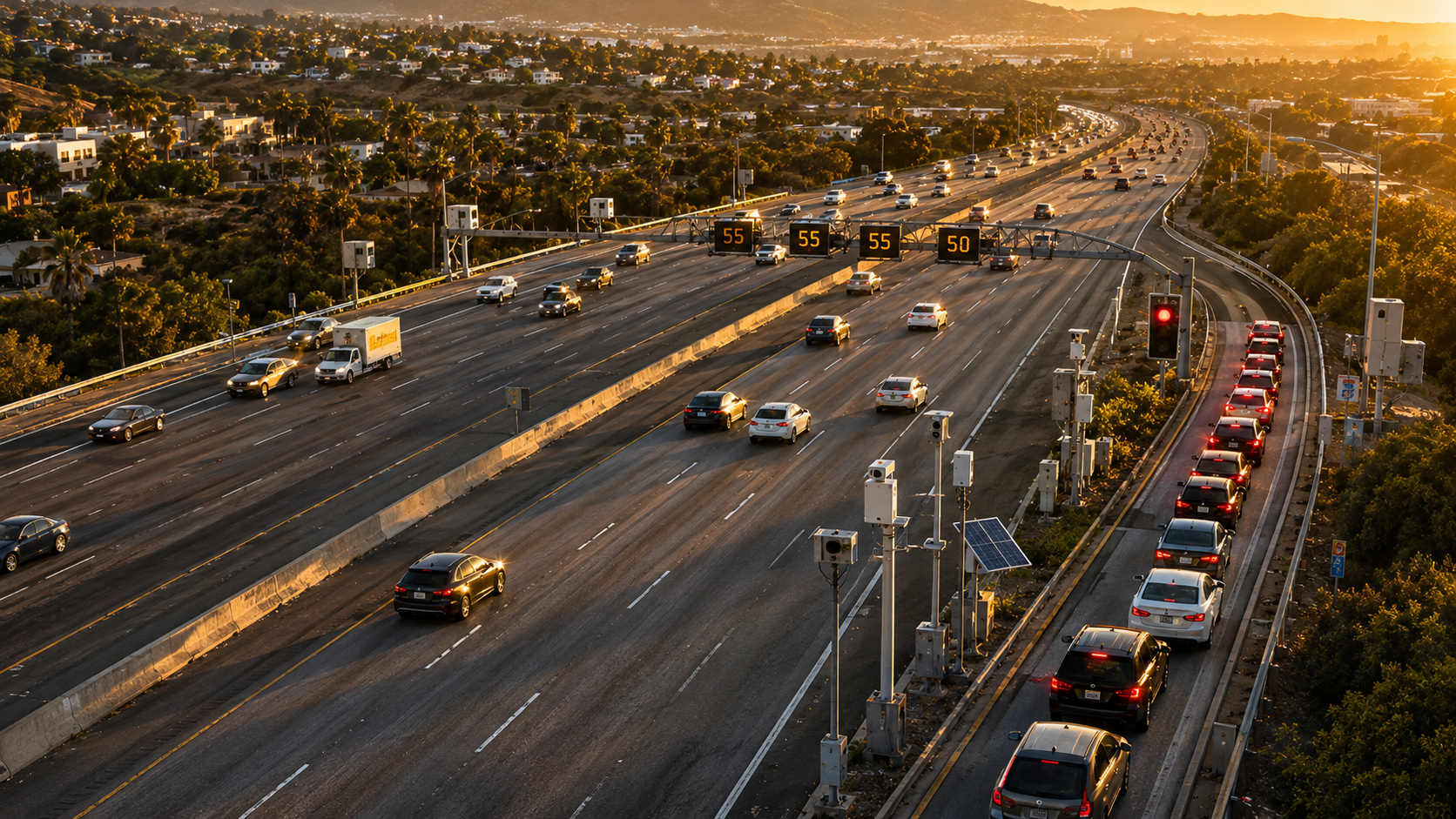
13-Kilometer Smart Highway in the U.S. Manages Traffic Flow to Prevent Congestion

-
Scientists Used Space Particles to Reveal Structures Above a Submerged Tunnel Without Drilling



But the source points to another decisive factor: electricity. Data centers need energy on a gigantic scale to keep servers, cooling, networks, and processing running without interruption. Without sufficient energy, even the best chips can become a bottleneck.
Hank Paulson, former US Treasury Secretary and former president of Goldman Sachs, states that the United States has an important advantage by being energy independent. Even so, he highlights that the country faces a lack of available electricity to power data centers.
The contradiction is precisely this: the USA produces a lot of energy, but demand is growing faster than the electrical supply in some areas. For artificial intelligence, this could mean delays, higher costs, and competition for network connection.
China expands energy while preparing infrastructure for the future
China, according to cited experts, is heavily investing in different energy sources. The source mentions expansion in coal but also highlights massive growth in renewables, especially solar and wind.
Hank Paulson states that China already has more renewables than Europe, the United Kingdom, and the United States combined. The most important point is not just environmental but strategic: those with abundant electricity can support more data centers, more factories, and more digital infrastructure.
Nick Burns, former U.S. ambassador to China, reports having personally observed the expansion of transmission lines across the country. According to him, the level of development of the Chinese electrical grid is impressive, even in provinces more distant from the economic center.
This expansion helps explain why energy has become central to the dispute. The artificial intelligence race does not happen only in laboratories or tech companies; it depends on power plants, substations, cables, electrical grid, and long-term planning.
Data centers could triple consumption by 2035 in the USA
The electrical demand of data centers in the United States is pointed out as one of the major challenges. The source indicates that the consumption of these structures could triple by 2035, putting pressure on a grid that is already operating under tension in some regions.
This growth comes directly from the expansion of artificial intelligence. The more companies train models, operate digital assistants, and offer AI-based services, the greater the need for physical infrastructure.
The cloud seems invisible to the user, but it is extremely concrete for the electrical system. It requires land, servers, cooling, water, energy, and connection to high-capacity networks.
If generation and transmission do not keep pace, the bottleneck may appear even before the technological race reaches the end user. In this case, the question shifts from “who has the best chips?” to “who can power all this?”
Beijing added electrical capacity on a historic scale
The numbers cited in the source help to gauge the difference in pace. Since 2021, China is said to have added more electrical generation capacity, considering all energy technologies, than the United States has built in its entire history.
Additionally, over the next five years, Beijing plans to add more than 3.4 terawatts of generation capacity, almost six times more than the U.S. in the same timeframe cited by the source.
This volume gives China a structural advantage in the race for infrastructure. It’s not just about producing solar panels, turbines, and batteries, but about installing generation, expanding the grid, and preparing the country for growing industrial and digital consumption.
For artificial intelligence, this electrical base can be decisive. Data centers compete not only for chips or engineers; they also compete for available megawatts and fast network connection.
Clean energy has become an economic strategy for China


Elizabeth Economy, a specialist in Chinese politics and senior fellow at the Hoover Institution, states that China’s bet on clean energy should not be seen solely as an environmental concern. For her, there is also a clear economic calculation.
The source points out that the global clean energy market could reach $7 trillion by 2035, and China wants to lead this space. The country is said to have invested about $1 trillion in clean energy last year, according to the report presented.
As a result, Chinese exports of electric vehicles are said to have grown 80% in 2025, while battery exports rose 40% and solar panel exports advanced 20%.
Clean energy, in this case, is green in two senses: environmental and financial. China sees renewables, batteries, and the electrical grid as a market, an industrial tool, and a base to support strategic sectors, including artificial intelligence.
U.S. focuses on chips, but may have taken their eyes off electricity
The source suggests that the U.S. may have focused too much attention on protecting its advantage in chips, leaving electrical infrastructure in the background. This perspective appears in statements from experts who see electricity as a potential brake on the expansion of data centers.
The debate also involves energy policy. According to the source, the American administration is reportedly reducing support for the clean and renewable energy sector, while China advances in global dominance of solar, battery, and wind technologies.
The risk for the U.S. is competing in AI with an electrical grid less prepared for the explosion in demand. Even if the country maintains leadership in chips, software, and models, large-scale operation requires cheap, stable, and available energy.
Artificial intelligence can, therefore, reveal a less visible fragility: it is not enough to win the semiconductor race if the electrical infrastructure does not keep up with the size of technological ambition.
Renewables are also an industrial dispute, not just environmental
The discussion about solar, wind energy, and batteries often appears as a climate debate. But, in the dispute between the USA and China, these technologies also function as industrial instruments.
The source states that China accounts for about 80% of global production of solar and battery technology and more than 70% in wind energy. These percentages indicate dominance not only in domestic installation but also in the production chain.
This means that when the world builds solar parks, batteries, or turbines, a significant part of this chain may go through Chinese manufacturers. The energy that powers artificial intelligence also depends on factories, minerals, components, and global logistics.
For the USA, regaining ground would require investment, a secure market, incentives, and a clearer industrial strategy. The source compares this need to the Chinese “playbook,” which integrates innovation, manufacturing, deployment, and export.
Long term may weigh more than quick reaction
Nick Burns argues that the USA needs to think in terms of 2030 and 2040 horizons, not just immediate disputes. This observation is important because electrical infrastructure does not emerge overnight.
Power plants, transmission lines, renewable parks, and data centers require planning, licensing, investment, and coordination. Whoever starts earlier can reap advantages years later, especially in energy-intensive sectors.
China has been incorporating renewables into successive plans for decades, according to the analysis presented. The current expansion would not have arisen solely because of AI, but it may end up directly benefiting the artificial intelligence race.
This is the irony of the scenario: an energy policy initiated for industrial, commercial, and strategic reasons may become a decisive advantage precisely in a technological dispute that has gained strength more recently.
AI security may still require cooperation between rivals
Despite the competition, the source also points to an area where the USA and China might need to talk: security in artificial intelligence. The accelerated expansion of AI increases the need for rules, accident prevention, and minimal coordination among major powers.
Hank Paulson argues that countries need to find ways to compete and work together at the same time. According to him, besides the trade deficit, there is a trust deficit that makes the relationship more difficult.
The AI race involves economic rivalry, national security, energy, and technological risk. Without some degree of cooperation, progress could make the world more unstable and less prosperous.
At the same time, the US wants to maintain leadership before entering deeper negotiations. This reinforces the tension: competing to not fall behind, but cooperating to prevent the technology itself from becoming dangerous.
The AI race can also be won at the outlet
The dispute between the US and China in artificial intelligence seems, at first glance, a war over chips, models, and talent. But the source shows that the physical base of technology can be as important as the software.
Data centers need electricity. The grid needs to support increasing consumption. Generation needs to keep up with demand. And countries that plan energy on a large scale may gain a silent advantage in the digital race.
China advances with power generation, renewables, transmission lines, and industrial dominance in clean technologies. The US remains strong in chips and AI but faces pressure from electrical demand, prices, and grid capacity.
In the end, the direct question remains: will the next phase of artificial intelligence be decided only by those who manufacture the best chips, or also by those who can produce enough energy to keep all these data centers running? Share your opinion.


