Portuguese
  Spanish


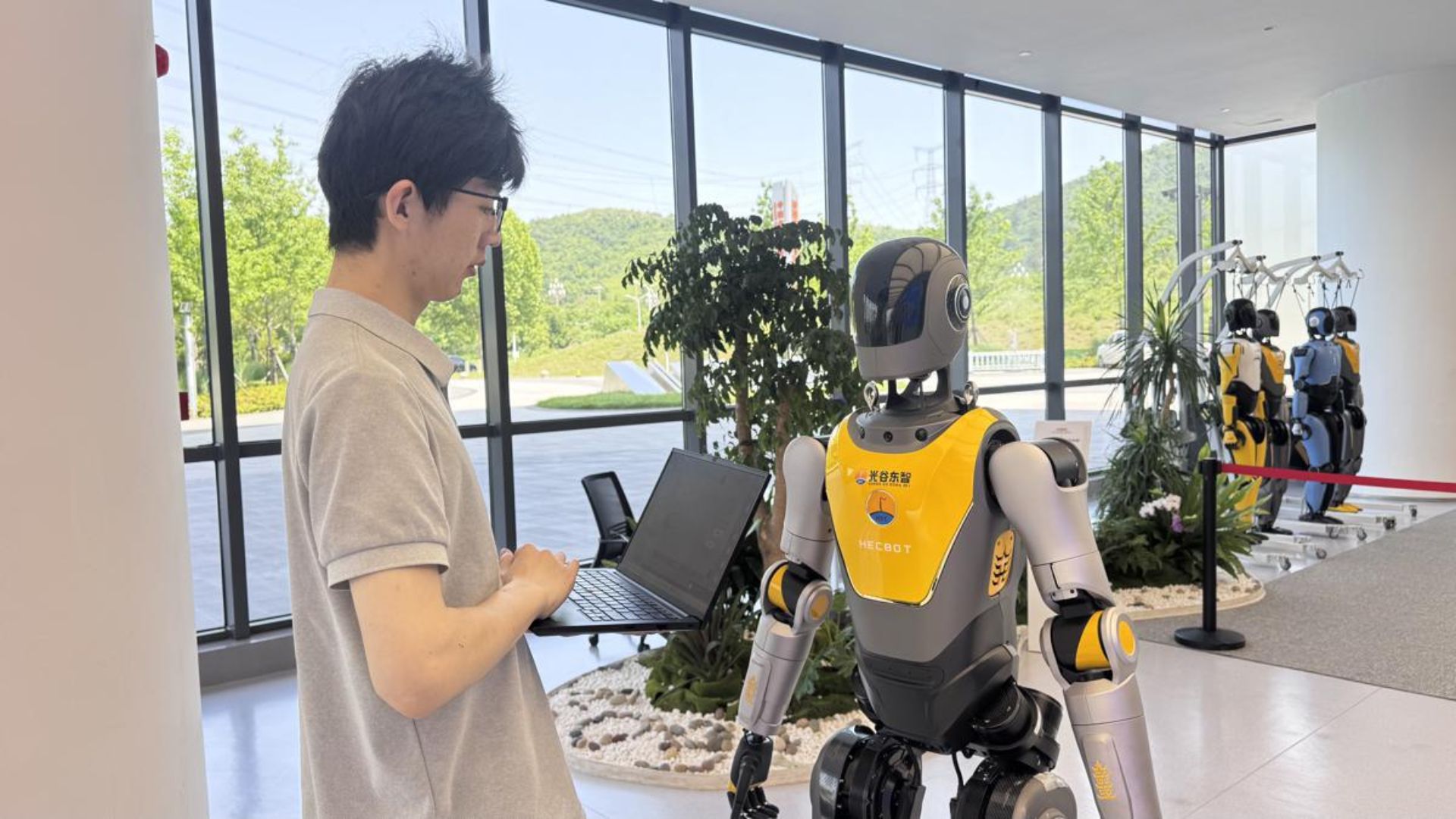


The Chinese province of Hubei has become the first region in China to officially adopt digital identity documents for humanoid robots. According to TV Brics, each machine receives a unique identification code with data such as manufacturer, technical specifications, intelligence level, and serial number. The system works similarly to a human document and plans to expand registration to other categories of robots and integrate the platform with smart manufacturing.
China has taken a step that puts science fiction into perspective: it has begun registering humanoid robots with digital identity documents, as if they were citizens. The province of Hubei, in the center of the country, is the first to implement the system, developed by the local Humanoid Robot Innovation Center. Each robot receives a unique identification code that accompanies it throughout its entire life cycle, from the moment it leaves the factory to eventual deactivation. The registration includes manufacturer, technical specifications, intelligence level, production history, and serial number, according to information released by the Hubei Provincial Department of Science and Technology and reported by the Xinhua agency.
The measure is not symbolic. Digital identity documents for humanoid robots have a direct practical function: to ensure complete traceability, increase operational safety, and create a standardized database that allows tracking the performance of each machine in different environments and platforms. The mechanism works similarly to a human document, but instead of name and date of birth, the registration contains data such as processing power, installed sensors, type of actuators, and maintenance history. It is the first time a government formally treats its humanoid robots as registrable entities.
How the digital identity of humanoid robots works

The system created in Hubei assigns each robot a unique identification code that aggregates all relevant information about the machine. When a technician or operator needs to check the status of a robot, they simply access the code to consult the manufacturer, model, production date, modifications made, and operation records. This eliminates the need for repeated inspections and allows different platforms to recognize the same robot without requiring new certification.
-
Farmer in Ireland Discovers Intact Bronze Age Tomb While Moving Stone on His Land

-
AI Deciphers 1.4 Meters of Text from a 2,000-Year-Old Scroll Carbonized by Mount Vesuvius Without Unrolling It
-
Ferrari, BMW, Tesla, and Chinese Automakers Shift from Copper to Aluminum Wiring to Reduce Weight and Costs in Electric Vehicles
-
Brazilian Researcher Unveils Innovative Intraocular Lens for Cataract Treatment with High-Precision Optics, Enhancing Vision at Multiple Distances and Reducing Unwanted Visual Effects




Traceability also has implications for safety. If a robot fails during an operation, the system allows immediate access to the complete maintenance history and identification of whether the problem lies in the hardware, software, or any alteration made after manufacturing. For humanoid robots already operating in public environments in China, such as traffic agents in cities like Wuhu, Hangzhou, and Shanghai, this type of control is considered essential.
Why China is Registering Humanoid Robots Now
The decision in Hubei did not arise in a vacuum. In March 2026, China launched its first national standardization system for humanoid robots, establishing technical criteria for manufacturing, operation, and safety. The digital registration is the practical extension of this effort: without identity, there is no way to consistently apply standards in an industry growing at an impressive speed.
China already has massive training centers for humanoid robots, such as the Pudong base in Shanghai, which currently operates 100 machines with a goal to reach a thousand by 2027. Companies like Unitree, Linx Dynamics, and DroidUP are producing increasingly sophisticated models, some with heated skin simulating human body temperature and others with 18,000 tactile sensors. The rapid growth of the industry has made it urgent to have an identification system that prevents machines from operating without traceability or proper certification.
The Expansion to Other Categories of Robots
Hubei’s plan is not limited to humanoid robots. The next stage of the program foresees the expansion of digital identities to other categories of autonomous machines, including industrial robots, service robots, and automated logistics equipment. Integration with smart manufacturing ecosystems and the industrial internet is also in the planning, which would allow identification data to be shared among factories, operators, and regulators in real-time.
Experts involved in the project assess that the initiative could serve as a basis for a national data management system related to robotics. If Hubei’s model is adopted by other provinces, China will have the world’s first integrated network for registering humanoid robots, capable of tracking each machine from manufacturing to disposal. The expectation is that the platform will make the collection, certification, sharing, and application of data more efficient in sectors ranging from the automotive industry to healthcare.
What the registration of humanoid robots means for the world
China’s decision to treat humanoid robots as registrable entities raises questions that go beyond technology. If each machine has identity, history, and traceability, the next logical step is to define legal responsibilities when something goes wrong. Who is liable for a robot that causes harm: the manufacturer, the operator, or the owner? Digital identity is the first step to answering this question.
No other country has implemented a similar system on a governmental scale. The European Union discusses artificial intelligence regulation, and the United States debates rules for autonomous vehicles, but neither formally registers each robot with an individual identity document. China is setting the precedent, and how the system evolves in the coming years may define the model that other countries will adopt when their own humanoid robots begin to circulate in public spaces.
Do you think humanoid robots should have identity documents like humans? What impresses you the most: the digital registration, the expansion to other machines, or the fact that no other country has done this before? Tell us in the comments.