





 Portuguese
  English
  Spanish
  4 min of reading
  0 comments


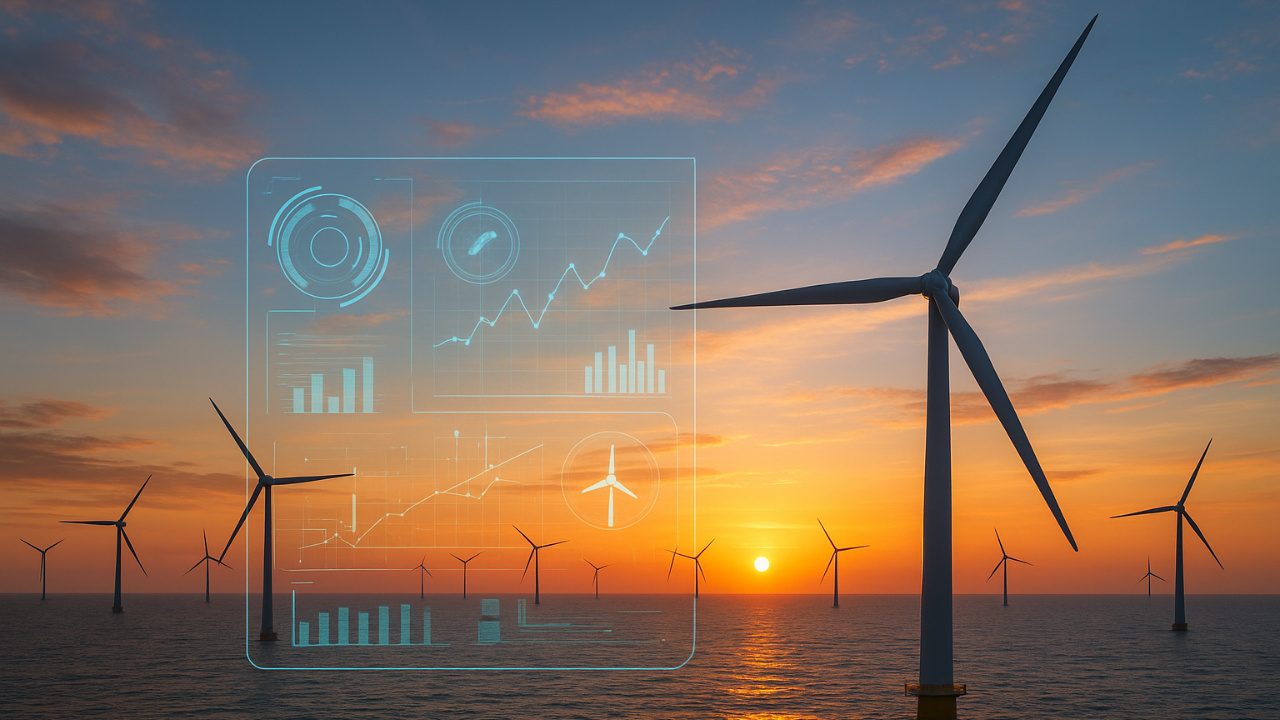
China Maintains Global Lead In Wind Energy For 15th Consecutive Year, With Technological Advancements, International Expansion And Use Of Artificial Intelligence To Optimize Turbines. The Country Aims For 5 Billion Kilowatts Of Installed Capacity By 2060.
China remains at the top of the global wind energy ranking, holding the title of global leader for the 15th consecutive year, according to the China Electric Power Enterprise Federation.
The country adds more than 100 gigawatts of new capacity annually, consolidating an unprecedented growth pace in the renewable energy sector.
By 2025, there were 57.84 million kilowatts connected to the national grid, raising total installed capacity to 580 million kilowatts. This volume represents 15.7% of China’s electrical capacity and shows that wind energy is already responsible for 10.1% of the total electricity consumption of major companies.
This performance puts China ahead of all other nations in installed capacity, technological investment, and clean energy integration into its electrical matrix.
-
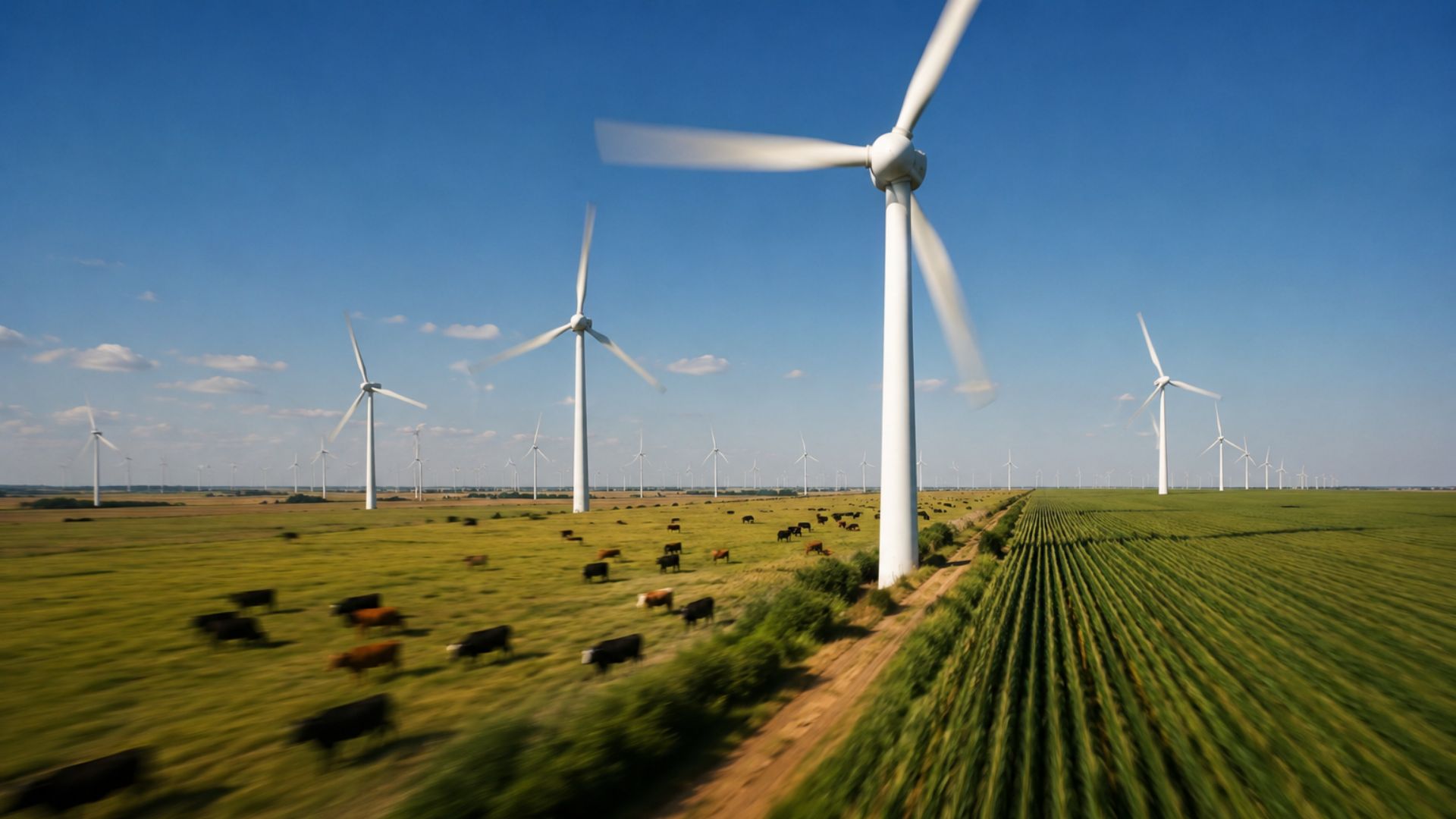
Taller than the Statue of Liberty, thousands of wind turbines are being planted in the middle of U.S. fields, creating two-story farms where corn and soybeans grow below while the wind turns into electricity above.

-
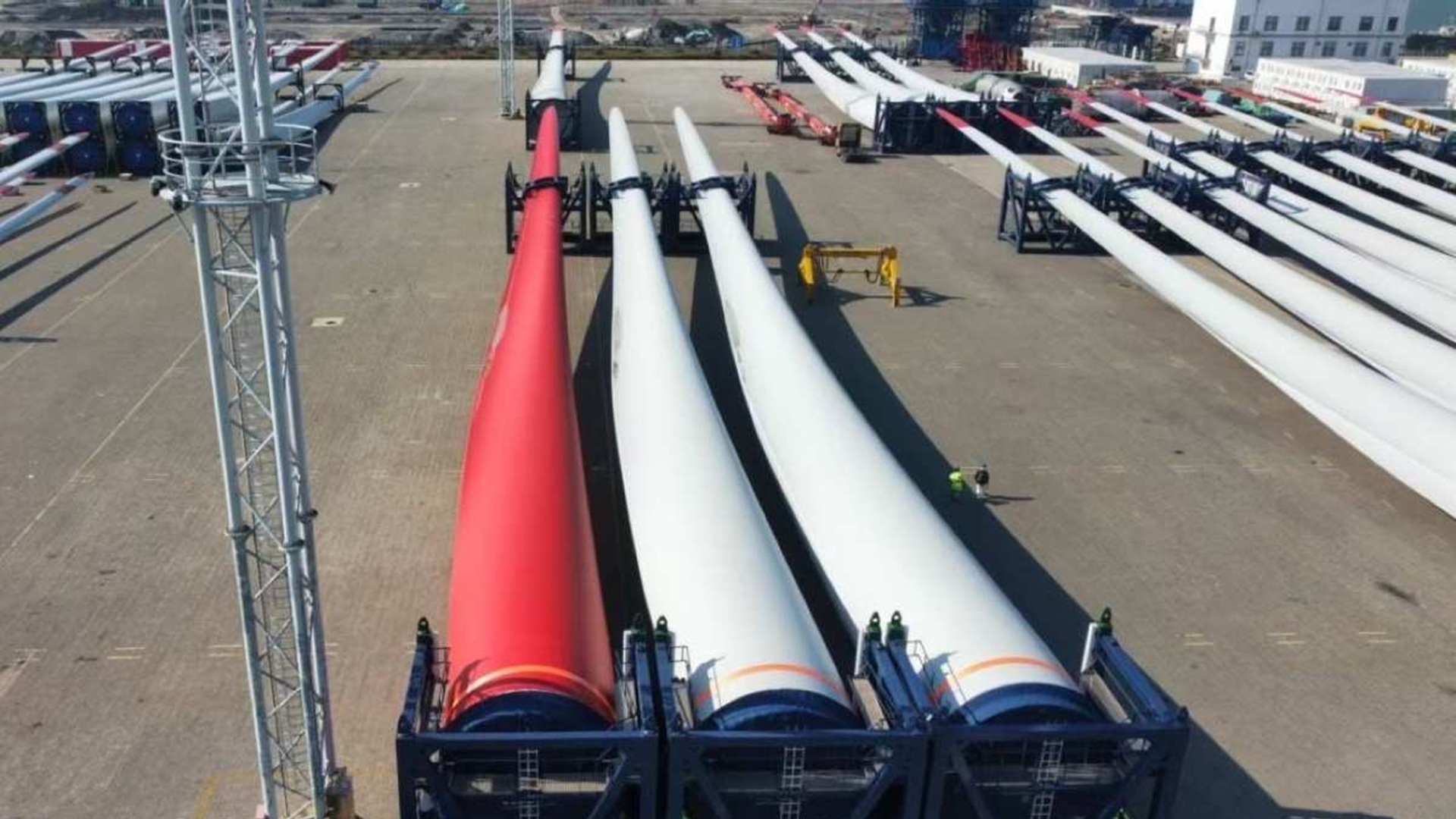
Dongfang breaks world record and manufactures 26 MW wind turbine in China with 137-meter blades that spin so slowly they appear stationary on the horizon.

-
Dutch wind farms attempt to innovate with red blade on turbines
-
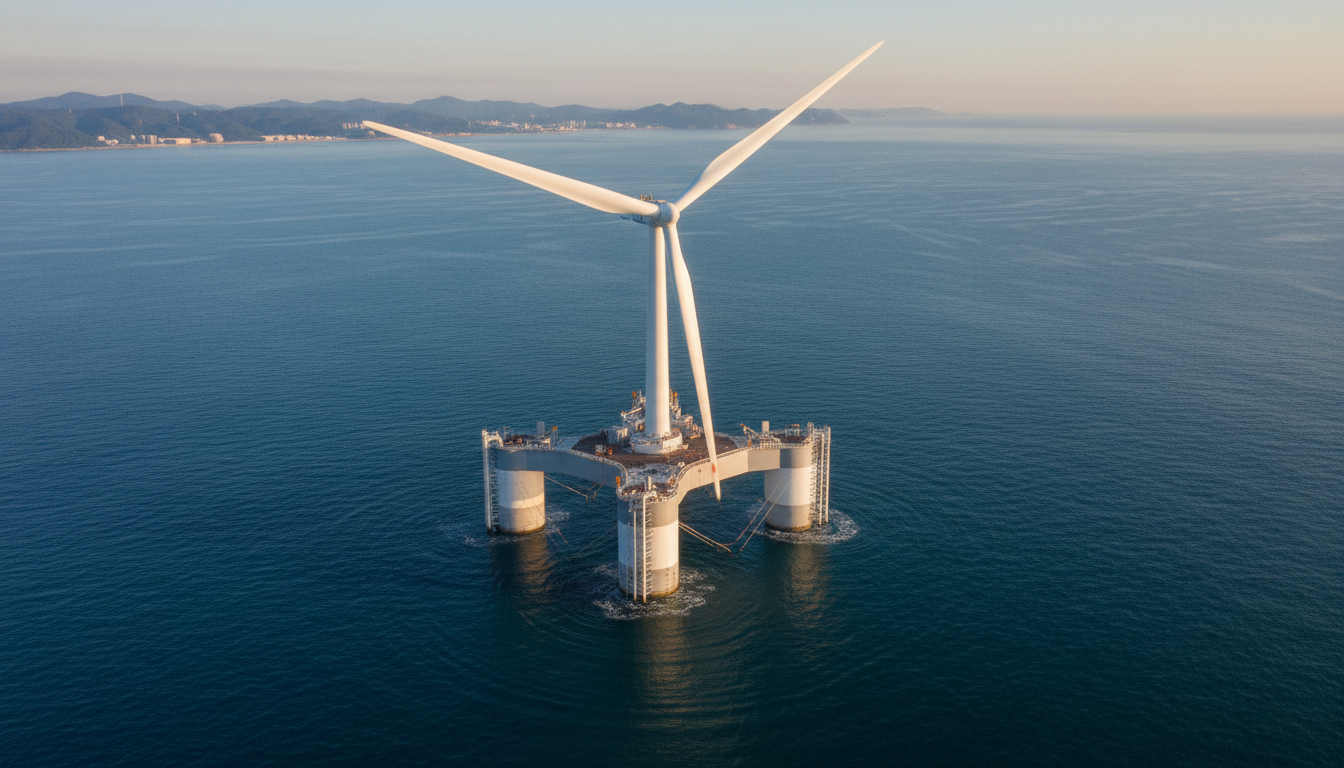
China installs the world’s largest floating wind turbine offshore with a 252-meter rotor and a swept area equivalent to 7 football fields.

Ambitious Goals Reinforce China’s Leadership In Wind And Solar Energy
According to Qin Haiyan, Secretary-General of the Wind Energy Professional Committee of the Chinese Renewable Energy Society, the forecast is that by 2035, the share of non-fossil energy will exceed 30% of the country’s energy matrix.
He estimates that the combined capacity of wind and solar energy will be six times greater than that recorded in 2020, exceeding 3.6 billion kilowatts.
The expert also highlighted that China’s 15th Five-Year Plan (2026–2030) aims to add at least 120 million kilowatts per year, with a goal of reaching 1.3 billion kilowatts by 2030 and 5 billion by 2060, consolidating large-scale energy transition.
Chinese Wind Potential Covers All Regions And Grows At Sea
China holds one of the largest wind potentials on the planet, particularly in the Northeast, North, and Northwest regions, known as Sanbei. In these areas, the technical and economic potential of land-based wind energy exceeds 7.5 billion kilowatts, ensuring low-cost electricity and helping to balance consumption across regions.
Additionally, in the Central, East, and South zones, the potential is 2.5 billion kilowatts, with ample capacity for new projects. On the coastal front, up to 300 kilometers from the shore, the offshore wind energy potential exceeds 2.7 billion kilowatts, reinforcing the advancement of commercial projects and expansion of offshore wind energy.
These numbers show that wind energy is not only a sustainable option but also a strategic economic force for the country.
Exports And International Expansion Strengthen The Chinese Wind Industry
China’s dominance in wind energy is also reflected in foreign trade. Chinese turbine manufacturers have expanded their presence in the global market and already export equipment to 57 countries across six continents.
Currently, seven companies in the sector have factories abroad or plans for installation, demonstrating the country’s industrial and technological strength.
The international expansion complements long-term goals, which foresee a self-sufficient and competitive production chain capable of supplying both the domestic and global markets.
Artificial Intelligence Revolutionizes Wind Turbines And Optimizes Production
Technological innovation is another pillar of China’s advancement. By 2025, companies in the sector launched smart wind turbines with systems based on artificial intelligence (AI).
These turbines automatically adjust their operation according to electricity prices, generating more power when prices are high and reducing production when values decrease. Smart management extends the lifespan of turbines by up to five years and increases economic yield by 2.5%.
According to Lou Yimin, Senior Vice President of Envision Energy, the company developed “the world’s first integrated wind energy and storage unit.”
“It operates like a small independent power plant. With our meteorological and energy models powered by AI, Tianji and Tianshu, it’s possible to increase the revenue of wind farms by more than 20%,” said Yimin.
The use of AI not only optimizes operations but also predicts weather conditions and adjusts performance in real-time, making Chinese wind energy more efficient and competitive.
Free Market And Smart Algorithms Accelerate Efficiency Of The Wind Sector
Since June 1st, a new directive from the National Development and Reform Commission and the National Energy Administration mandated that all energy generated from renewable sources be traded in an open market, with prices set by supply and demand.
According to Lu Yichuan, a member of the Wind Energy Committee of the Chinese Renewable Energy Society, smart algorithms are involved in all stages of negotiations.
“The integration of large data volumes and advanced models increases market efficiency and helps balance energy generation and consumption,” he explained.
This market opening, combined with automation, is likely to transform the Chinese energy model, making it more dynamic and attractive to international investors.
Fuxin: From Mining Town To Wind Energy Industrial Hub
The advancement of wind energy is also transforming local economies, as seen in Fuxin, in Liaoning province. An old coal mining town, the municipality has reinvented itself as an industrial wind center.
Currently, a factory for main turbine components is under construction and is expected to start production in the coming months. Fuxin has an average of 3,000 hours of wind generation per year, leading the provincial ranking in potential and production.
Since the installation of the first turbine in 2001, the city has transitioned from being a power producer to a complete hub of the wind supply chain, hosting national manufacturers involved in everything from turbine and tower assembly to the production of motors and electrical materials.
The 2024 industrial plan of Liaoning province established six hubs for renewable energy equipment, with Fuxin recognized as the only hub for land-based wind equipment in the region.




Be the first to react!