






 Portuguese
  Spanish
  5 min of reading
  0 comments


Successor to Mingyang 18 MW and Siemens Gamesa 15 MW increases individual world record by 73%
Dongfang Electric broke the world record for unit power for wind turbines in 2026. The Dongfang 26 MW has blades of 137 meters and surpasses all global competitors.
The model increases the previous mark by 73%. Previously, the Chinese Mingyang held the record with the 18 MW turbine.
According to New Atlas, the equipment is a technological demonstration. The purpose is to validate engineering on a record scale before mass production.
-
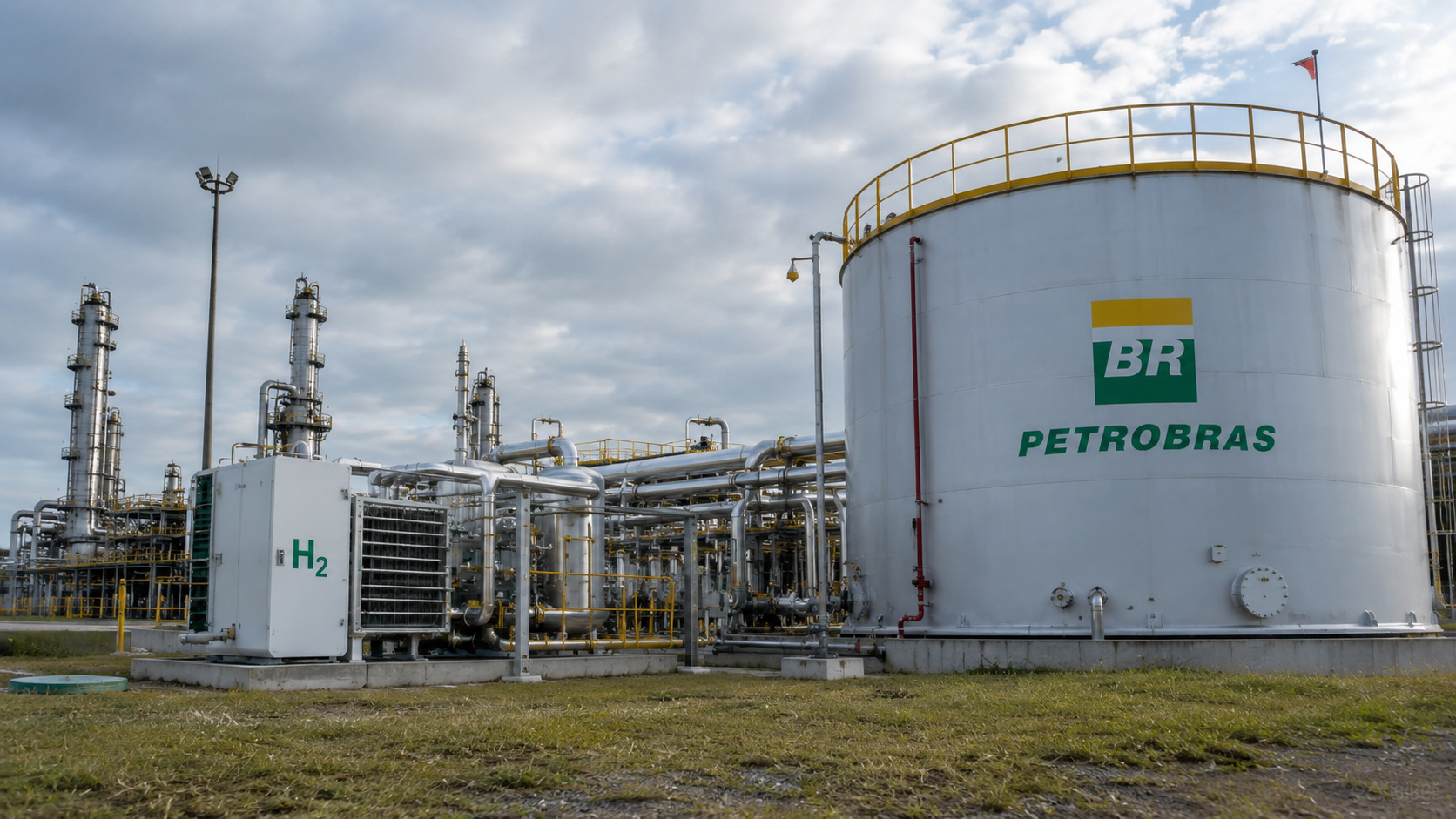
Brazilian scientists are simultaneously advancing two research projects on clean hydrogen and driving solutions that could transform the energy matrix, enhance industrial competitiveness, and accelerate large-scale emission reduction targets.

-
Advancement in renewable energy: A R$ 150 million project launched by Petrobras and Finep aims to create state-of-the-art electrolyzers for green hydrogen, strengthening national research and preparing Brazil to compete in a billion-dollar energy market.
-
Illiterate or semi-literate grandmothers were trained to repair solar systems, open rural workshops, and light up homes that still depended on kerosene.
-
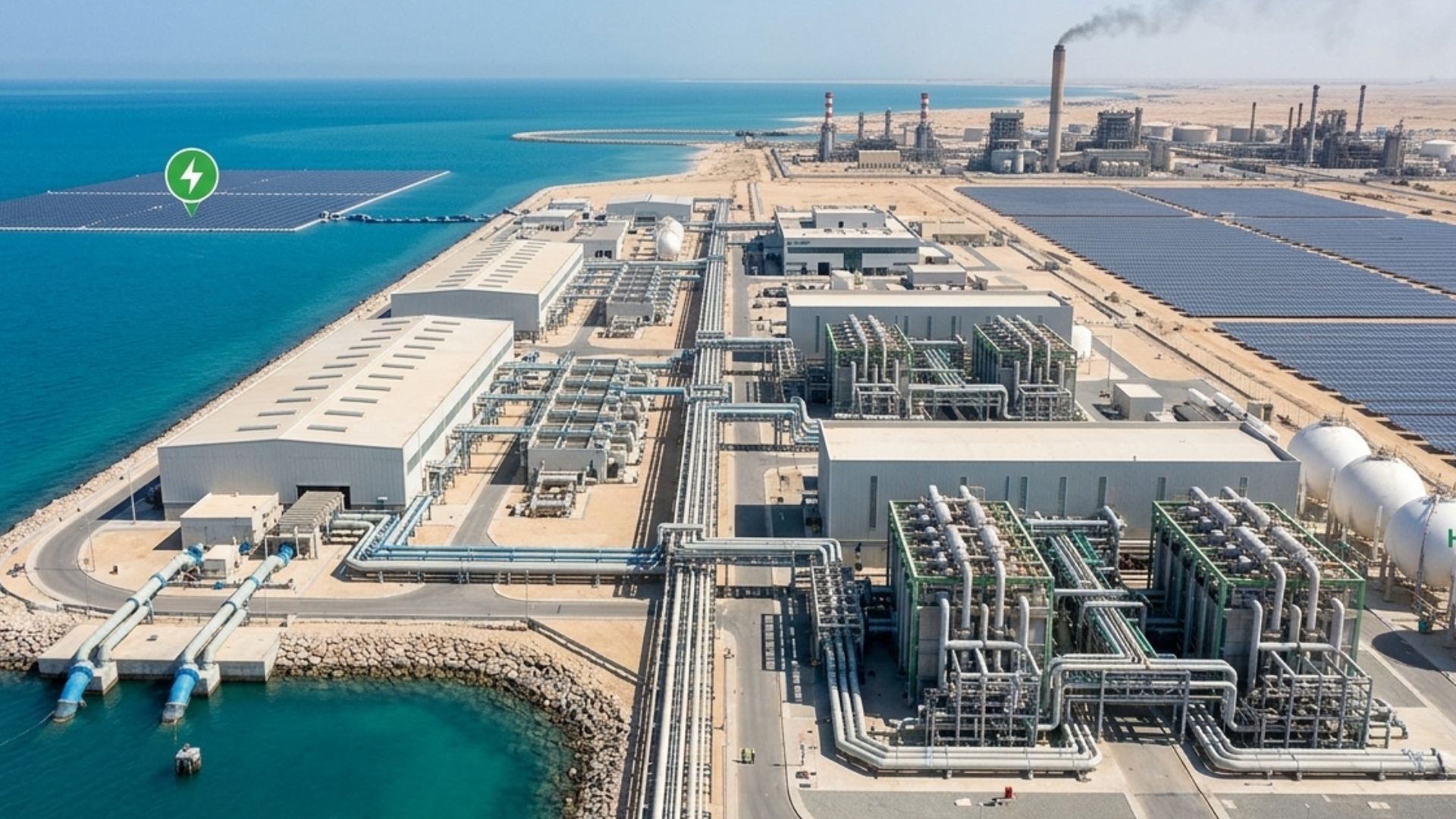
The world has bet on green hydrogen as the fuel of the future, but now faces the side effect: producing 1 kilogram requires about 9 liters of ultrapure water, and the largest projects on the planet are precisely in the driest regions of the Earth, where water is already scarce for people.



As reported by Global Energy Monitor, Dongfang launches China into a position of absolute dominance in the offshore sector.
Indeed, the factory in Fujian ran the first prototype since October 2024. The testing installation was confirmed in September 2025.
Therefore, the Dongfang 26 MW marks the beginning of a new era for the sector. The technical leap was immediate — with no intermediate steps between 18 MW and 26 MW.

How the Dongfang 26 MW works and why it is the largest
The Dongfang 26 MW has 3 blades. Each measures 137 meters in individual length.
According to details from Dongfang Electric, the rotor diameter exceeds 280 meters. The area swept by the blades is greater than 60,000 square meters.
Therefore, a single complete rotation sweeps an area equivalent to 8 football fields. Even spinning slowly, it captures a huge volume of wind.
In parallel, the tower has a useful height above 150 meters. The highest point of the blade exceeds 280 meters above sea level.
According to analysis from Wikipedia (list of most powerful), the Dongfang 26 MW leads by a wide margin.
In fact, the immediate successor would be the Chinese Mingyang of 18 MW. The difference is enormous: 8 MW more unit capacity.
Thus, Western manufacturers have fallen behind. Siemens Gamesa, GE Vernova, and Vestas remain in the 14-15 MW range.

The evolution of wind turbine records up to the Dongfang 26 MW
The rise of the Dongfang 26 MW happened at a historic pace. In 2020, the record was only 10 MW (Vestas V164).
In 2021, GE Haliade-X reached 14 MW. In 2022, Siemens Gamesa SG 15-236 hit 15 MW.
According to data from Siemens Gamesa, the SG 15-236 is still a reference. But the Chinese leap left the Europeans behind.
In 2024, Mingyang Smart Energy delivered the 18 MW. And the 20 MW from the same Mingyang suffered a blade failure in December 2024.
Therefore, the Dongfang 26 MW becomes a milestone. According to Maritime Executive, the system was hoisted for tests in September 2025.
Thus, China consolidates its position as the absolute leader. 5 of the top 5 largest wind turbines in the world are Chinese.
- Power: 26 MW (new world record)
- Blades: 3 units of 137 meters each
- Rotor diameter: more than 280 meters
- Total height (tip): more than 280 meters
- Swept area: >60,000 m² (8 football fields)
- Prototype launch: October 2024
- Testing installation: September 2025
- Manufacturer: Dongfang Electric (China)
Where the Dongfang 26 MW will operate
The Dongfang 26 MW is still in the validation phase. According to OffshoreWIND.biz, the first commercial unit will be installed in a Chinese offshore park by 2027.
Therefore, China is preparing plants with more than 1 GW of capacity that will use this turbine as a base. The individual capacity reduces the number of units per GW.
In parallel, the East China Sea has ideal conditions for these machines. Average depths allow for fixed foundation, without the need for a floating platform.
According to CGTN, China reached 2.4 billion kW of renewable capacity in March 2026.
Indeed, a significant part comes from offshore wind. The country plans to triple offshore capacity by 2030.
Thus, the Dongfang 26 MW becomes the centerpiece of China’s strategy. Each gigawatt gained contributes to China’s climate goal.

The impact of the Dongfang 26 MW on the Brazilian sector
Brazil does not yet have commercial offshore wind capacity. But the Dongfang 26 MW reinforces the pressure to enter the sector.
According to analysis from Brazil Energy Insight, Petrobras even removed an offshore project in Espírito Santo from the business plan in December 2025.
Therefore, the Brazilian sector loses competitiveness. China offers more powerful turbines at a lower unit cost per installed MW.
In parallel, the Brazilian offshore wind auction is scheduled for 2027. Operators need to decide between Chinese, European, or American suppliers.
Indeed, the Chinese Mingyang announced interest in entering the European market. According to Wind Power Monthly, the step is strategic.
For more on the current offshore sector, it is worth reading the coverage by Click Petróleo e Gás on global maritime operations.
For another Chinese industrial comparison, check out the coverage by Click Petróleo e Gás on batteries and automotive transition.

Technical risks and operational limits of the Dongfang 26 MW
The scale of the Dongfang 26 MW brings new challenges. As reported by OffshoreWIND.biz, the Mingyang 20 MW prototype suffered a blade failure in December 2024.
Therefore, there is technical concern about reliability. Blades over 130 meters require unprecedented materials and processes.
In parallel, transportation is a critical problem. Each blade requires a specialized vessel and is restricted to a few maritime routes worldwide.
According to Windletter, some reports indicate that prototypes have blades up to 153 meters. The final measure depends on tests in real conditions.
Indeed, operation in offshore parks brings new risks. Typhoons in the China Sea can expose engineering to extreme conditions.
It is worth noting that commercial approval still depends on 12-18 months of testing. The unit cost is also still high for markets without subsidies.
Despite this, the sector is advancing rapidly. By 2030, turbines of 30+ MW should be in mass production in China.







Be the first to react!