






 Portuguese
  Spanish


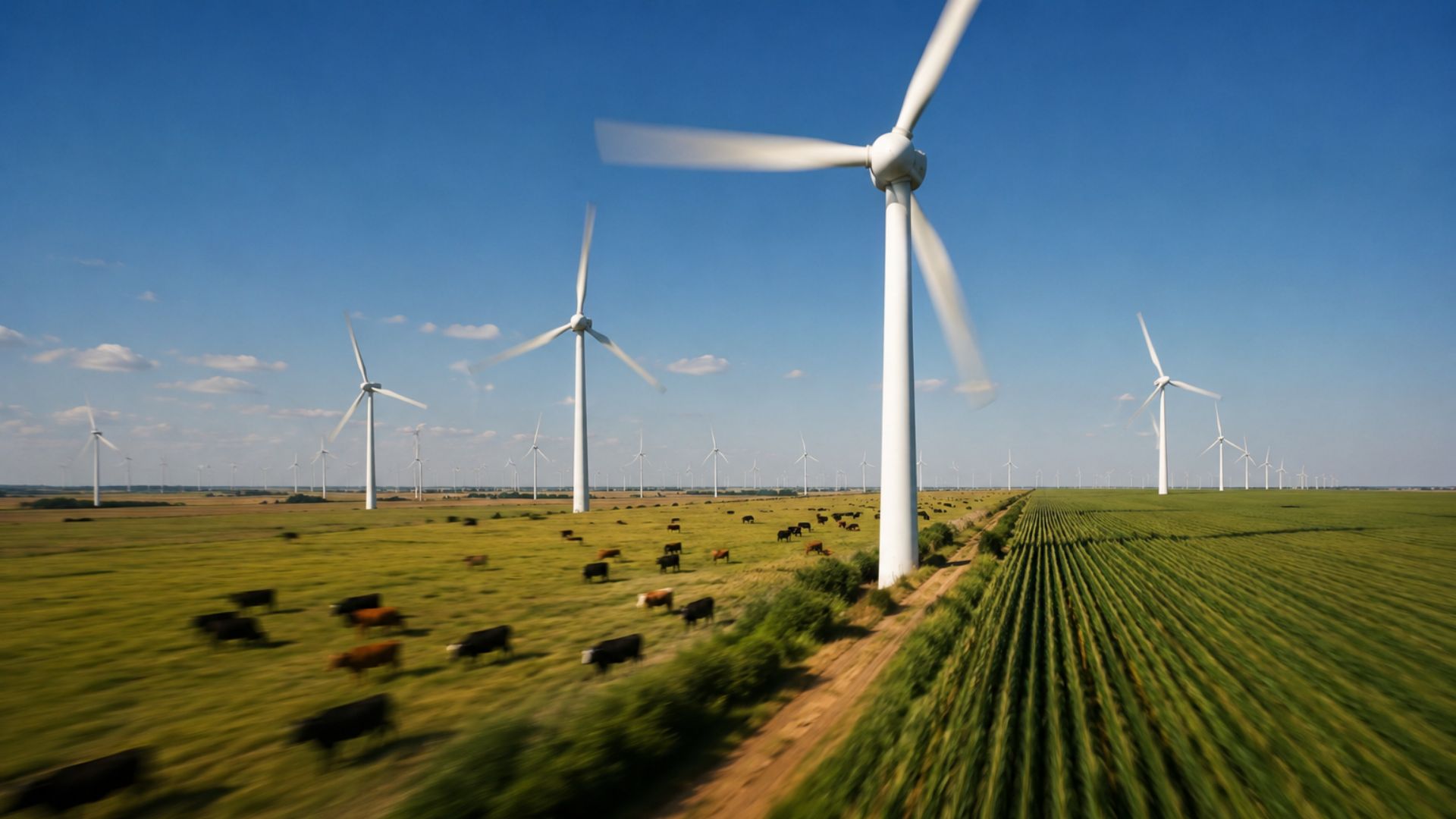


The most surprising data comes from the U.S. Department of Agriculture itself: after installation, less than 1% of these areas stopped producing, and more than 95% of the park’s land remains planted. In the Midwest, 94% of the turbines were planted right in the middle of corn and soybean fields, without displacing the farmer.
Taller than the Statue of Liberty, thousands of wind turbines are being planted in the middle of the United States’ fields, creating what can be called two-story farms: below, corn and soybeans continue to grow; up high, the wind is transformed into electricity. This model, which combines food production and energy generation on the same piece of land, has been spreading across American rural areas, especially in the Great Plains and the Midwest.
The numbers confirm the strength of this movement. According to the United States Department of Agriculture, the USDA, between 2012 and 2020 more than 90% of large commercial wind turbines installed in rural areas of the country were on agricultural lands, whether crops or pastures. In the Midwest, the concentration is even higher: 94% of wind turbines were erected on farmland, right in the middle of corn and soybean fields, without agriculture disappearing beneath them.
What are two-story farms

Wind turbines physically occupy only a small fraction of the area, basically the concrete base, access roads, and maintenance zones. The rest of the field remains available for planting or animal husbandry.
-
Billion-Dollar Winds Propel Wind Energy Growth in Brazil, Boosting Unprecedented Technical Workforce Development

-
Brazil filled the Northeast with wind turbines but now faces the side effect of 705 giant blades reaching the end of their lifespan by 2032 just in Rio Grande do Norte, while the world projects 43 million tons of waste by 2050.
-
Brazil has filled the Northeast with wind turbines, but now it faces the side effect of 705 giant blades reaching the end of their useful life by 2032 just in Rio Grande do Norte, while the world projects 43 million tons of waste by 2050.
-
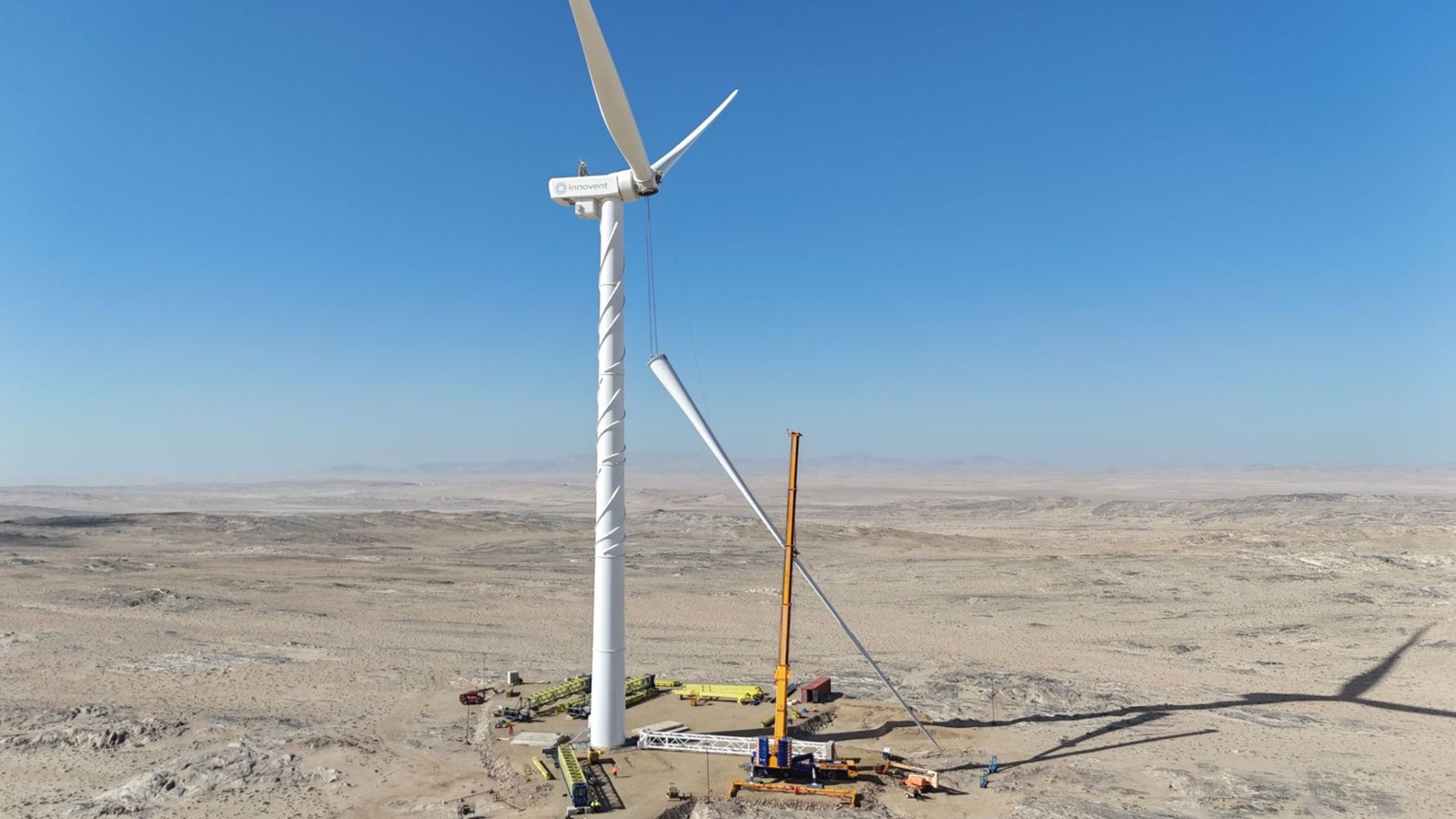
Wind farm in Namibia will have wind turbines assembled without giant cranes and is expected to avoid 200,000 tons of carbon dioxide per year when it becomes operational.


For this reason, the turbines are not installed close to each other like poles, but spaced hundreds of meters apart, both to avoid blocking the wind from each other and to allow free passage for tractors, planters, sprayers, and harvesters. The result is a field that produces two sources of value at the same time: the crops that sprout from the soil and the electricity generated by the wind blowing above, without one activity interfering with the other.
The data that dispels the fear of losing the crops

However, USDA data helps put the debate in perspective. A study by the agency’s economic research service showed that, of the farming areas that received turbines, more than 99% continued to be farmland after installation, meaning less than 1% left agriculture.
Moreover, more than 95% of the area within wind farms remains available for agricultural activities. The area directly affected by turbines and solar panels totaled only about 424,000 acres in 2020, less than 0.05% of the nearly 900 million acres used for agriculture in the United States. In other words, wind turbines occupy a tiny space in the field, which supports the concept of two productive layers coexisting on the same land.
Iowa, the symbol of agricultural wind energy


No place illustrates this model better than Iowa, one of the largest producers of corn and soybeans in the United States. The state has vast plains, few obstacles, and constant wind, exactly the ideal conditions for wind energy. There, the turbines coexist with the crops, and the strip of land between the towers remains wide enough for agricultural machines to operate normally throughout the harvest.
The result is remarkable: in 2024, about 63% of the electricity generated in Iowa came from wind, while the fields below continued producing billions of bushels of grain per year. This shows that wind turbines have not eliminated the state’s agricultural role; on the contrary, they have become part of one of the largest food production machines in the country, adding income without taking land away from farming.
Roscoe, Texas: a giant over the field
Another emblematic example is the Roscoe wind farm in Texas, one of the largest in the world in terms of the number of turbines. Completed in 2009, it comprises 627 wind turbines spread over about 100,000 acres, approximately 40,000 hectares, with an installed capacity of 781.5 megawatts. The project cost over 1 billion dollars and shows how a huge area can maintain its rural vocation while becoming a gigantic power plant.
In West Texas, parks like Roscoe have helped revitalize the economy of remote regions, offering farmers an extra source of income through leasing parts of their land. This type of enterprise requires impressive logistics, with the transportation of blades measuring dozens of meters and components weighing tens to hundreds of tons on rural roads, often with escort vehicles and meticulously planned routes.
Why farmers accept the turbines
The main reason for farmers’ adherence is economic. Agriculture has always depended on unstable factors, such as weather, crop prices, and input costs, so even a good harvest can turn into a loss if the market moves in the wrong direction. In this scenario, wind turbine lease payments serve as a more stable and predictable income, often with contracts of 20 to 30 years, without depending on agricultural production.
This money also benefits rural communities more broadly. In the United States, wind and solar energy projects have contributed billions of dollars in local and state taxes, resources that can fund schools, roads, and public services. Wind energy also creates jobs: the role of wind turbine maintenance technician is among the occupations expected to grow the most in the coming years, according to U.S. government projections.
The controversies behind the turbines
Despite the advantages, the expansion of wind turbines on farmland is not free of controversy, and it would be incomplete not to mention this. The first complaint is the change in the landscape: structures over 100 meters high profoundly alter the rural view, and for some residents, they are not just energy equipment but industrial installations in the middle of the field. There are also complaints about noise, intermittent shadows from the blades, and the movement of trucks and transmission lines.
Another sensitive point is the division within the communities themselves, as the landowner who receives the lease profits, while neighbors may suffer the inconveniences without gaining anything in return. There is also the bottleneck of the electrical grid, with a lot of wind capacity waiting for connection, and the issue of decommissioning: after 25 to 30 years, the turbines need to be upgraded or dismantled, and poorly defined contracts can leave doubts about who pays for land recovery.
What this model can teach Brazil
The American model of two-story farms directly aligns with the Brazilian reality, as Brazil is an agricultural powerhouse and has been strongly expanding wind energy, especially in the Northeast. The possibility of generating extra income by leasing land for turbines, without giving up food production, is an attractive option that already draws Brazilian rural producers, particularly in areas with constant wind.
At the same time, the controversies observed in the United States serve as a warning for Brazil, highlighting the importance of transparent contracts, clear rules about the end of the equipment’s useful life, and fair dialogue with surrounding communities. If well-managed, this type of coexistence between farming and energy generation can become a powerful model for the 21st century, capable of feeding people and fueling the economy at the same time.
The wind turbines rising above the crops in the United States show that producing food and generating clean energy on the same land is not a distant promise, but a reality already in operation. USDA data confirms that the land remains productive beneath the towers, while the wind turns into electricity above. Like any transformation, the model has pros and cons, and its success will depend on balancing the interests of farmers, communities, and the energy sector.
Do you think this model of two-story farms, with wind turbines coexisting with crops, should be expanded in Brazil? Do you believe the economic benefits outweigh the changes in the rural landscape and the inconveniences for neighbors? Leave your comment, share your thoughts on wind energy in the countryside, and share the article with those interested in agribusiness, renewable energy, and the environment.


