






 Portuguese
  Spanish


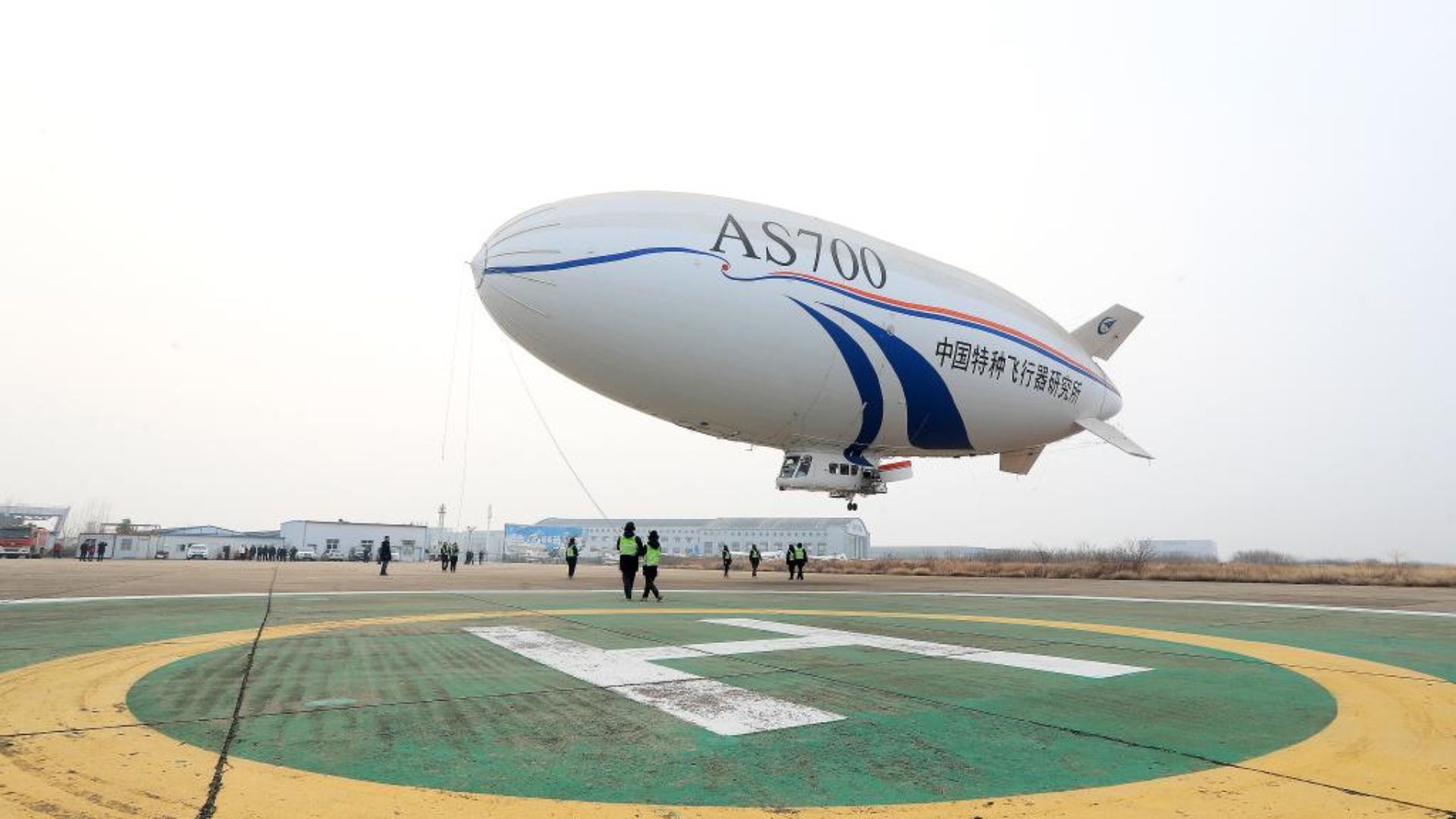


Manned Electric Airship Premieres Flight in China and Advances Within a Civil Program That Has Already Achieved Industrial Certification, Focusing on Silent Operations, Air Tourism, and Low-Altitude Services, Supported by Hundreds of Hours of Testing and Formal Authorization for Series Production of the Original Platform.
In February 2025, China conducted the first test flight of the AS700D, a fully electric and manned variant of the civilian AS700 airship.
According to the Aviation Industry Corporation of China, AVIC, the model was designed to carry up to 10 people and execute vertical takeoffs and landings.
The trial took place in Jingmen, Hubei province, marking the flight debut of an aircraft powered by lithium batteries.
-
A Brazilian street cleaner built a machine to recycle PET bottles in the hinterlands of Paraíba, transforming the trash he swept from the streets into threads, brooms, and equipment sold even outside Brazil, and began earning about R$ 7,500 per month with his own invention.

-
In a city where every piece of land is worth gold, he began buying plots in the 1960s and built a real estate empire with over a thousand properties.

-
An artist sank over 500 life-sized human statues at the bottom of the Caribbean Sea, and what seemed like macabre art turned into a living reef covered with corals that attracts divers from all over the world.

-
A fossil kept for years in a small museum in Montreal concealed 450-million-year-old soft tissue, a discovery that has only happened once before in history.


With this, the platform became associated with a promise of low noise levels and reduced emissions during operation.
At the same time, the advancement of the AS700D fits into a broader program, which includes the conventional AS700 version, equipped with piston engines.
By the end of December 2025, the family received an additional boost when the AS700 was granted a production certificate by the Chinese civil aviation authority, CAAC.
This document authorizes series manufacturing within the standards required for civil aircraft and signals industrial readiness.
Initial Test Confirmed Vertical Takeoff and Landing

As is typical in inaugural trials, the flight of the AS700D had a short profile designed to verify controllability, stability, and responses of the electric propulsion system.
According to the state agency Xinhua, the airship took off vertically, climbed to about 50 meters in altitude, hovered for a moment, and returned to the ground with a vertical landing.
AVIC further reported, according to Xinhua, that the goal was to demonstrate the technical maturity and principles of the electric design, laying the groundwork for future versions.
In the coverage of the trial, test pilot Lin Hong compared the flying sensation to driving an electric car and noted a quieter and more comfortable experience.
Electric Propulsion Distinguishes the AS700D from the Original Version
In the AS700D, the central change lies in the battery pack and electric drive system, which replaces the engine and fuel circuit of the original model.
AVIC stated that the airship uses a electric drive system with lithium batteries, in addition to propellers, thrust vector control, and a dedicated cooling system.
In Chinese communications and reports, it is promised to operate with nearly zero emissions during flight and significantly reduced noise, attributes highlighted as relevant in areas with environmental restrictions.
Among the examples mentioned are natural reserves, ecologically sensitive environments, and operations near large outdoor events.
In data released by state media, the AS700D has a maximum design speed of 80 km/h, a ceiling of up to 3,100 meters, and capacity for up to 10 people, including the pilot.
Industrial Certification Authorizes Series Production of the AS700
While the electric model draws attention for its technology, the step more directly linked to the market came with the combustion AS700.
The production certificate issued by the CAAC indicates that the manufacturer has demonstrated capability to reproduce the model in series with quality control, traceability, and consistent processes.
The issuance ceremony took place in Jingmen, which concentrates industrial activities related to the program.
Before this step, the AS700 had already undergone an earlier phase of the regulatory process, focused on validating design and airworthiness.
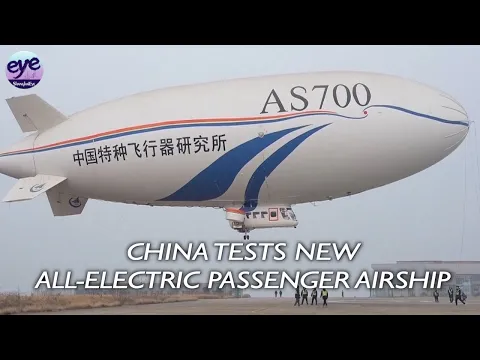

Chinese reports and industry communications state that the airship obtained the type certificate in December 2023, a milestone associated with compliance of the design with technical requirements.
Test Campaign Accumulated Over 600 Flight Hours
To achieve production authorization, the AS700 underwent an extensive testing campaign, focused on reliability and performance under different conditions.
According to Chinese media, prototypes of the model completed 187 test flights, totaling 602 flight hours, numbers presented as a demonstration of the project’s maturity.
This history helps explain why the AS700D gained visibility now, being presented as a derivative of a platform already tested and in the process of industrialization.
By leveraging infrastructure, supply chain, and accumulated experience, the program avoids the image of isolated development and aligns electrification with a more structured regulatory path.
Specifications Target Air Tourism and Observation Missions
Described as a medium-sized civil airship, the AS700 was designed for short and medium routes, prioritizing air time and operational flexibility.
According to data disclosed by AVIC and reproduced by Chinese outlets, the model has a maximum takeoff weight of 4.15 tons, maximum speed of 100 km/h, range of up to 700 km, ceiling of around 3.1 km, and endurance of up to 10 hours.
The cabin accommodates one pilot and nine passengers, a configuration aimed at operations where speed is not the main requirement.
When listing applications, communications and reports cite air tourism as the central use, with scenic tours and low-altitude flights.

There are also mentions of patrolling, monitoring, mineral exploration, maritime surveillance, rescue support, and some cargo transport modalities in specific scenarios.
Initial Deliveries and Orders Indicate Attempt to Create Market
With series production authorized, the program has begun treating deliveries and orders as part of the pathway to consolidate civil operations.
A report noted the delivery of one unit of the AS700 to a state-owned tourism company in Jiangsu province, with expectations of use for aerial tours.
Furthermore, coverage mentioned confirmed orders associated with the project, still without publicly detailing all recipients.
In the case of the electric variant, state media described the AS700D as an option for scenarios where noise, emissions, and takeoff and landing conditions weigh more heavily in operational decisions.
By combining electric propulsion with vertical takeoff and landing capability, the project seeks space in the Chinese discourse of expanding the low-altitude economy.
With the AS700 capable of achieving industrial scale and the AS700D already demonstrating flight in tests, the revival of airships in everyday life now depends on routes, operators, and uses that make sense outside demonstration environments.
What will be the first practical application capable of making an electric airship a common presence in the skies of cities and tourist areas?



Muito interessante! Vai vender muito, o mercado está aberto para turismo, Se os chineses fizesse contrato de aluguel, eu operaria um desses em Porto seguro, tem turistas prá lá. E da retorno financeiro,mas aqui no Brasil como tem muita corrupção, até principalmente nos municípios as prefeituras estados e federação cobrão impostos e não deixa
Ninguém vencer na vida, Só se você tiver parentes na justiça, segurança pública ou participar de algum grupo onde a corrupção reina, é muito difícil.