






 Portuguese
  Spanish


The Most Powerful Radar in the World? Meet LARID, the Incredible Machine That Revealed a Millennia-Old Secret Hidden in the Pyramids of Egypt!
Several months ago, we mentioned that China was developing a new technology that could allow it to “cloak” its fleet of fighter jets. The key material was plasma, which is back in the spotlight this week. Normally, conventional radars struggle to detect objects below the horizon due to the curvature of the Earth. However, China now has a new device that changes everything: a super radar called LARID, which was tested on an island, resulting in a surprising discovery.
Plasma Bubbles in a Pyramid
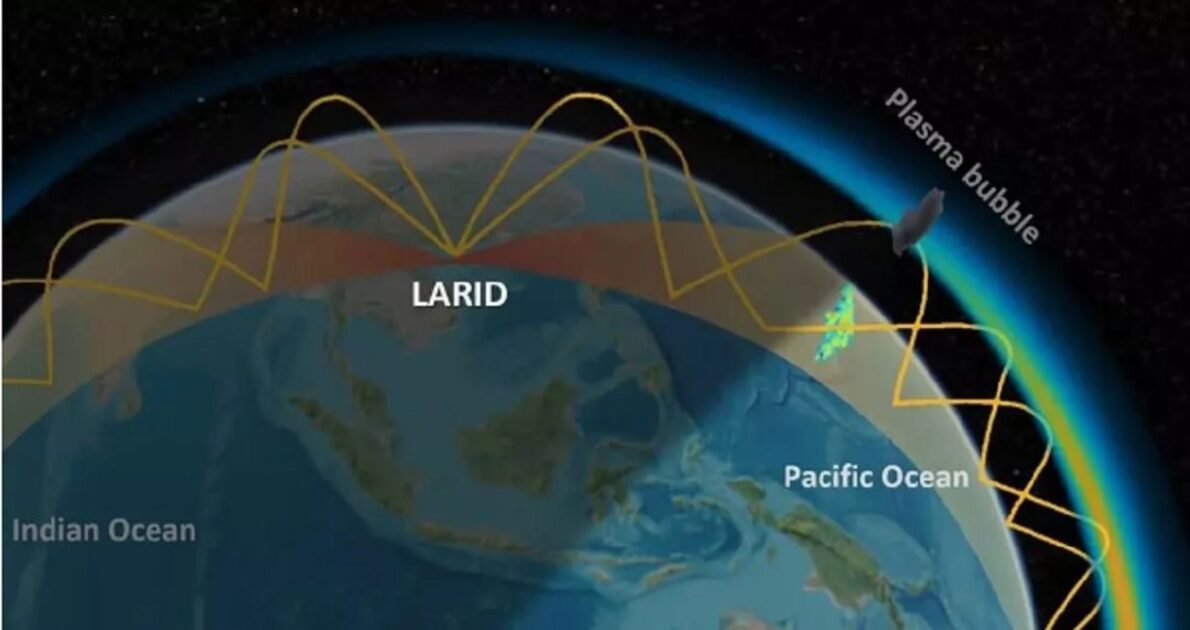
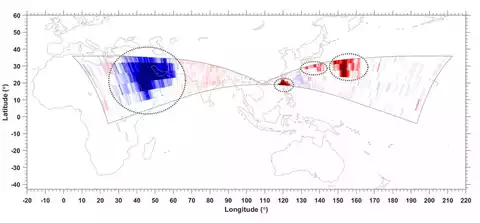
On August 27, the Institute of Geology and Geophysics, part of the Chinese Academy of Sciences, shared fascinating results. They detected the largest plasma bubbles ever recorded. Specifically, Chinese scientists detected these plasma bubbles over the Pyramids of Egypt and the Midway Islands, thanks to the LARID radar, located on the Hainan Island.
What Are Equatorial Plasma Bubbles?
These bubbles are unusual weather phenomena in low-latitude areas, caused by a sudden loss of charged particles in the ionosphere, a higher layer of the Earth’s atmosphere. These bubbles can grow up to hundreds of kilometers wide and interfere with satellite communications and GPS signals.
-
Near a $750 million AI data center in Brazil, a resident’s well runs dry, leaving her unable to afford the $25,000 needed for repairs.

-
16-Year-Old from Brazil’s Sertão Wins Young Scientist Award for AI Predicting Rainfall with 94.5% Accuracy to Aid Farmers
-
Netherlands Reports First Child Euthanasia Case Since Rule Expansion for Minors

-
Brazilian Innovator Survives Homemade Submarine Dive in Paraty Despite Hatch Leak and False Oxygen Alarm


LARID: China’s New Revolutionary Device
LARID is a long-range, low-latitude ionospheric radar built last year by China. With this announcement, China becomes the first country to detect plasma bubbles with a radar. The LARID, located in Hainan at the southern tip of the Chinese mainland, has a detection range of 9,600 km. While conventional radars struggle to detect targets below the horizon, LARID can emit high-powered electromagnetic waves that reflect between the ionosphere and the ground, allowing it to cover long distances.
How Does China’s Super Radar, LARID, Detect Plasma Bubbles?
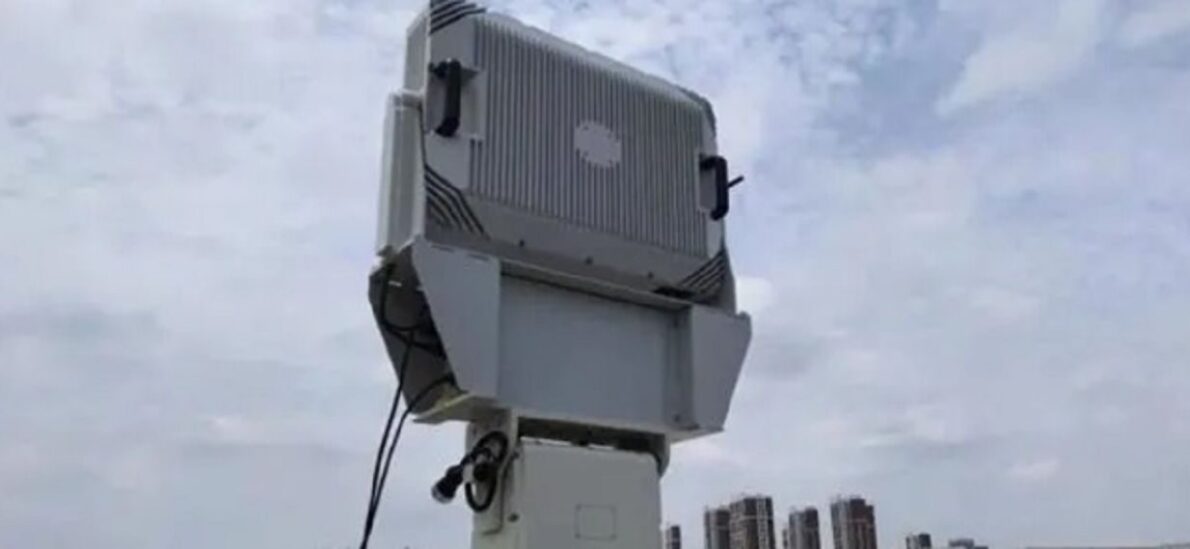
When the emitted waves encounter plasma bubbles, part of the signal is reflected and captured by the array of LARID antennas. The radar operates in the frequency range of 8-22 MHz and has two subsystems, one directed east and the other west, with 24 transmitting and receiving antennas on each side. Additionally, LARID utilizes a fully digital phased array system, allowing real-time adjustments to frequency, range, sweep area, and radar configuration as needed.
Detection at the Pyramids of Giza
The plasma bubbles caused by a solar storm were clearly visible on radar between November 4 and 6 of last year. The most distant signals detected came from North Africa and the Central Pacific. When analyzing these readings, scientists observed the detailed formation of the bubbles and tracked their movements in real time, identifying them over the Pyramids of Egypt.
Increase in the Range of China’s Super Radar
Initially, LARID’s detection range was 3,000 kilometers. However, with new signal coding and geophysical simulation models, its performance rapidly improved. In just six months, the detection range tripled. Now, Chinese researchers are proposing to build three to four additional radars similar to LARID in low-latitude regions around the world. The goal is to create a continuous, real-time monitoring network of equatorial plasma bubbles.
Does LARID Have Military Applications?
Despite all the technological advancements, LARID has low resolution and is not suitable for detecting military targets such as planes or warships. However, Chinese media commented that the country’s military has widely deployed over-the-horizon radars with similar technologies, devices that have successfully detected, for example, stealth fighters like the F-22.





