Portuguese
  Spanish


While technology giants bet on traditional architectures, a Chinese company has introduced a quantum system that combines two independent cores into a single processor, promising significant advances in stability, error correction, and expansion of quantum computing
China unveils unprecedented quantum computer with 2 cores and 200 qubits: new architecture promises to reduce errors, increase stability for up to 100 seconds, and accelerate the global race for more powerful and scalable quantum machines
The global race for quantum supremacy has gained a new chapter. China announced the development of a quantum computer considered unprecedented by its creators, thanks to a “dual-core” architecture designed to overcome some of the biggest challenges faced by modern quantum computing.
According to information released in May by ST Daily, a Chinese state media outlet specializing in science and technology, the company CAS Cold Atom Technology officially presented the system named Hanyuan-2. The company, based in the city of Wuhan, published technical details of the project on its official website and claims that the new machine represents an important step towards building more stable, efficient, and scalable quantum computers.
-
Sixth-grader in Miami wins Lemelson Young Inventor Prize for creating water-absorbing concrete using discarded oyster shells and charcoal.

-
Brazilian Researchers Develop Portable, Painless, Radiation-Free Breast Cancer Tracker Using Microwaves, Costing Around $200 and Potentially Replacing $240,000 Mammograms
-
Beer as a Vaccine? Scientist Develops Experimental Method with Live Yeasts, Tests Own Brew, and Publishes Results on Zenodo

-
Brazilian Researchers Develop ‘Rapha’ Device Using Natural Latex and LED Light to Heal Diabetic Foot Ulcers and Prevent 50,000 Annual Amputations


The announcement draws attention at a time when countries like the United States, China, and members of the European Union are intensifying billion-dollar investments in quantum technologies, considered strategic for areas such as artificial intelligence, cybersecurity, drug development, and advanced scientific modeling.
What makes the Hanyuan-2 different from other quantum computers?
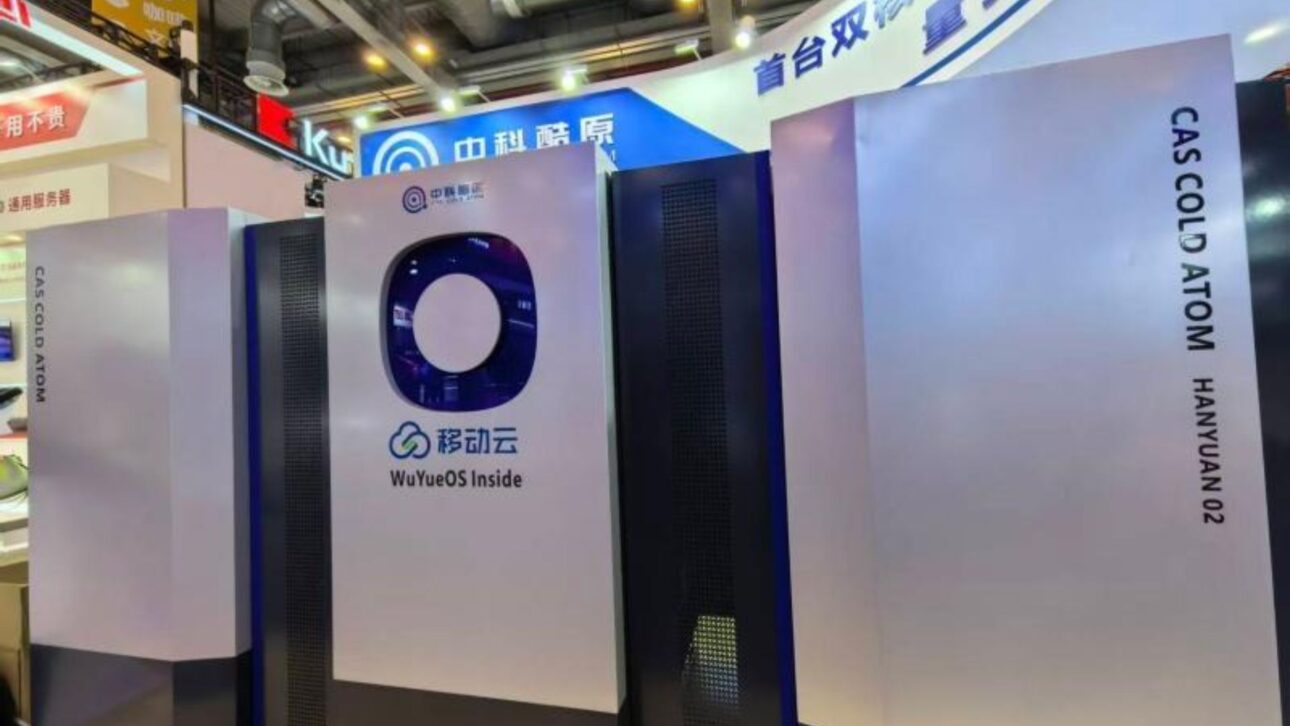
The main differentiator of the Hanyuan-2 lies in its dual-core architecture. Instead of operating with a single set of qubits, the system uses two independent arrays of neutral atoms working together within the same processor.
According to the report published by ST Daily, the technology is based on independently controlled arrays of neutral atoms. The equipment gathers a total of 200 qubits formed by rubidium atoms, with 100 rubidium-87 atoms and another 100 rubidium-85 atoms.
Gui-Guo Ge, senior solutions specialist at CAS Cold Atom Technology, explained that each core functions as a complete and independent array. This allows both to operate simultaneously to increase processing capacity or to act in a hybrid configuration, where a main core works together with an auxiliary core.
According to the company, this approach was created to tackle historical bottlenecks of single-core systems, including expansion limitations and interferences between neighboring qubits.
Furthermore, the structure was designed to facilitate future expansions of computational capacity without requiring radical changes to the machine’s central architecture.
How the system seeks to reduce errors in quantum computing
The fragility of qubits remains one of the biggest obstacles to the advancement of quantum computing.
Unlike traditional bits, which assume only the values 0 or 1, qubits can exist in multiple states simultaneously thanks to the phenomenon known as quantum superposition. Although this characteristic is extremely powerful, it also makes systems highly sensitive to external disturbances.
Small temperature variations, mechanical vibrations, or electromagnetic interferences can generate noise capable of compromising complex calculations.
In this context, the dual-core architecture of the Hanyuan-2 seeks to minimize these problems. According to the developers, the two cores can cooperate in identifying and correcting errors, as well as divide computational tasks to increase the reliability of operations.
The proposal may also represent an important advancement in the so-called noise suppression below the critical limit, considered one of the most important goals to make quantum computers truly useful in practical applications.
Neutral atoms eliminate the need for extreme cooling
Another aspect that differentiates the Hanyuan-2 is the use of qubits based on neutral atoms.
Currently, many of the world’s most well-known quantum computers, including systems developed by IBM and Google, use superconducting qubits that rely on enormous cryogenic refrigerators capable of operating at temperatures close to absolute zero.
Neutral atoms, on the other hand, offer relevant advantages.
Being electrically neutral, they interact less with the external environment, which reduces the effects of quantum decoherence — a phenomenon that occurs when quantum states lose stability and compromise the results of calculations.
In practice, this means the possibility of preserving quantum information for longer periods, increasing coherence time and potentially reducing error rates.
Additionally, this technology requires less energy to operate, making future commercial applications more viable.
The data released by the company indicates that the Hanyuan-2 features more than 500 optical tweezers arrays and has a qubit lifespan of up to 100 seconds.
Another detail that caught the attention of specialists is the energy consumption of less than 7 kilowatts. The equipment uses a standard rack-mounted design and requires only a compact laser cooling system.
In practice, this means that the machine can operate in conventional environments, without the need for highly specialized cryogenic installations.
Experts point out doubts about the true scope of the innovation
Despite the enthusiasm generated by the announcement, experts note that there are still important gaps in the disclosed information.
One of the main issues involves the quantum entanglement capability between the two independent cores. So far, it is unclear whether the qubits present in the rubidium-87 and rubidium-85 arrays can operate fully integrated or if they function as separate systems.
The difference is significant.
If the two sets operate independently, the final performance may differ from that expected in a unified quantum processor with 200 fully connected qubits.
Another point that remains unanswered is the absence of detailed benchmarks.
The company has not disclosed fundamental metrics such as error rates, operational fidelity levels, or complete coherence times, parameters often used to compare quantum computers developed by laboratories in the United States and Europe.
The very data regarding the qubit lifespan of 100 seconds is considered unusual for current industry standards, although there are rare exceptions recorded in advanced research.
Thus, experts state that it is still early to determine the real impact of the Hanyuan-2 on the global quantum computing scenario.
Even so, the announcement represents a potentially relevant advancement and inaugurates a novel approach that could influence future quantum hardware projects in different parts of the world.
If the promised results are confirmed by independent tests, the dual-core architecture could become an important alternative to overcome one of the biggest challenges in quantum computing: building larger, more stable systems capable of executing complex calculations with acceptable error levels.