






 Portuguese
  Spanish
  5 min of reading
  0 comments


Warm Pacific current advanced to cold areas of Japan, raised sea temperatures, altered conditions in Sanriku and became the focus of studies on fishing, extreme heat and intense rain, in an episode monitored by researchers since the end of 2022.
An unusual change in the route of the Kuroshio Extension, one of the main warm currents of the North Pacific, altered the sea temperature near Japan, affected fishing areas in Sanriku and, according to recent studies, may have intensified episodes of extreme rain in 2023.
The current, which normally flows east after moving away from the Japanese coast, began advancing north at the end of 2022 and reached the region near Aomori Prefecture in the winter of 2023, in an unprecedented movement in satellite observations since 1993.
The phenomenon brought tropical waters to an area historically marked by the meeting of warm and cold masses, where the Kuroshio interacts with the Oyashio current, of subarctic origin, in a dynamic associated with fishing productivity off Sanriku.
-
They wanted artificial intelligence, but they drained the water from a village in Mexico: the water consumption of data centers caused a hepatitis outbreak, and big tech companies Amazon, Microsoft, and Google were forced to halt billion-dollar projects.

-
System created to save lives in disasters turned ‘against’ Brazilians overnight: a hacker attack sent out a false alert from Civil Defense with the word “misantropia” that went off on the phones of half the country, even in silent mode, and took down the Cell Broadcast.
-
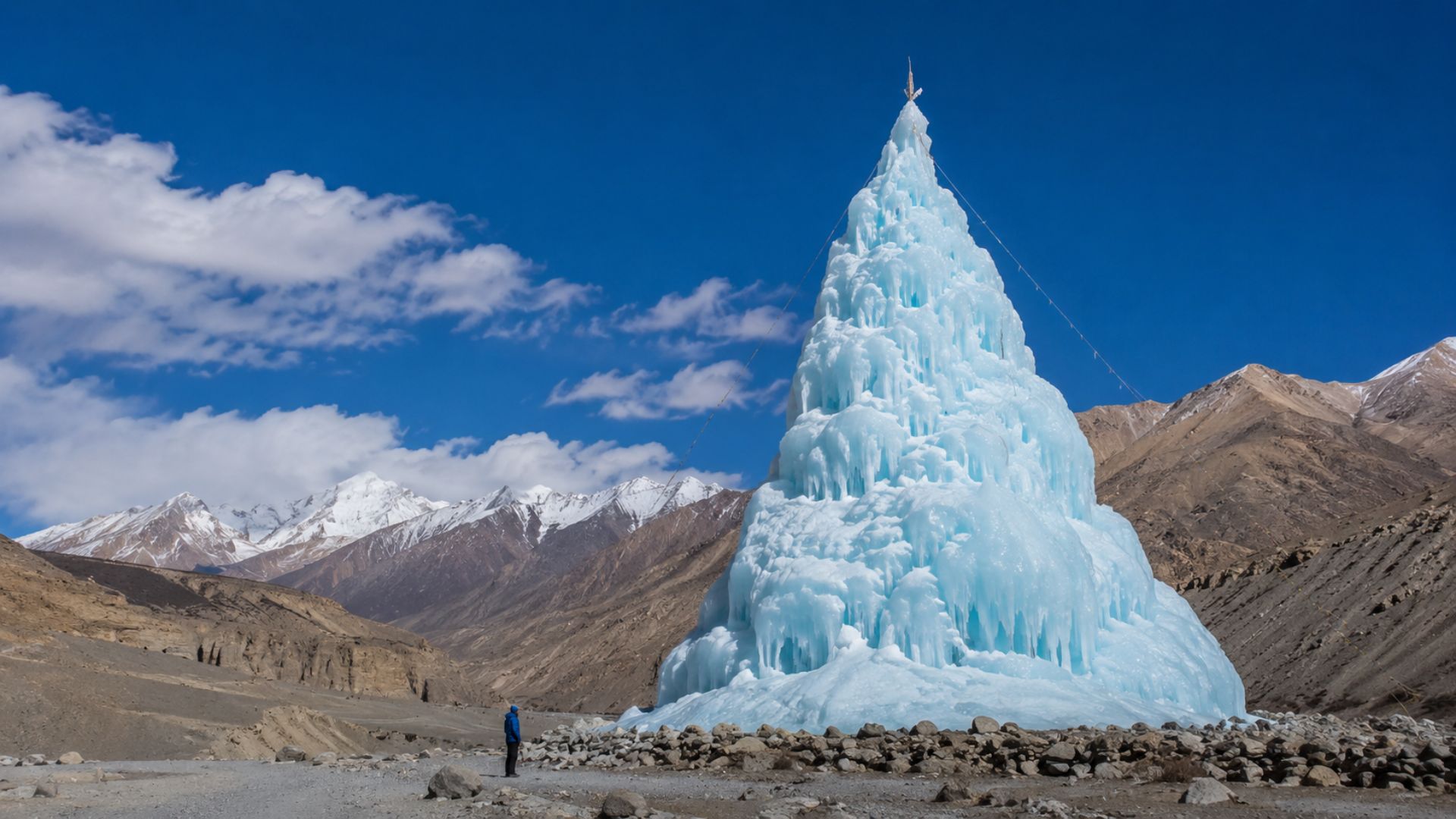
In the cold desert of Ladakh, where it hardly rains, engineer Sonam Wangchuk created the ice stupa, a tower that freezes winter water and stores it for irrigating crops in the spring, a simple engineering feat that mimics nature.
-
For the first time in history, solar and wind energy generated more electricity than natural gas worldwide in a single month, April 2026, a milestone in the energy transition that shows renewable sources taking the lead in the global electric system.



With the change in route, the sea surface temperature in the region was about 6°C above average during the period of extreme meandering, recorded between February 2023 and January 2025, according to data released by researchers from the Habitable Japan project.
According to these researchers, the prolonged warming in Sanriku was among the most intense observed in the oceans during this interval, considering the combination of the magnitude of the thermal anomaly and the duration of the episode on the sea surface.
Kuroshio Extension advanced to the north of Japan
The Kuroshio is a warm ocean current that passes through the south of Japan and flows into the Pacific after separating from the coast in the Boso Peninsula region, in Chiba, when it is called the Kuroshio Extension.
Under usual conditions, this extension predominantly moves eastward, around 36°N, but studies indicate that since April 2023, the current began to form a pronounced meander to the north, reaching approximately 40°N in the winter of 2024.
The alteration was not limited to the surface, as hydrographic data collected by the Japan Meteorological Agency in May 2024 identified warm, salty subtropical water between 50 and 400 meters deep, in areas normally influenced by cooler subarctic masses.
Scientific surveys also indicated that the warming extended to about 700 meters deep in part of the Sanriku region, a condition that helps explain why the physical effects of the episode were not limited to the ocean’s surface layer.
Sanriku experienced changes in fishing and marine life
In northeastern Japan, Sanriku relies on the marine productivity associated with the meeting of the Kuroshio and Oyashio, an oceanic boundary that influences the presence of plankton, the distribution of fish, and the organization of local food chains.
When this contact zone shifts position, the environment that supports species adapted to cold waters also undergoes changes, and researchers have recorded since 2023 the presence of fish typical of warmer waters in areas where they were not common.
Among the records cited in studies are species associated with southern regions, observed off the coast of Miyagi Prefecture for the first time, indicating a reorganization of marine fauna in response to abnormal thermal conditions.
For fishing communities, the change in species composition can affect capture periods, fishing areas, and economic expectations, especially in zones accustomed to the presence of organisms adapted to cold waters and productivity linked to the influence of the Oyashio.
At the same time, the entry of subtropical waters into an area marked by subarctic influence shows that the episode altered the physical functioning of the ocean, without the full effects on fish stocks and biodiversity being fully defined.
Heated ocean influenced the atmosphere
The impact of the Kuroshio Extension was also observed in the atmosphere, because the much warmer than normal water increased the release of heat into the air, especially during winter, altering thermal conditions over the Sanriku region.
Researchers observed that this effect reached atmospheric layers up to approximately 2 kilometers above the sea surface, a result indicating a change not only in water temperature but also in the thermal structure of the lower atmosphere.
The Japan Meteorological Agency pointed out that elevated temperatures in the seas around the country may have contributed to the extreme heat recorded in northern Japan in 2023, when the national summer average was the highest since the beginning of the historical series in 1898.
This assessment considers the simultaneous action of other atmospheric systems, including high-pressure areas, jet stream shifts, and typhoon influence, which is why studies do not attribute the extreme heat to a single cause.
Within this set of factors, the heated ocean appears as a relevant element to understand the regional conditions observed in 2023, especially in areas where the sea surface thermal anomaly was persistent and extensive.
Extreme rain in Japan likely reinforced by heated sea
The relationship between the Kuroshio and intense rainfall has also begun to be investigated by researchers, after extreme precipitation events recorded in Japan in September 2023 were analyzed with high-resolution numerical simulations.
In a study published in 2025, the authors concluded that the marine heatwave associated with the large meander of the Kuroshio Extension increased the availability of heat and water vapor to the atmosphere during the analyzed events.
This environment favors the formation of heavier clouds and more intense rain systems, according to the research, which compared simulated scenarios with and without the oceanic anomaly associated with the current’s deviation.
According to the study, the difference between the scenarios reached about 300 millimeters of additional precipitation in parts of the evaluated events, a value that represents an estimate for specific situations and not a national average of rainfall.
The Japan Meteorological Agency had already reported that episodes of heavy rain in 2023 were linked to intense moisture transport, the activity of stationary fronts, and the context of global warming, which increases the atmosphere’s capacity to retain water vapor.
Current deviation stood out from historical patterns
For the researchers, the case is distinguished by the combination of reach, duration, and intensity, as the Kuroshio Extension shows natural variability, but there was no similar record, in satellite observations, of advancement up to near Aomori with prolonged warming in Sanriku.
At the end of 2022, the current began to curve north instead of following its more common route east, passing through areas near Ibaraki, Fukushima, Miyagi, and Iwate before reaching the vicinity of Aomori in the winter of 2023.
The extreme meander persisted until around February 2025, and in September of that year, researchers reported that the Kuroshio Extension was flowing in a calmer condition off Ibaraki, although the subsequent trajectory still depended on continuous monitoring.
New oscillations may again alter the oceanic and atmospheric environment of northeastern Japan, according to specialists, which maintains the need for monitoring by research vessels, sensors, satellites, and measurements at different depths.
In Sanriku, the episode produced a scientific record of how an ocean current can modify, in the same period, the distribution of marine organisms, the air temperature over the ocean, and the intensity of rains associated with extreme events in Japan.





Be the first to react!