Portuguese
  Spanish


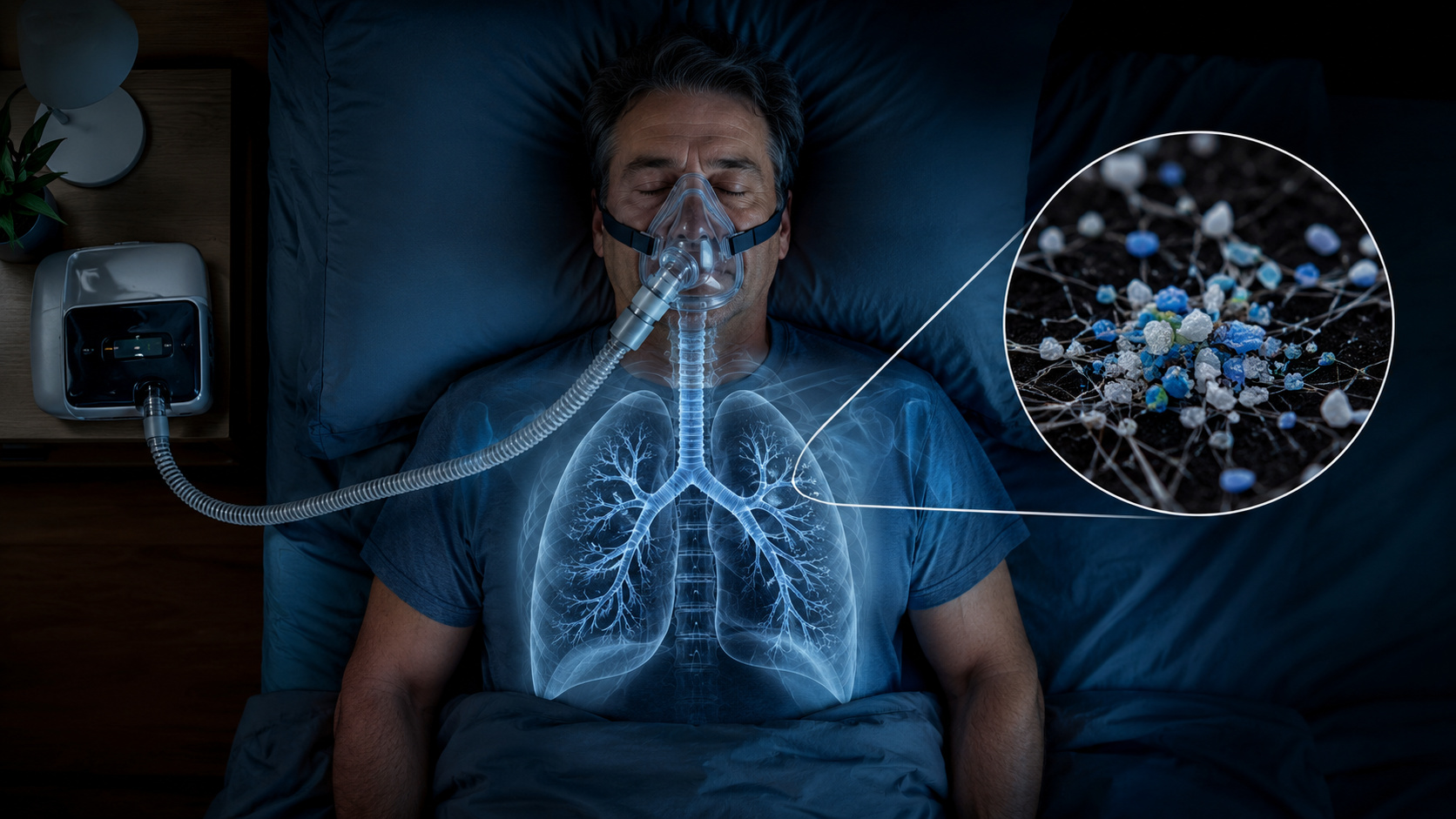

Scientific research analyzes microplastics in patients with sleep apnea and investigates effects of environmental pollution on respiratory health.
According to a study published in Springer Nature on February 4, 2026, scientists investigate microplastics in the airways of patients with sleep apnea and reveal a new focus of attention for research on environmental pollution, human exposure, and possible impacts on sleep quality and breathing.
A recent study, with the participation of researchers from the University of São Paulo (USP), identified these particles in the upper airways of all individuals analyzed. The data raises an alert in the medical community: high concentrations of the material are associated with an increase in proteins linked to inflammatory processes in the respiratory system.
Microplastics and the threat to respiratory health
Although the study does not point to the residues as a direct cause of sleep apnea, the results have profound implications for respiratory health and for understanding how environmental pollution affects the body. The analysis started from the suspicion that CPAP equipment could release residues due to the wear of internal foams. However, scientists found that the presence of the particles is independent of the use of the device, which proves the strength of everyday atmospheric exposure.
-
For the first time, scientists have seen the ocean floor open up in real-time—plates moving apart by two meters in a few days and 160 million cubic meters of lava emerging on the seafloor.

-
Iraq floats and sinks under an arm of the Euphrates 10 giant concrete boxes of 46,000 tons and 125 meters each to assemble a 2.4 km submerged tunnel and open a new land route between Asia and Europe.

-
Scientists use more than 20,000 artificial birds and solar speakers to “trick” seabirds, reactivate nesting routes, and revive a colony on an island that seemed abandoned.
-
She spent 73 years breathing inside an iron lung, survived the aftereffects of polio, and became the last woman in the United States dependent on the equipment before dying at 78 years old.




The microplastics are synthetic fragments measuring less than five millimeters. The first investigations on the subject emerged about 20 years ago, initially focused on the oceans, where macroplastics were identified and, subsequently, microscopic particles. Today, it is known that these pollutants are present in practically all the planet’s biomes, reaching even remote regions such as Antarctica and the Arctic.


The major problem for respiratory health is that the defense system of the upper airways cannot easily eliminate non-biodegradable synthetic materials. When these particles attach to tissues, they cease to be merely inert foreign bodies and begin to interact harmfully with local cells.
Pathologist Thais Mauad, a specialist in the impacts of these substances on the human body and one of the authors of the work, emphasizes that the isolation of these pollutants in the air makes inhalation a constant and dangerous daily exposure route for the urban population.
The investigation on sleep apnea at USP
Sleep apnea affects millions of people worldwide and is characterized by repeated interruptions of breathing during the night. This occurs because the airways become partially or completely blocked, drastically reducing airflow. To understand the interface between pollutants and the disorder, the USP team analyzed the respiratory tissues of patients suffering from this chronic condition.
The work brought together leading experts at the USP School of Medicine. Among the study’s authors is Professor Michel Cahali, creator of the lateral pharyngoplasty technique, a surgical procedure that changed the treatment of sleep apnea. The combination of this clinical knowledge with expertise in environmental pathology allowed for precise analysis of living tissues that are rarely accessed in studies on pollutant exposure.

The CPAP recall and the findings of scientific research with microplastics
The study originated after an episode involving the manufacturer Philips in the United States. The company issued a recall of CPAP models — essential equipment that keeps the airways open through a continuous flow of pressurized air — due to the degradation of the internal foam in some devices. From this practical case, researchers sought to verify whether patients using the device accumulated more plastic residues in their airways.
The final results of the scientific research revealed the following data:
- Independence of use: The use of CPAP did not increase the amount of particles in the upper airways of the evaluated patients.
- Universal presence: Plastic fragments were found in all individuals analyzed, regardless of whether they were undergoing treatment with the device or not.
- Molecular factor: The main finding was the direct association between higher concentrations of microplastics and higher levels of proteins related to inflammation.
This molecular scenario suggests that daily exposure to these particles may trigger undesirable immune reactions in the airways, a hypothesis that should be investigated in detail in future studies.
Environmental pollution and the consequences on respiratory tissue
The study significantly expands the knowledge about the possible effects of these particles on the body. Tissues that showed a high concentration of synthetic materials recorded greater inflammatory activity. This chronic inflammatory state can cause edema and swelling in the pharynx region, further reducing the space for oxygen passage during the night.
Although the results do not indicate that the particles cause the sleep disorder itself, the observed association reinforces the hypothesis that environmental pollution directly influences inflammatory processes in the airways. The continuous accumulation of these pollutants acts as a systemic aggravating factor, reducing the recovery capacity of respiratory tissues and making obstructive crises potentially more severe.
Horizons of scientific research and the future of sleep medicine
This pioneering study changes the course of medical science by proving that plastic pollution has surpassed environmental barriers and penetrated human organs. Until then, the risks of plastic were associated with visual impact and marine fauna. Now, scientific research makes it clear that the problem is internal and a public health issue.
The next steps of medical science to face this reality include:
- Mapping which specific types of polymers are most present in the upper respiratory tract;
- Understanding the exact biochemical mechanisms involved in the relationship between plastic and human cells;
- Investigating whether these microparticles can cross cellular barriers and reach the bloodstream.
Scientists emphasize that new studies are strictly necessary to understand the real risks of plastic pollution to human health and the mechanisms involved in this relationship.
Microplastics: a global alert for collective health
In summary, the investigation conducted by USP researchers proves that microplastics are present in the airways of individuals with sleep apnea. By demonstrating that CPAP is not the cause of this accumulation, the study shifts the focus of the problem from medical technology to the global crisis of environmental pollution, highlighting that the simple act of breathing exposes us to microscopic synthetic residues.
The direct association between the high concentration of these particles and the increase in inflammatory processes serves as a strong warning. Preserving respiratory health and ensuring quality of life will require more than isolated clinical treatments; it will demand strict public policies to reduce the use of plastics on the planet. Scientific research has fulfilled the role of revealing the invisible enemy, and now it is up to society to transform this diagnosis into concrete preservation actions.