Portuguese
  Spanish


Ambitious expansion of the São Paulo metro projects hundreds of kilometers of tracks, multiple lines, and simultaneous use of tunnel boring machines, indicating structural transformation in urban mobility in the metropolitan region over the next decades, with parallel works and integration between cities.
The São Paulo Metro presented an expansion projection that foresees more than 200 additional kilometers of tracks by 2040 and the consolidation of a network with 14 lines in the metropolitan region, combining extensions of existing branches with new connections beyond the capital’s limits.
Disclosed by Roberto Torres Rodrigues, Director of Engineering and Planning, the estimate was presented during the LATAM Metro Rail Summit, held on April 15 and 16, 2026, in Panama City, where challenges of financing and execution of large urban projects were also discussed.
Beyond the territorial dimension, the material drew attention for the projected operational scale, as the planning considers the possibility of up to eight tunnel boring machines operating simultaneously at different fronts, depending on the overlap of works, specific schedules, and the progress of each project.
-
They exchanged the idea of a large house for a 35 m² warehouse, spent US$ 12,000 on the structure, and created a tiny house in Colorado with space to live and work.

-
A newly opened terminal in the middle of the Amazon has begun transporting soy and corn through Amapá, eyeing the queue of ships that is congesting the ports in the South.

-
Goodbye to old tiles: renovation technique without construction transforms bathrooms in a few hours, eliminates debris, and reduces costs with coverings using special paints, high-resistance adhesives, and modern finishes that completely renew the space.
-
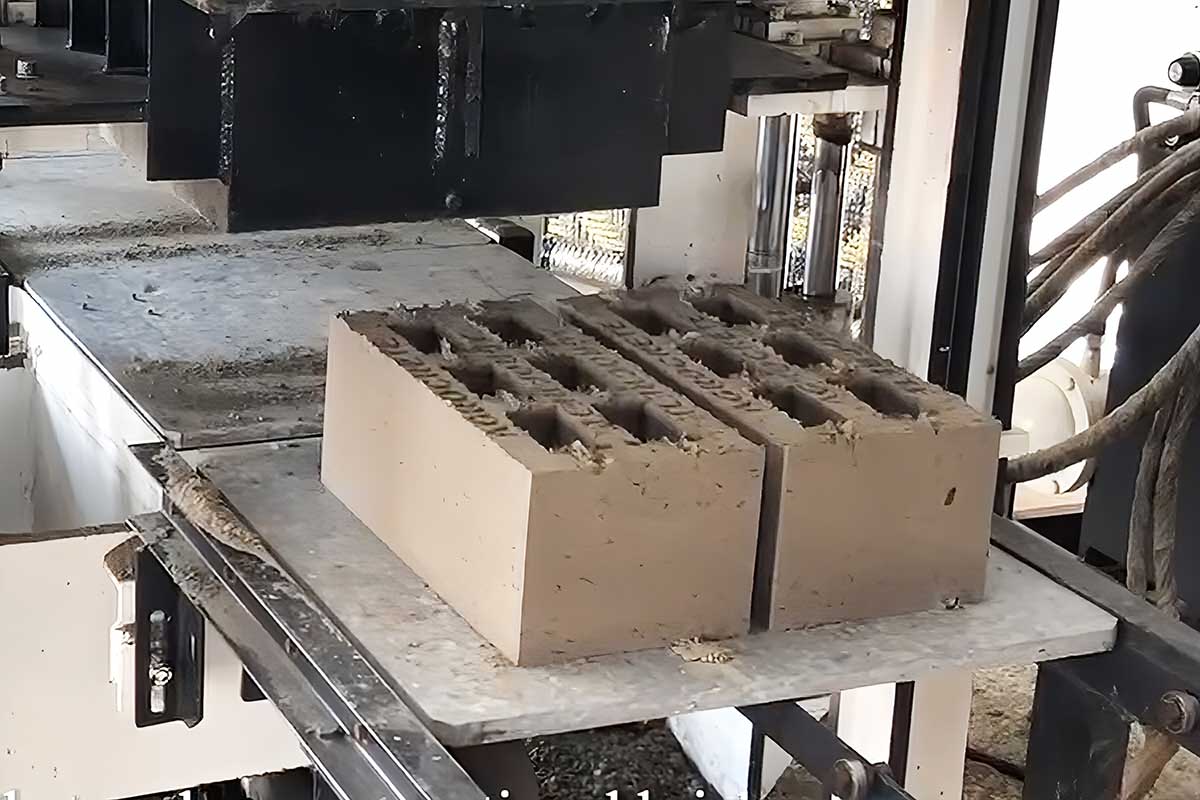
Goodbye to the traditional clay brick: Indian startup transforms burnt straw into a carbon-negative brick that costs half, insulates better, and even removes CO2 from the air.


Metro expansion and metropolitan integration
More than just expanding stations within the capital, the presented plan seeks to strengthen integration between municipalities in the metropolitan region, prioritizing axes with long commutes, high dependence on individual transport, and strong pressure on bus corridors that are already operating close to capacity.
In this context, the network projected for 2040 advances beyond the city of São Paulo and maintains as its central axis the connection between different urban territories, aligning with projects that have already surpassed the conceptual phase and present more defined routes or advanced bidding stages.
Among the examples, the Line 19-Celeste had its bidding notice launched in March 2025 and is expected to connect Guarulhos to Anhangabaú, with 17.6 kilometers of extension and 15 stations, while the Line 20-Rosa emerges as a strategic link between the capital and the ABC region.
Also included in this set, the Line 22-Marrom appears as part of the expansion axis aimed at the west vector, connecting Sumaré to Cotia, in a move that expands the coverage of the rail system in historically underserved regions by the metro network.
Tunnel boring machines and construction pace until 2032
The use of tunnel boring machines on a large scale is presented as one of the main indicators of the expected pace for the works, as the number of machines in simultaneous operation directly reflects the level of investment and the capacity for execution at different fronts.
In 2025, for example, three pieces of equipment were active, with one in the expansion of the Line 2-Green and two in the excavations of Line 6-Orange, a scenario that is expected to evolve in the following years with the intensification of the planned interventions.
For 2026, the projection indicates two tunnel boring machines on Line 2, including the continuation of Cora Coralina and the start of operations of Hebe Camargo, both aimed at extending the branch towards Guarulhos, reinforcing the connection with the metropolitan area.
Starting from 2029, the planning points to a more significant growth, with the possibility of four machines operating simultaneously, three linked to the future Line 19-Celeste and one associated with the continuation of the works of Line 6-Orange towards Mooca.
In the case of Line 20-Pink, there is a forecast for the use of four tunnel boring machines, although there is still no public definition regarding the simultaneity of the excavations, with the initial proposal indicating the start of works in the ABC Paulista, prioritizing regional connection.
The most ambitious scenario emerges in 2032, when the estimate considers at least eight tunnel boring machines operating at the same time, although the material does not detail the distribution of these machines nor confirm the inclusion of new equipment beyond those already planned.
Planned lines and network projection until 2040
The planned expansion relies on a diverse set of projects that includes ongoing works, projects in advanced contracting phases, and initiatives still under study, reflecting different levels of maturity within the metro planning.
Among the interventions already underway are the expansion of Line 2-Green and the construction of Line 17-Gold, while Line 19-Celeste advances in the contracting process, consolidating itself as one of the main expansion axes.
Other projects, such as lines 20-Pink, 22-Brown, 21-Graphite, and 23-Lime, still present different stages of development and do not have the same degree of public definition regarding layout, schedule, or construction method.
Even with these variations, the projection indicates that the network could reach 279.1 kilometers and 230 stations by 2040, with expected impacts on emission reductions, travel time, and road safety.
By presenting this data at an international event, the São Paulo Metro positions the plan as part of a broader expansion strategy, reinforcing discussions on financing, project structuring, and simultaneous execution of large-scale works.
Thus, the proposal signals the intention to expand the presence of rail transport in areas that are still poorly served, while also betting on the parallel execution of projects as a way to accelerate the transformation of urban mobility in the metropolitan area.