Portuguese
  Spanish


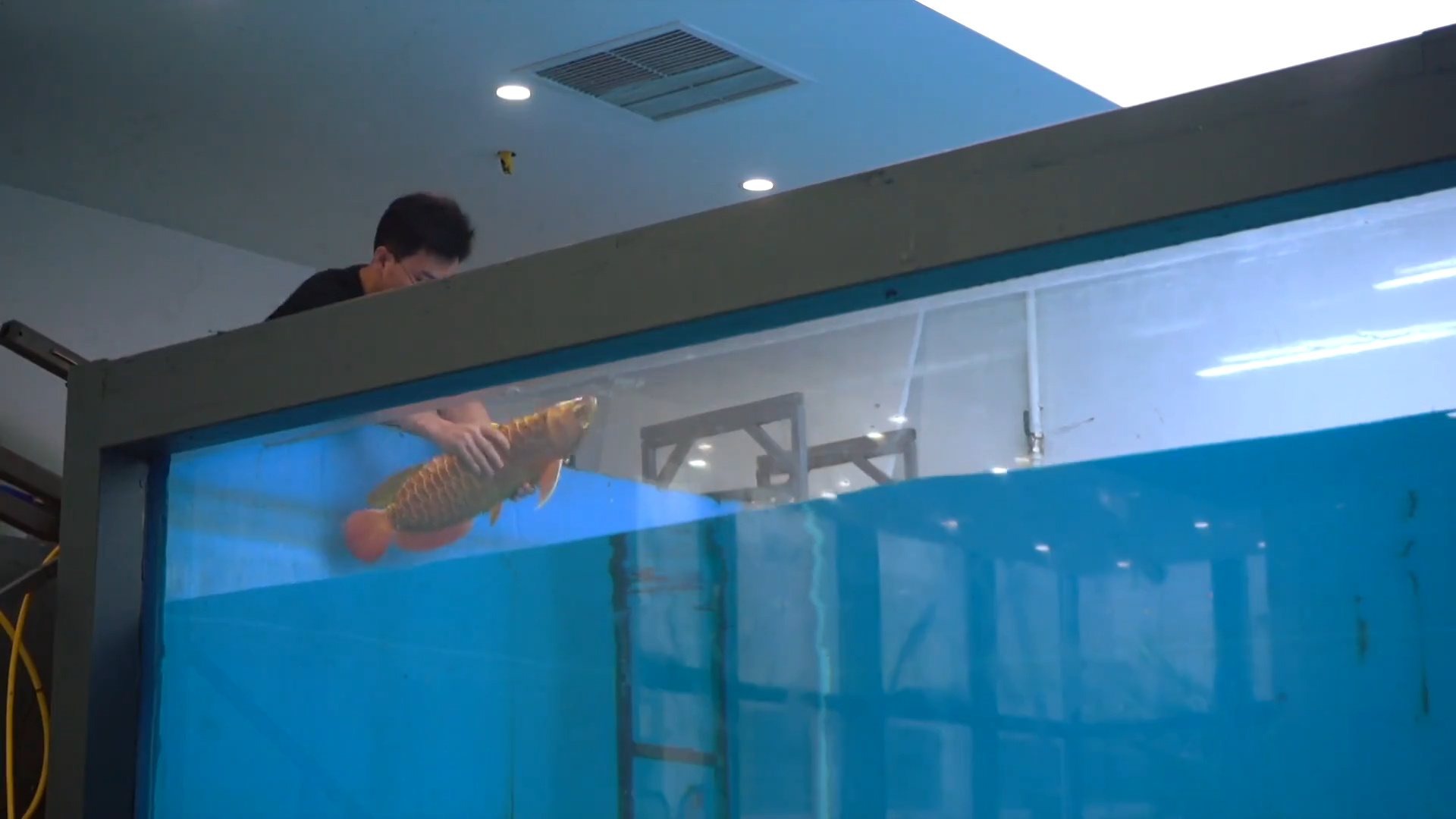

Chinese bionic robot fish uses AI and sensors to swim like a real animal and could transform environmental monitoring and underwater operations.
On May 14, 2025, Wuhan University unveiled in Wuhan, China, a 53-centimeter biomimetic underwater robot developed by professors and students to work on Yangtze River protection projects. According to the Wuhan Science and Technology Department, the machine mimics the shape and swimming of a real fish, uses body joints to reproduce natural movements, and features obstacle avoidance sensors and AI learning capabilities.
Unlike traditional propeller-driven underwater drones, this new generation of robot fish uses fin-inspired propulsion, which can reduce noise, improve displacement efficiency, and lessen environmental impact in aquatic monitoring operations. An article published in 2025 in the scientific journal The Innovation describes these robots as autonomous systems designed with biomimetic principles, capable of swimming and performing specific tasks in water with advantages such as maneuverability, low noise, and greater operational discretion.
Next, understand how these robot fish work, why China is using this technology in environmental monitoring, and how machines inspired by real animals can open a new phase of underwater exploration.
-
The Trap of Modern Technology: How Screen Overload and Digital Connections Can Impact Your Mental Health and Well-being

-
Wyoming Couple Grows Tropical Fruits Year-Round in -40°C Using Geothermal Greenhouse, Demonstrating Earth’s Heat Can Produce Oranges and Lemons in Snow Without Traditional Heating

-
Ship Returns from Brazilian Coast with Thirty Newly Discovered Life Forms
-
Nigerian Professor Invents Electricity-Free Refrigerator Using Clay Pots and Wet Sand, Extending Shelf Life of Vegetables to 27 Days; 7,000 Units Distributed in Energy-Deprived Villages



Biomimetic technology enables more efficient and discreet movement in water
The main innovation of these robots lies in the application of biomimetics — an area of engineering that seeks to replicate solutions from nature.


In the case of robot fish, this means abandoning conventional mechanical systems and adopting undulating movements similar to those of real fish. This type of propulsion offers relevant technical advantages:
- lower energy consumption
- greater hydrodynamic efficiency
- significant noise reduction
- greater maneuverability in complex environments
By imitating nature, these systems can operate more efficiently than many traditional technologies.
Sensors and artificial intelligence enhance autonomy and navigation capabilities
In addition to their physical design, the robots are equipped with advanced sensor systems and artificial intelligence. These systems allow for:
- obstacle detection
- autonomous navigation
- environmental data collection
- real-time environmental adaptation
Integration with learning algorithms allows the robot to adjust its behavior according to water conditions, currents, and the presence of objects.
This combination transforms the robot into an intelligent platform, capable of operating with minimal human intervention.
Environmental applications are already a reality in water monitoring
While strategic interest is evident, one of the most consolidated applications of this technology is in environmental monitoring. Robot fish can be used for water quality analysis, pollutant detection, aquatic ecosystem monitoring, data collection in sensitive areas, and much more.
As they move similarly to natural organisms, these robots cause less environmental impact and can approach areas where conventional drones would have difficulty.
This characteristic makes the technology particularly useful for ecological studies and environmental preservation.
Ability to operate discreetly raises strategic interest
Beyond scientific applications, the silent and natural behavior of these robots draws attention due to their strategic potential.
The absence of propellers and their fish-like movement make these devices less detectable in underwater environments. This opens up possibilities for applications such as inspection of submerged structures, monitoring of maritime areas, and data collection in sensitive environments.

While direct military use is not always explicitly confirmed, the nature of the technology suggests strong dual-use potential.
The same system that monitors a river can, in another context, be adapted for strategic operations.
China invests in multiple biomimetic underwater robotics projects
The development of robot fish is not an isolated case. China has also presented other biomimetic underwater projects, including robots inspired by jellyfish and other marine organisms.
These projects are part of a broader movement of investment in autonomous technologies, focusing on:
- underwater robotics
- artificial intelligence
- unmanned systems
The goal is to expand technological presence in environments where human access is limited or unfeasible.
Underwater technological dispute involves several global powers
While China is advancing rapidly, the development of underwater robotics is a global trend. Other countries are also investing in:
- autonomous underwater vehicles
- maritime drones
- ocean surveillance systems
The difference with biomimetic robots lies in their approach: instead of mechanical force, they prioritize efficiency, discretion, and adaptation to the environment. This could represent a paradigm shift in how underwater operations are conducted.
Limitations still exist, and technology continues to evolve
Despite advances, robot fish still face technical challenges. Among the main points are:
- limited energy autonomy
- restricted payload capacity
- maintenance complexity
Furthermore, operating in deep marine environments still requires additional advances in resistance and control. The technology is at an advanced stage of research, but still in the process of maturing for large-scale applications.
Future points to increasingly integrated autonomous systems
The trend is for robots like these to evolve into more complex systems, possibly operating in groups or integrated into larger monitoring networks. Combined with other technologies, they can form systems capable of:
- mapping underwater environments in real time
- operating continuously for long periods
- interacting with other autonomous platforms
This type of integration significantly expands the reach and utility of the technology.
Given this advance, could the oceans become the next invisible field of technological dispute?
With robots capable of swimming like fish, operating autonomously, and collecting data silently, biomimetic underwater technology is beginning to redefine the limits of engineering and ocean exploration.
What was once restricted to noisy and easily detectable equipment is now being replaced by discreet and adaptable systems.
The question that arises is direct: to what extent will these technologies transform not only environmental monitoring but also how countries compete for space and information in the oceans?