Portuguese
  Spanish


Researchers Reveal the Remains of an Ancient Egyptian City, Hidden Under Layers of Greek Ruins, Bringing to Light Secrets of a Civilization That Existed More Than 3,500 Years Ago, With Surprising and Unusual Findings.
An impressive archaeological discovery in Egypt has revealed the remains of an ancient city, hidden under layers of Greek ruins, dating back more than 3,500 years.
Located near Alexandria, in the Nile Delta, the area had been considered a settlement from the Hellenistic era, associated with the Greeks.
However, recent excavations have uncovered remains of an even older city, belonging to the New Kingdom of Egypt, a period when Pharaoh Ramses II ruled the Egyptian territory.
-
At 17, she hand-painted her first watercolor design for school uniforms; her brand grew without investors, sold 135,000 pieces, and aims for $3 million in revenue by 2026.

-
Shell Discovers Intact Early 19th-Century Wooden Shipwreck in the Gulf of Mexico at Over 1,300 Meters Deep
-
Brazilian Entrepreneur Turns Door-to-Door Jewelry Sales into a Family Business Empire with Over 70 Stores

-
$75 Million Bridge in Brazil Opens to Connect Cities, Create Jobs, and Cut Travel Time from 30 to 2 Minutes; Spanning 1.24 km, It’s Among the Country’s Largest and Ends Decades of Ferry Queues.




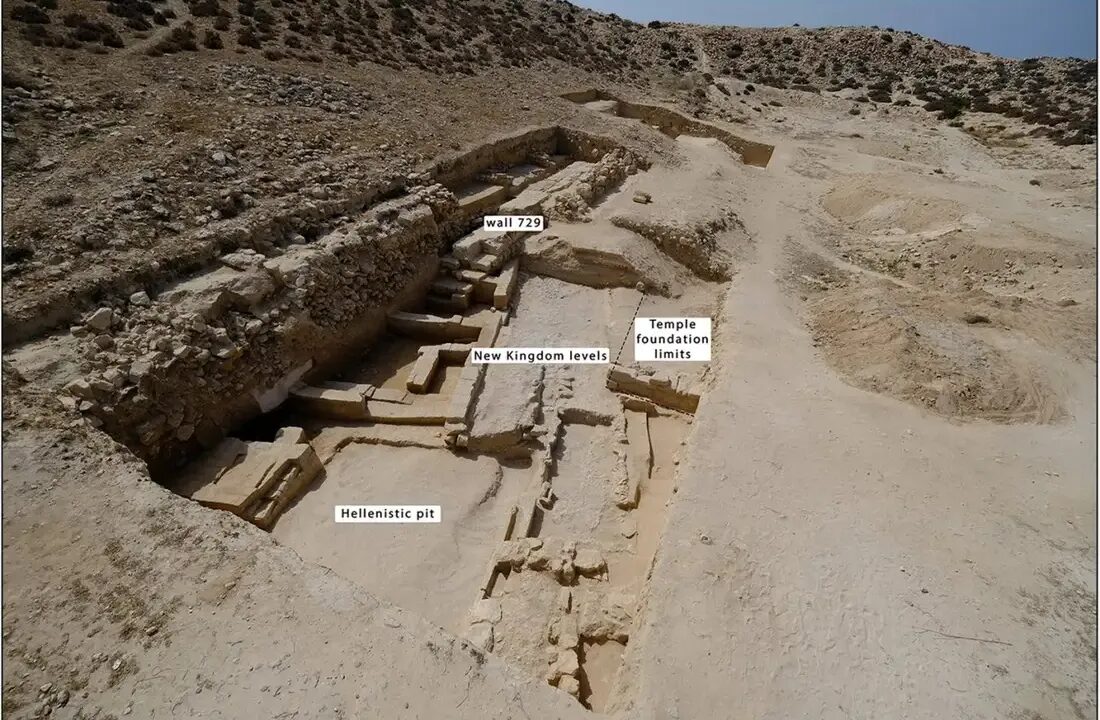
Archaeologists, in their mission to understand the past of this historical site, discovered walls, streets, jars, and even structures associated with wine production, suggesting a society with well-established economic activities.
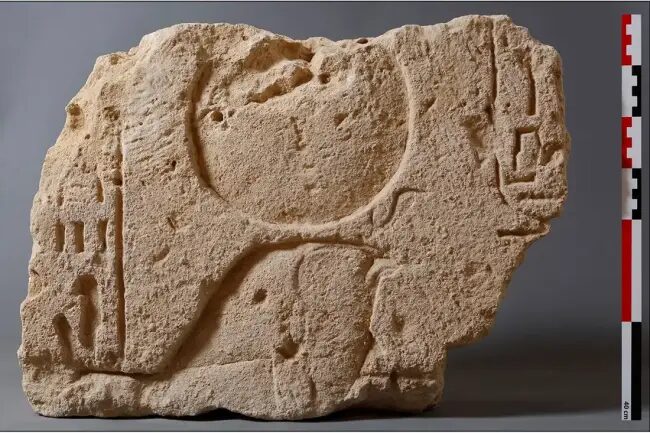
However, the biggest find so far has been the set of stone blocks with hieroglyphic inscriptions, belonging to a temple dedicated to Ramses II, one of the most renowned pharaohs in Egyptian history.
Ramses II and Wine Production: A New Perspective on Egyptian History
The city, called Kom el-Nugus, is situated on a rocky elevation, between the Mediterranean Sea and Lake Mariut, which offers a strategic location, possibly focused on defending Egypt’s borders and commercial activities in the region.
Although the site was already known for housing structures from the Greek period, recent excavations revealed even older constructions made with mud bricks, typical of pharaonic Egyptian architecture.
The urban planning of the city became evident through the houses arranged around a main street, which had a sophisticated drainage system.
One of the most significant items found during the excavation was an amphora, a type of jar used in antiquity, which bore the name Meritaten, daughter of Akhenaten and Nefertiti.
This find, according to specialists, helps date the city to the 18th Egyptian dynasty, a period that spans approximately from 1550 to 1292 BC.
This indicates that the site was already in operation long before the arrival of the Greeks in the region in the 4th century BC.
Amidst the repurposed blocks in later constructions, elements from a temple dedicated to Pharaoh Ramses II, who ruled Egypt between 1279 and 1213 BC, were identified.
This pharaoh is known for significantly expanding Egypt’s borders and for overseeing numerous monumental constructions.
The discovery of structures linked to his empire in Kom el-Nugus reinforces the idea that the region held great strategic and economic value, likely focused on wine production and protecting Egypt’s western border against invasions from Libya.
The City as a Military Base and Center of Economic Production
Among the other items found at the site, archaeologists discovered fragments of private chapels and small ceramic bowls, which provide more clues about daily life in the city.
Some researchers believe that Kom el-Nugus may have served as a temporary or seasonal base, possibly as a military garrison responsible for monitoring the region.
This theory is supported by the discovery of structures indicating strategic planning and by the location, which suited military and commercial operations.
These new findings alter the view that had been held about the Nile Delta until now.
Until now, scholars believed that this area had only been occupied by Egyptians later, during the Greek rule, after Alexander the Great’s conquest in the 4th century BC.
The find at Kom el-Nugus changes this perspective, revealing that Egyptians were establishing complex cities and societies in this region many centuries before the arrival of the Greeks.
The Mystery Behind the City’s Name and the Expectation of Future Excavations
The original name of the city remains a mystery, and archaeologists continue to study the area with the hope of finding more clues about its history.
Ongoing excavations may bring to light more information about the daily lives of the inhabitants, their economic activities, and the role this city played during the height of the Egyptian Empire.
The expectation is that upcoming finds may also offer more details about how Egyptians interacted with other cultures in the region and how their cities were connected to the rest of Egypt.
A New Light on Egyptian History: The Legacy of Kom el-Nugus
The impact of this discovery is significant, as it offers a new perspective on Ancient Egypt, a civilization that has always captivated the world’s curiosity.
Kom el-Nugus may be the key to understanding how Egypt expanded beyond its traditional borders, adapting to different geographic and political conditions over time.
The coming years of excavations and studies will surely reveal even more about this fascinating chapter in human history.
The discovery of Kom el-Nugus serves as a window to the distant past, revealing that long before the Hellenistic era and Greek domination, Egyptians had already established complex and organized societies in the northern part of the country.
Soon, new information may rewrite parts of history that we thought we already knew.
What else do you think can still be found at this archaeological site? Leave your opinion in the comments and share with your friends interested in history and archaeology!