Portuguese
  Spanish


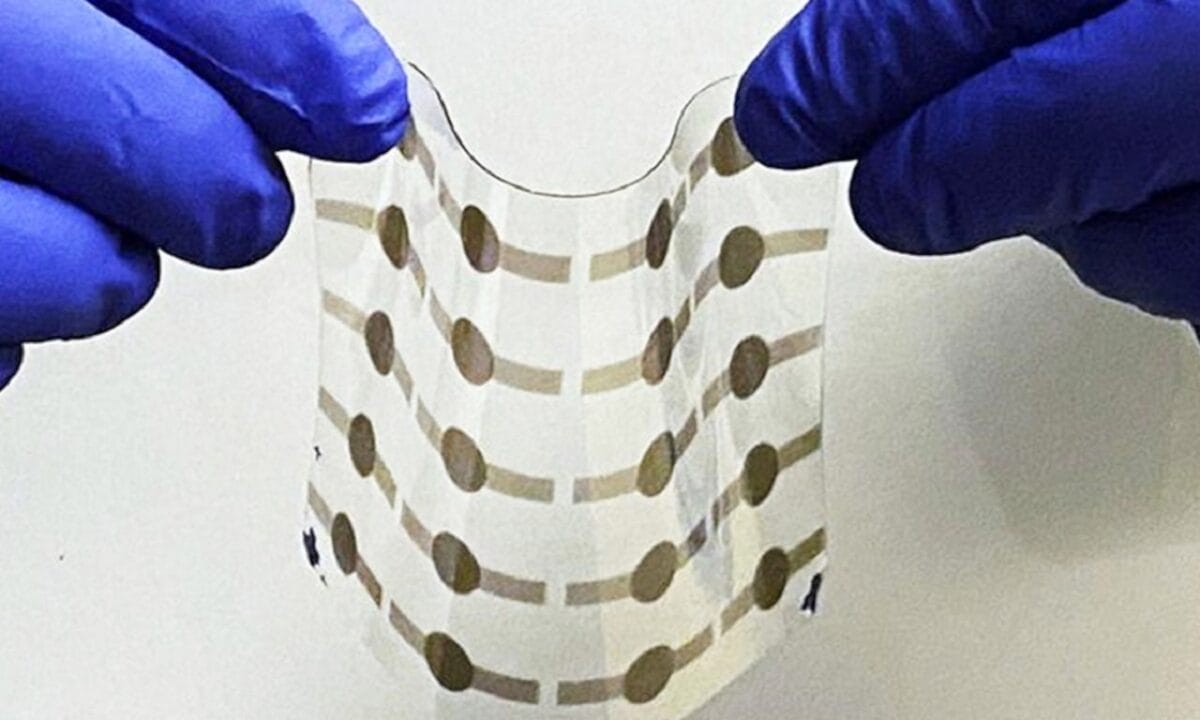

Scientists Develop Cellulose Artificial Muscles Strong Enough to Break a Brick Upon Stretching. The Artificial Muscle Can Lift a 2-Ton Car Using Just a 15×15 cm Piece.
Scientists from Sweden have developed a new type of artificial muscle that can be generated from wood cellulose, potentially occupying an important niche in the field of soft robotics and possibly in medical robotics and other biomedical devices.
Understand How Cellulose Artificial Muscles Work
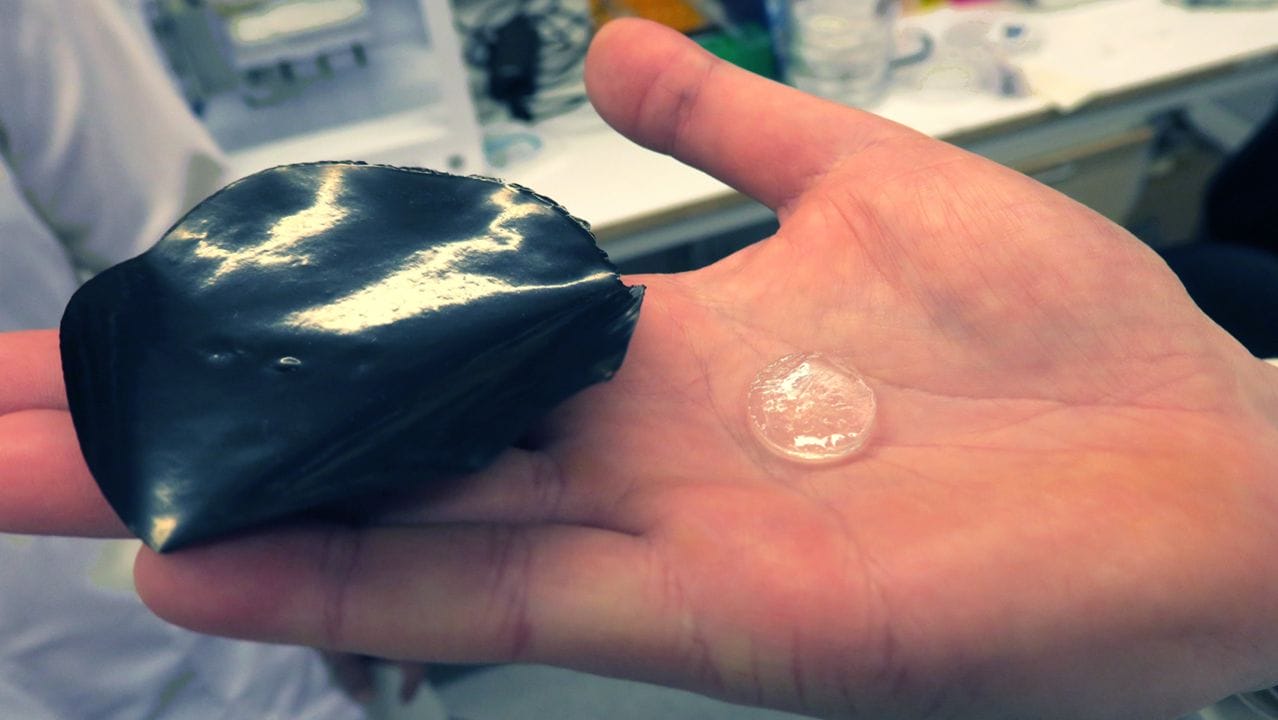
The material is essentially a hydrogel made with cellulose nanofibers and a small amount of carbon nanotubes, which act as a means of conducting the electric pulses that control the artificial muscle.
Unlike traditional muscles produced by scientists, which expand with the force of air or pressurized fluid, these cellulose artificial muscles inflate due to the movement of water inside, driven by electrochemical pulses.
-
Indian Inventor, 58, Develops Steering Wheel-Free Agricultural Machine Operated by Levers, Offering Cost-Effective Alternative to Expensive Tractors

-
Scientific Breakthrough: Bacteria Found in a Rio de Janeiro Lagoon Guide Mars Research After Scientists Identify Similarities to Extreme Environments, Expanding Understanding of Extraterrestrial Life Possibilities

-
Brazilian Mechanic Wins Indian Presidential Award for Inventing Fuel-Efficient Agricultural Machine

-
Brazilian Polilaminin Reaches 100 Spinal Cord Injury Patients Through Compassionate Use, Shows Progress After 6 Months, Highlighting UFRJ’s Role in Experimental Regeneration Research



[Image: David Callahan]
They can expand, contract, or change as needed, all controlled by electric pulses of less than 1 volt. The material’s strength comes from the alignment of nanofibers in the same direction, similar to what is seen in wood fibers. Cellulose artificial muscles are very strong; just a small portion, when electrically activated and stretched, managed to break a brick longitudinally.
According to Professor Tobias Benselfelt from the Royal Institute of Technology in Sweden, nanofiber hydrogels swell uniaxially, along a single axis, generating immense pressure. A single 15×15 cm piece has the capacity to lift a 2-ton car. Inheriting all its strength and resistance from wood, the material’s volumetric expansion is electronically controlled due to the addition of carbon nanotubes, which are electronically conductive, generating what scientists call electrochemically osmotic hydrogels.
Interesting Aspects of Cellulose Artificial Muscles
According to Professor Mahiar Hamedi, whose team of scientists is also using cellulose nanofibers to produce flexible batteries, it is necessary to think about how trees are strong, able to grow through pavement by the same forces we apply. Thus, this force is being electronically controlled. Another interesting aspect of cellulose artificial muscles is that, upon swelling, the material exhibits a remarkable increase in its porosity.


Through electrical control, the porosity of the artificial muscle can be increased by 400%. This makes these hydrogels ideal for producing electro-adjustable membranes to separate or distribute molecules or drugs in situ.
For now, scientists foresee that the use of this material will be limited to small devices, such as switches in microfluidics, valves, and biochips. Currently, they come in thin sheets, which limits their use as artificial muscles for larger robots, according to Hamedi.
Other Advancements with the Use of Artificial Muscle
Materials that function as artificial muscles have been available for decades and have been explored in robotics experiments and other small mechanisms. The advantage is that these materials are much simpler and lighter than traditional motors, and can provide movement powered by electricity, light, or heat. In the past year, researchers at the University of Freiburg in Germany developed the first artificial muscle capable of contracting autonomously, made from natural proteins.
The artificial muscle is based on elastin, a natural fibrous protein that is also present in humans, for instance, giving elasticity to the skin and blood vessels. According to Professor Stefan Schiller, at the time, their artificial muscle is still a prototype; however, the high biocompatibility of the material and the possibility of adjusting its composition to match specific tissue could pave the way for future applications in reconstructive medicine, prosthetics, pharmaceuticals, or lightweight robotics.
The autonomous contractions of the material can be controlled by changes in temperature or pH, with movements driven by a chemical reaction that consumes molecular energy.
Source: Technological Innovation