Portuguese
  Spanish


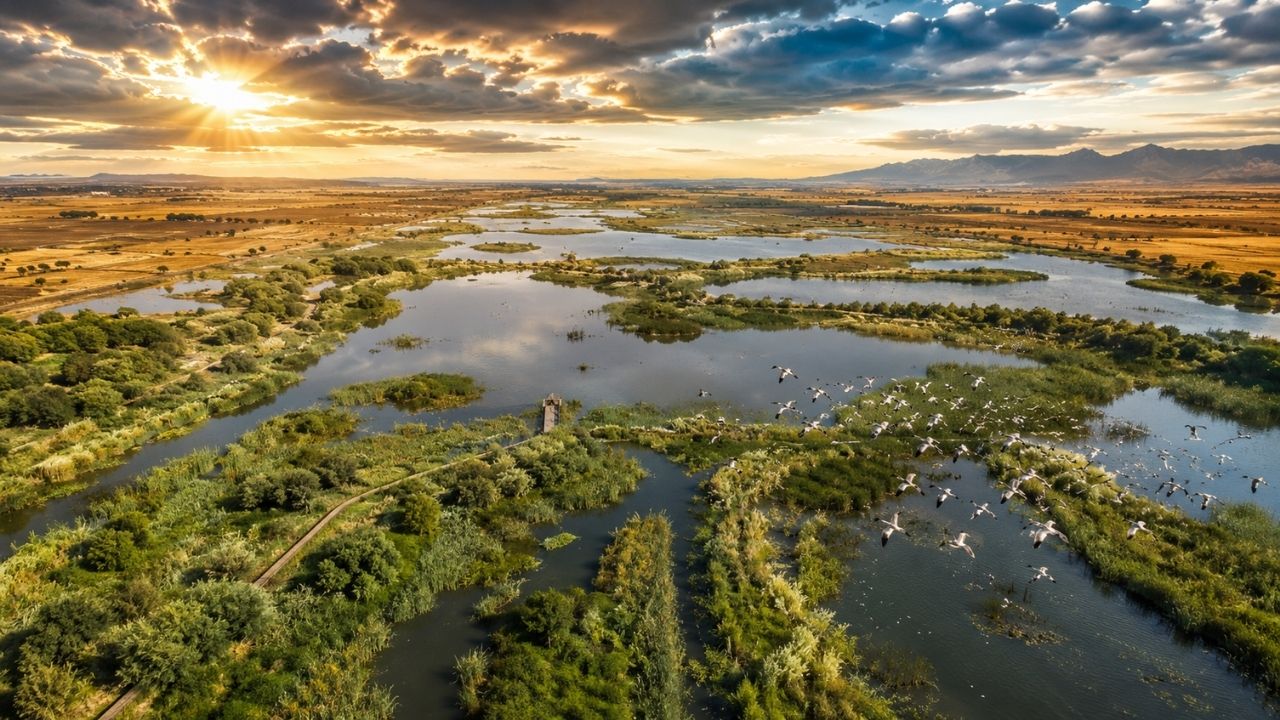


Wetlands enter Europe’s climate agenda with LIFE HumedalES, a 160 million euro initiative to restore wetlands in Spain, recover 26,000 hectares, improve 43 habitats, and strengthen natural protection against floods, droughts, species loss, water pollution, and atmospheric carbon in degraded areas.
Wetlands have returned to the center of the European environmental strategy with the launch of LIFE HumedalES, a megaproject aimed at restoring wetlands in Spain. The initiative was presented on February 2, 2026, and targets ecosystems pressured by decades of degradation, biodiversity loss, and changes in water use.
According to a publication by the European Commission, the project involves the European Union, public entities, environmental authorities, regional governments, NGOs, and representatives from the agricultural and tourism sectors. In practice, the goal is to restore more than 26,000 hectares of Spanish wetlands, improve the conservation status of 43 types of habitats, and reinforce natural resilience against floods, droughts, and the effects of the climate crisis.
Megaproject transforms wetlands into a key piece of climate adaptation

The wetlands are treated as strategic areas because they function as natural water reservoirs, species shelters, and environmental filters. Contrary to the image of unproductive lands, these ecosystems help regulate water cycles, store carbon, and reduce the impacts of extreme events.
-
Engineers Develop Fridge-Sized Machine to Produce 95-Octane Synthetic Fuel from Air and Water, Aiming to Sustain Combustion Engines Without Oil

-
Two-Armed Robot Uses AI to Reassemble Destroyed Pompeii Frescoes, Solving an “Impossible” Puzzle
-
New Law in Brazil Requires Breaks for Type 1 Diabetes Management at Work, School, and Public Exams

-
Scientists Confirm “Greening” of Antarctica: Ice on the World’s Coldest Continent Turns Green as Mosses Multiply Over Tenfold in Four Decades


The European bet is based on a simple logic: restoring nature can be more efficient than just repairing damage afterward. In regions subject to floods, droughts, and environmental degradation, healthy wetlands can cushion some of the impacts before they reach cities, crops, and infrastructure.
The LIFE HumedalES emerges as the largest project ever launched within the LIFE Program, with a total budget of 160 million euros. Of this amount, almost 30 million euros come from the European Union, while the rest comprises national and regional mobilization in Spain.
The scale is noteworthy because the project is not limited to an isolated area. The proposal involves high mountain lakes, inland wetlands, coastal lagoons, and swamps, bringing together different landscapes that fulfill distinct but equally important environmental functions for climate resilience.
Spain must restore more than 26 thousand hectares of wetlands
Spain was chosen as the stage for LIFE HumedalES, which aims to recover more than 26 thousand hectares of wetlands. The plan seeks to improve 43 types of habitats, including freshwater environments, coastal areas, and swamps that support endangered species and essential environmental services.
The restoration of these areas can benefit everything from wildlife to human communities that depend on clean water, stable soil, and protection against extreme events. When a wetland is degraded, the damage is not limited to the environment: it affects the economy, water security, and quality of life.
The project also stands out for the number of participants. More than 40 stakeholders are involved, including public entities, environmental authorities, agricultural authorities, 14 regional governments, non-governmental organizations, and representatives linked to tourism and agriculture.
This articulation is necessary because the restoration of swamps and wetlands does not depend solely on planting vegetation or controlling water. It requires negotiation on land use, water management, species conservation, productive activity, and territorial planning.
Ecosystems help store carbon, water, and biodiversity

Swamps play a significant role in carbon storage because they accumulate organic matter in waterlogged soils and help keep this carbon out of the atmosphere. When degraded or drained, these environments can lose part of this capacity and cease to fulfill an important climatic function.
In addition, wetlands serve as a refuge for a wide variety of species. Birds, mammals, amphibians, fish, and insects depend on these environments for feeding, reproduction, and movement. By protecting habitats, the project also protects the ecological chains that keep these environments alive.
Another point is water quality. Wetlands can help retain sediments and reduce certain types of pollution, functioning as natural filters. This aspect is especially relevant in regions where agriculture, urbanization, and water scarcity compete for the same territory.
A European study cited in the context of the initiative indicates that strategic restoration of wetlands can reduce nitrogen pollution and improve water quality with minimal impact on agriculture. In other words, the proposal seeks to reconcile conservation and production, without treating the two fields as automatic enemies.
Project connects to the European Nature Restoration Law
LIFE HumedalES is also aligned with the Nature Restoration Regulation, one of the most relevant environmental fronts of the European Union. The goal is to recover degraded ecosystems and strengthen the continent’s ability to deal with climate change, biodiversity loss, and pressure on natural resources.
In this context, swamps are no longer seen just as isolated landscapes and become part of a continental environmental security strategy. The logic is that losing nature means losing resilience, especially in a scenario of more intense droughts, extreme rainfall, and increased demand for water.
The LIFE Program, which for more than 30 years has funded environmental and climate initiatives, appears as the chosen instrument to enable the action. The new project expands this trajectory by concentrating resources on an ecosystem historically drained, occupied, or underestimated in various regions of Europe.
The political and environmental message is clear: restoring degraded areas has become a form of infrastructure. Instead of relying solely on conventional works, Europe tries to reinforce natural defenses capable of protecting communities, reducing risks, and sustaining economic activities in the long term.
Pressure on wetlands concerns economies and communities


European wetlands have faced strong pressure for decades. Drainage, urban expansion, intensive agriculture, pollution, and climate change have reduced the ability of these environments to retain water, protect species, and balance local ecosystems.
With this, the degraded wetlands cease to function as natural barriers against floods and reservoirs during dry periods. The loss of these ecosystems can increase public costs, threaten productive activities, and reduce the safety of populations living near vulnerable areas.
However, restoration is not simple. It requires monitoring, adaptation to local conditions, and time for habitats to resume their functions. In some cases, it will be necessary to restore water flows, control invasive species, review land uses, and protect newly restored areas.
Even so, the project shows a change in priority. Instead of treating nature as an obstacle to development, the European strategy now treats it as part of the solution to protect the economy, food, water, and communities.
Wetlands can become natural defense against droughts and floods
One of the most important promises of LIFE HumedalES is to reinforce the natural defense against droughts and floods. Preserved wetlands can absorb water during periods of intense rain and release it more slowly during times of scarcity.
This functioning makes wetlands allies in climate adaptation. They do not eliminate extreme events, but they can reduce some of the impacts and buy time for communities and productive systems to better respond to climate changes.
The initiative also reinforces the importance of nature-based solutions. While rigid constructions remain necessary in many contexts, restored ecosystems can complement protection with additional benefits such as biodiversity, landscape, water quality, and carbon capture.
In practice, the challenge will be to transform budget, institutional coordination, and environmental goals into visible recovery in the territory. The project has an unprecedented scale within the LIFE Program, but its success will depend on execution, monitoring, and maintenance of the restored habitats over the years.
The big question is whether projects of this type will be able to change the way governments plan environmental infrastructure. Do you think restoring wetlands and wet zones should also become a priority in countries like Brazil, or do traditional constructions still seem safer to face floods, droughts, and biodiversity loss?