






 Portuguese
  Spanish



The ‘Impossible’ Became Reality: Ultraflexible Material That Repels Liquids Without Losing Performance, Even After 5000 Cycles, Was Created by Researchers from North Carolina and Promises to Revolutionize the Industry and Consumption Worldwide
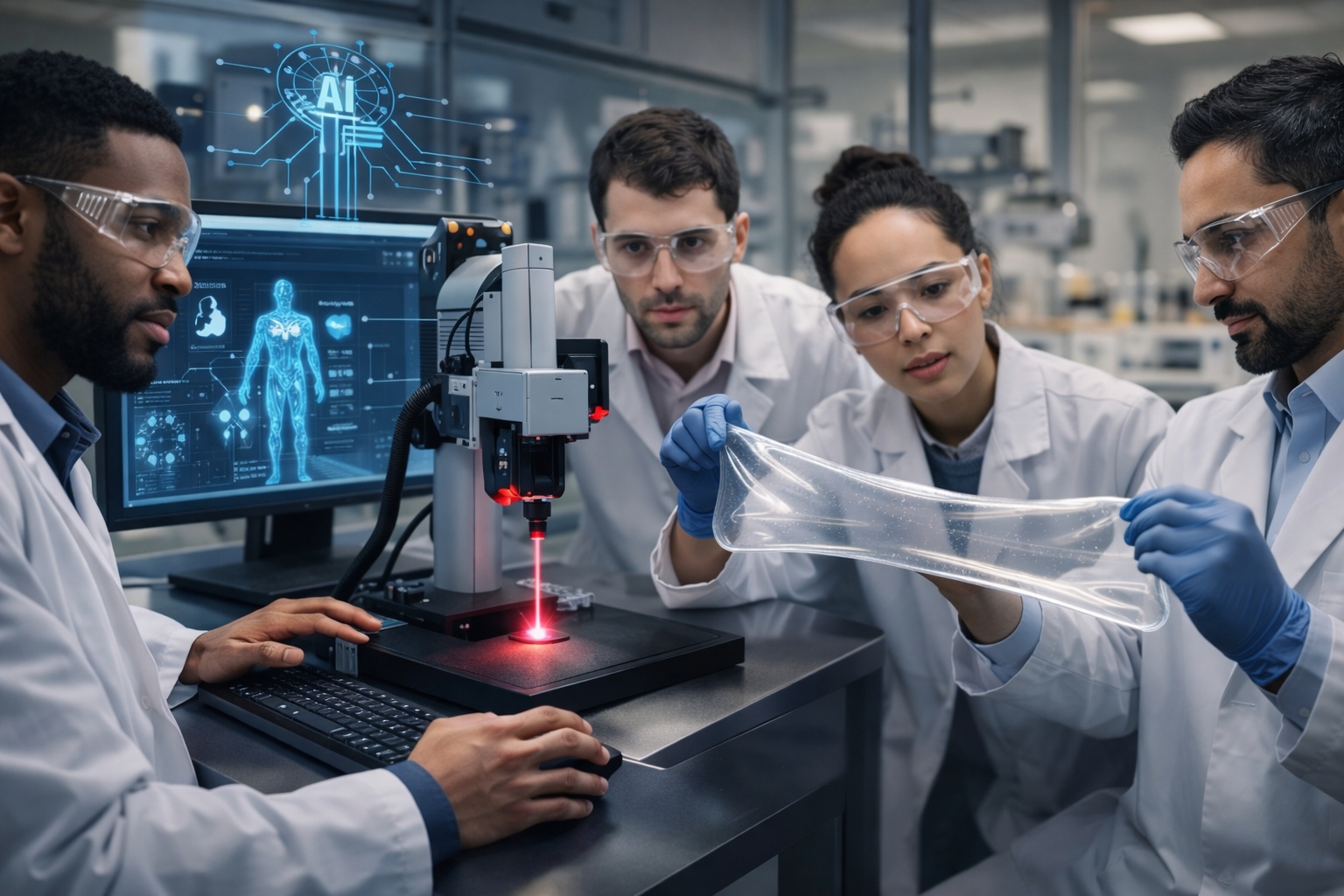
Researchers from North Carolina State University achieved a feat that seems straight out of a science fiction movie: a material capable of repelling almost any liquid, including acids and solvents, resisting extreme deformations, even when stretched five times its original size.
The detail that drew the most attention was durability: the material maintained its superomniphobic properties after more than 5000 cycles of stretching and releasing something that once seemed impossible.
Furthermore, the process to create the surface is more sustainable. Instead of harsh chemical sprays, the scientists used laser guided by artificial intelligence, making the manufacturing greener and more efficient.
-
She spent 73 years breathing inside an iron lung, survived the aftereffects of polio, and became the last woman in the United States dependent on the equipment before dying at 78 years old.

-
Brazilian students created a $1 filter using pine bark, cotton, and 3D-printed parts to clean cassava wastewater, reduce the toxicity of a hazardous waste, and transform contaminated water into biofertilizer.

-
Astronaut from Artemis II steps down after mission to the Moon and decision surprises after a record of 406,771 km, a historic 10-day journey, and an unprecedented achievement for Canada.

-
A fossil kept for years in a small museum in Montreal concealed 450-million-year-old soft tissue, a discovery that has only happened once before in history.


The result promises to transform sectors that rely on flexible, durable materials, from robots to chemical protective clothing.
Laser and Artificial Intelligence Create Surfaces That Challenge the Limits of Physics
The major innovation lies in the method. The material does not use nanoparticle spray as before. Laser ablation creates micro-protrusions and rough textures directly on the surface, ensuring superomniphobicity without harsh chemicals.
Artificial intelligence determined the ideal laser parameters: power, speed, and pulse frequency among millions of possible combinations. This eliminated years of trial and error testing.
The result is a surface that repels water, acids, and strong bases while maintaining performance even under extreme deformations.
Resistance That Impresses Experts and Surpasses Old Standards
The material can withstand stretching up to 5 times its original length and remains repellent even after 5000 cycles of stretching and releasing.
Detailed tests showed that contact angles, rupture pressure, and sliding remain stable, ensuring that robots, clothing, and wearable electronics maintain functionality in extreme conditions.
Compared to traditional methods that lose effectiveness after 100% stretching, the advancement is impressive and changes the game in surface engineering.
Applications That Can Revolutionize Industry and Technology
The impact is immediate. Flexible robots can operate in aggressive chemical environments without compromising sensors or motors.
Wearable electronics and artificial skins can become more durable and secure. Even chemical protective fabrics can be lighter, more durable, and efficient.
The fact that it does not rely on harsh chemicals makes the process more eco-friendly and cost-effective, accelerating adoption in innovative industries.
Before and After Superomniphobicity Without Harsh Chemicals and With Sustainability
Old methods relied on chemical sprays with nanoparticles that easily shed when stretched.
The IA-guided laser approach overcomes this limit, allowing flexible and durable surfaces that do not deteriorate. It is estimated that this technology will open doors to applications that were previously unfeasible.
The change occurred in just a few years, but it already redefines standards in the engineering of flexible and durable materials.
The Future of Flexible and Repellent Materials for Robotics, Electronics, and Protection
Researchers believe that the technology can be quickly applied in textiles, robotics, wearable electronics, and even medicine.
What once seemed impossible has become reality: ultraflexible materials that repel aggressive liquids without losing performance.
The impact is mechanical resistance, chemical protection, and sustainability in a single material that promises to transform industry and consumption.
The innovation from North Carolina State University demonstrates that laser and artificial intelligence can create industrial surfaces that protect against aggressive liquids with unprecedented durability.
The detail that stands out is the combination of extreme elasticity, liquid repellency, and sustainability, paving the way for previously impossible applications.
Can you imagine? A material that stretches five times and repels any aggressive liquid? How would you use this technology? Comment and share your opinion.








Revolucionário mesmo!! A primeira ideia que me vem à cabeça é usar a tecnologia laser guiado por IA para criar essas microprotrusões e texturas rugosas diretamente na superfície de eletrodos (catodo e anodo) de baterias, o que deve aumentar a superfície e consequentemente a capacidade da bateria. E tambem usar o material superomnifobico para isolamento dos componentes internos evitando corrosao pelo eletrolito. Ou, se for uma bateria de eletrolito solido, como involucro externo dos eletrodos.