






 Portuguese
  Spanish


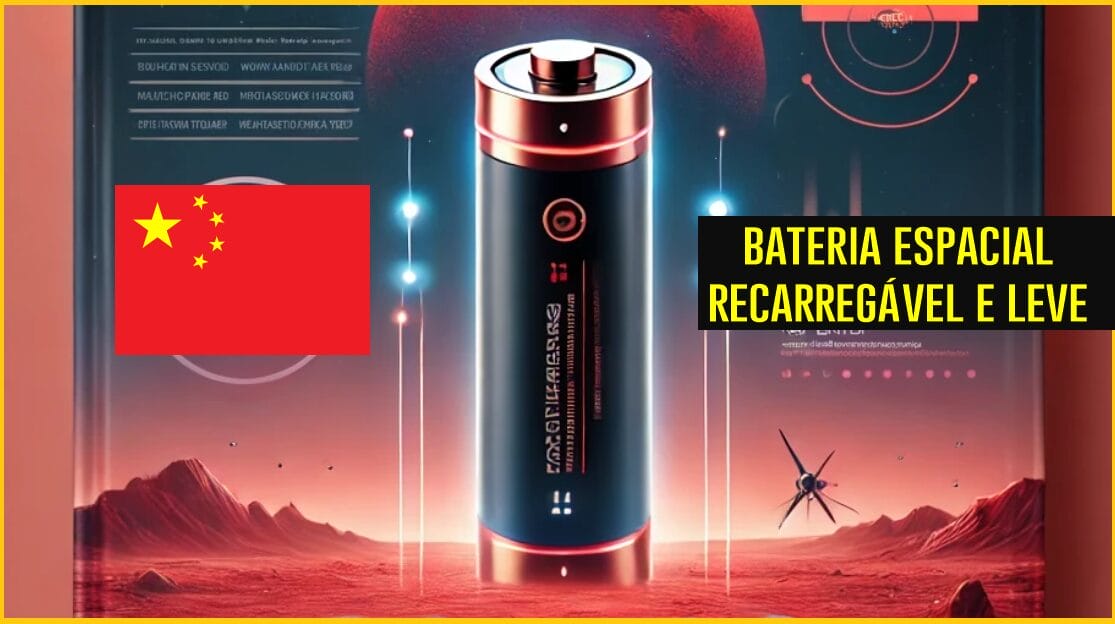

A New Space Battery Developed by Chinese Scientists Could Work in the Atmosphere of Mars and Withstand Extreme Temperatures
Scientists from the University of Science and Technology of China announced the development of an innovative space battery for Mars exploration. This battery, in addition to being lightweight and rechargeable, can utilize the Martian atmosphere as a source of energy, withstanding the extreme temperature variations of the red planet.
This technology represents a significant advancement in space exploration missions, where the efficient use of local resources is crucial for long-term success.
An Innovation for Space Missions

According to the researchers, the space battery can perform “direct inhalation of the Martian atmosphere as fuel” during its discharge process. Additionally, it can be recharged using external energy sources such as solar and nuclear.
-
China Develops Custom 140-Ton Electric Mining Truck with 770 kWh Swappable Battery, Deploys 290 Units in Xinjiang’s Largest Zinc Mine

-
Meta to Launch Arena, a New Prediction App Targeting 3.56 Billion Users, Competing with Polymarket and Kalshi

-
Scientist Challenges Famous Human Evolution Theory, Argues Homo Sapiens Evolved Gradually Over Thousands of Years
-
15-Year-Old American Builds Ocean Generator with PVC Pipe and 3D-Printed Propeller for $12, Wins National Prize, Presents at White House, and Makes Forbes 30 Under 30 List




This capability allows the device to function for long periods, even under challenging conditions. According to a study published in the journal Science Bulletin, the battery managed to operate for over 1,350 hours – approximately two Martian months – at a temperature of 0°C.
Mars is known for its extreme temperatures, with variations of up to 60 degrees between day and night. To handle these conditions, the space battery was designed to withstand large thermal fluctuations, making it a viable solution for prolonged missions on extraterrestrial surfaces.
Utilizing Local Resources to Generate Energy
One of the most remarkable features of this new technology is the way it generates energy. The battery operates similarly to a fuel cell, converting chemical reactions into electricity.
According to Xiao Xu, one of the authors of the study, the device uses gases from the Martian atmosphere, such as carbon dioxide, oxygen, and carbon monoxide, as “fuel”. This process eliminates the need to transport large amounts of fuel to Mars, which represents a significant reduction in weight and costs for missions.
Similar to hydrogen and oxygen fuel cells, which use these elements to generate energy, the Martian battery harnesses the available resources on the planet itself, producing electricity directly through chemical or electrochemical reactions. This way, missions can rely on a local and sustainable energy source.
Advantages Over Current Technologies
Currently, missions to Mars primarily rely on portable lithium-ion batteries, as well as large solar panels and nuclear batteries to power rovers and other exploration equipment.
However, the accumulation of dust on solar panels, as occurred with the Chinese rover Zhurong, can limit the amount of light received, reducing the efficiency of the energy system. The new battery proposed by the Chinese researchers could offer a solution to this problem, as it does not depend exclusively on solar panels.
While the new battery does not aim to replace existing energy sources like nuclear or solar batteries, it represents an important addition to the energy supply system.
The combination of multiple sources, such as solar, nuclear, and the developed battery, could ensure more efficient and sustainable exploration on Mars.
Next Steps in Battery Development
The study, which is a proof of concept, is still in the development phase. Scientists hope to improve the solid battery technology by addressing issues such as the volatilization of electrolytes at low pressures and thermal and barometric management.
This could ensure that future Martian batteries are even more effective and reliable, allowing for long-duration missions to be conducted with greater safety and efficiency.
This new approach to harnessing local Martian resources opens up new possibilities for space exploration, bringing a more sustainable and self-sufficient vision for the future of interplanetary missions.






