






 Portuguese
  Spanish


In One of the Deepest Regions of the Pacific, Researchers Identified Three Species Previously Unknown of Deep-Sea Fish. Among Them, a Specimen Garnered Attention Due to Its Unusual Appearance and Is Considered Cute. The Discovery Occurred During Scientific Expeditions Carried Out Off the Central Coast of California, at Great Depths
The discovery of three species in the eastern Pacific was formalized through a study published on August 27 in the journal BioOne. The team described organisms from the family Liparidae and detailed morphological and genetic attributes.
Among the records, one specimen was characterized publicly as “very adorable,” a statement associated with field perception and direct observation. The findings reinforce the diversity of snailfish in deep-sea environments.
Snailfish: Descriptions and Characteristics
They presented Careproctus colliculi, with a round pink head, referred to as the thick-lipped snailfish; Careproctus yanceyi, with a rounded black head, cited as the dark snailfish; and Paraliparis em, with a long black body, designated as the slender snailfish.
-
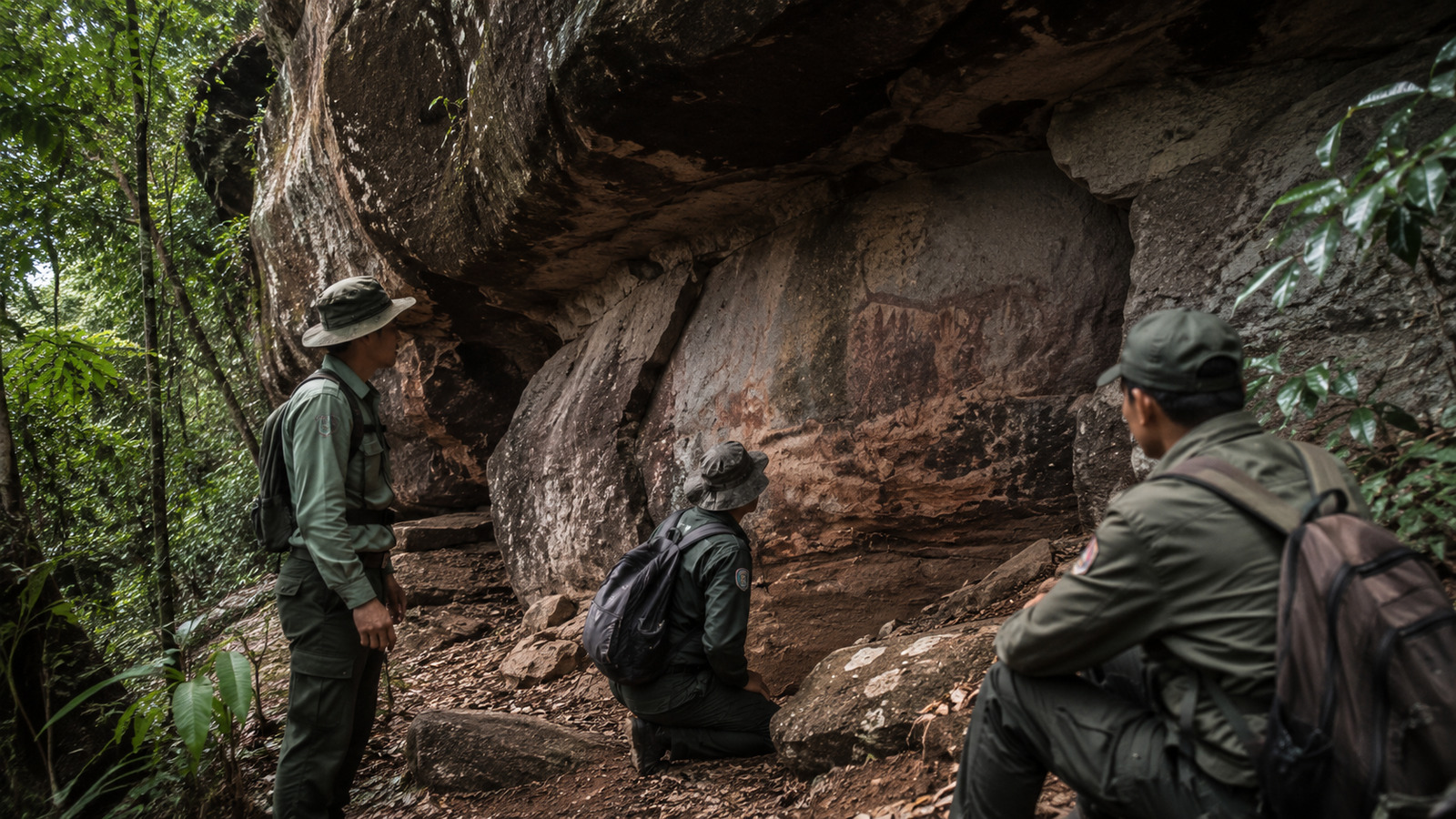
Anti-poaching patrol in Thailand accidentally discovers hidden cave with 2,000-year-old petroglyphs, geometric engravings, and mysterious three-finger patterns on sandstone walls.

-
Russia Deploys Largest Nuclear Icebreaker in Arctic Capable of Breaking Through Three-Meter-Thick Ice

-
TCL Launches Energy-Efficient Refrigerator in Brazil, Promising 70% Less Consumption Than Competitors

-
Project Daedalus: The 190-Meter Spacecraft Aiming to Reach Another Star with Nuclear Fusion and a 50-Year Fuel Supply




The three species belong to Liparidae, a group where proportionally large heads and gelatinous bodies are observed.
It is common for these deep-sea fish to have a ventral suction disc used for attachment to the substrate and movement alongside other organisms.
Among the described species, only the slender snailfish does not present a suction disc, a functional distinction that was noted comparatively in the analyzed material.
The color variation mentioned for the group generally includes blue, pink, white, and purple, with specific mention of recognizable facial shapes in photographic and video observations.
Collections, Depths, and Locations
Two snailfish—the dark snailfish and the slender snailfish—were collected in the same dive by the submersible Alvin at 13,513 feet at Station M, a deep-sea research observatory located about 130 miles off the central coast of California.
The simultaneous occurrence of two undescribed species in a extensively studied location was highlighted by the team as indicative of gaps still existing in the sampling of the seabed.
The third record was obtained by a remotely operated vehicle at 3,272 meters in the Monterey Canyon, California.
This is the pink-colored fish, described by the lead researcher as “very adorable,” a formulation presented in an interview and linked to the visual aspect of the animal observed at depth.
Method of Identification and Comparison
The specific delimitation employed DNA sequencing and documentation of morphological metrics, covering size, shape, and meristic counts such as number of vertebrae. The integrated assessment allowed distinguishing the cryptic forms obtained at Station M, whose external examination indicated high similarity.
According to the team, the combined analysis enabled taxonomic separation and comparison with previously known species, aimed at understanding the evolution of snailfish in the deep benthic environment.
The morphological characterization was accompanied by recording structural variations associated with the suction appendages, cephalic contour, and skin texture.
These data were articulated with the genetic sequences to support the specific diagnosis and the proposal of scientific names.
Nomenclature and References
The epithet C. yanceyi honors Paul Yancey, a deep-sea biologist, whose work was cited as a reference for understanding adaptations to high pressure.
The Paraliparis em refers to Station M, a site linked to the collecting effort. Meanwhile, C. colliculi received a name associated with skin texture, an attribute that aided in the taxonomic definition of the species within the scope of the study.
The mention of “lovely” colors and a “smile” was recorded in a technical statement by a researcher who was not part of the article’s authorship, forming an external assessment of color patterns and facial shape in Liparidae.
These observations, of a descriptive nature, were cited as part of the context of scientific communication on deep-sea species off the coast of California.
The Reach of the Study and Scientific Implications
As clarified by the authors, the identification of three new species expands the inventory of organisms in the largest habitat of the planet, the deep ocean zone.
The result documents the presence of snailfish in long-mapped areas and demonstrates the persistence of taxonomic gaps in regions considered well-studied.
The combined methodological advance—genetic and morphological—was identified as a central element for the resolution of cryptic species and for comparison with previously described taxa.
The publication in the journal BioOne on August 27 formalized the nomenclature and descriptive basis.
The material indicates that new samplings and analyses may consolidate internal evolutionary relationships within Liparidae and detail the bathymetric distribution of the snailfish recorded off the central coast of California.


