






 Portuguese
  Spanish


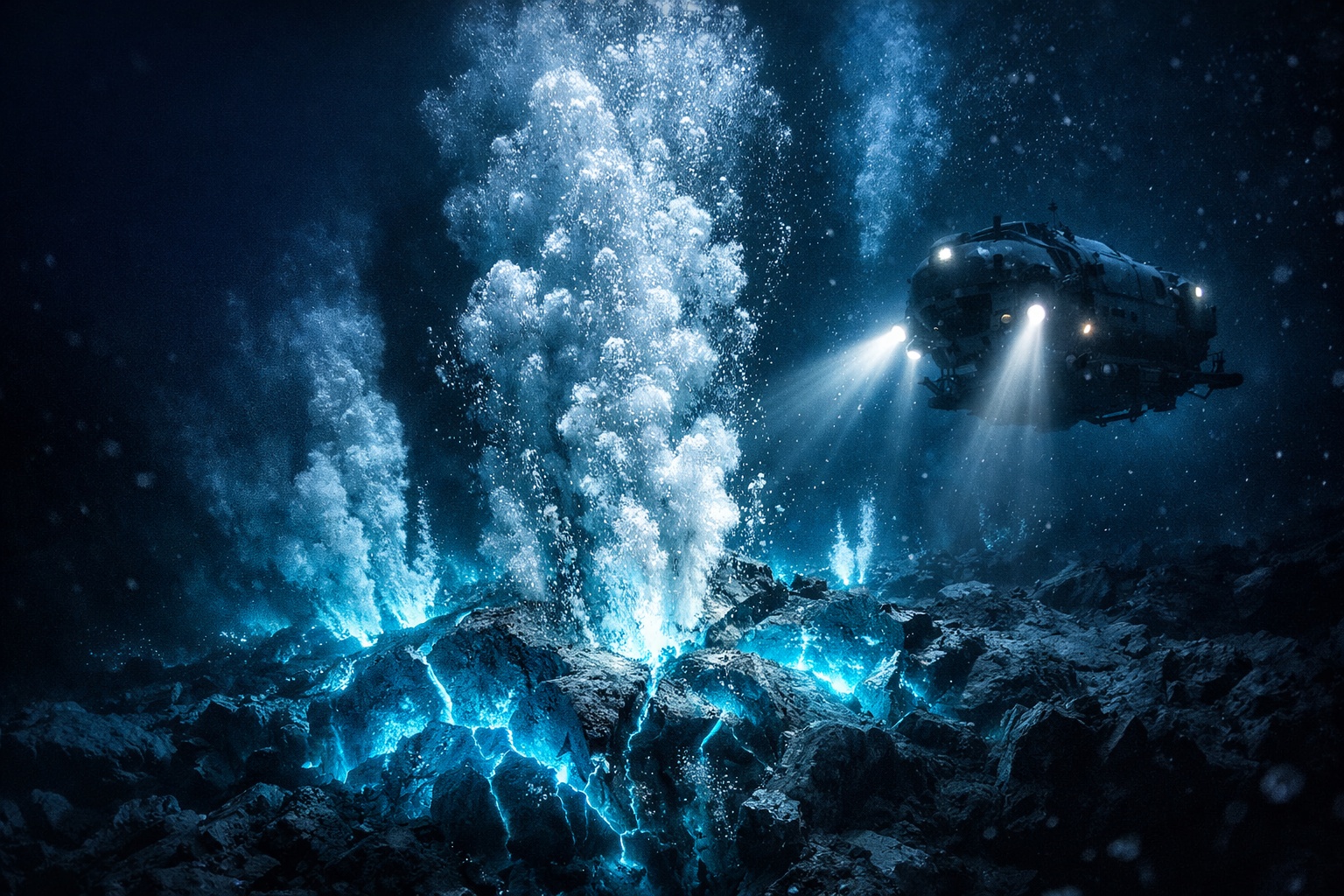


Studies Detect Methane Release at 3,500 Meters Depth and Rekindle Alert About Submarine Hydrates That Store More Carbon Than All Fossil Reserves.
The detection of methane release on the ocean floor at about 3,500 meters depth has rekindled a scientific debate that has mobilized climatologists, marine geologists, and oceanographers for decades: the risk associated with methane hydrates — frozen formations that trap enormous amounts of gas under high pressure and low temperatures. Research conducted by institutions such as the GEOMAR Helmholtz Centre for Ocean Research Kiel and the National Oceanic and Atmospheric Administration confirm that there are areas on the ocean floor where methane escapes naturally through geological fractures, tectonic faults, and thermal destabilization of sediments. In certain regions, measurements indicated emissions up to twice as high in specific hydrate zones compared to stable adjacent areas.
The phenomenon is not new, but the intensity and geographical distribution of these releases have been monitored with greater precision in recent years, especially in the Arctic, Ross Sea (Antarctica), and regions of the North Pacific.
What Are Methane Hydrates and Why Do They Store More Carbon Than All Fossil Reserves
Methane hydrates — also known as clathrates — are crystalline structures formed when methane molecules become trapped in a “cage” of frozen water under conditions of high pressure and low temperature.
-
Robots Clean Solar Panels in Desert Power Plants Without Water, Preventing Energy Losses

-
AI Radar Built with Old Camera and $20 Gains Attention After Alleged $317,000 Sale to Chinese Government, But Lack of Documentation and Official Confirmation Raises Questions

-
Amateur Detectorist Discovers 3,400-Year-Old Bronze Age Gold Treasure with 121 Pieces in Transylvania, Including a Unique Ring

-
Italian Designer Develops Solar-Powered Terracotta Water Purifier Producing Up to 5 Liters of Drinking Water Daily Without Electricity


They are found:
- On deep continental margins
- In abyssal plains
- Under permafrost in the Arctic
It is estimated that submarine hydrates store more carbon than all known reserves of oil, natural gas, and coal combined. This estimate is based on global geological surveys consolidated over the last few decades.
This massive concentration of carbon is precisely what makes the phenomenon a sensitive topic for climate science.
Methane Release at 3,500 Meters: What the Studies Really Show
At approximately 3,500 meters depth, the pressure exceeds 350 atmospheres. Under these conditions, methane tends to remain dissolved in water or stabilized in solid hydrate form. However, recent studies have shown that:
- Changes in deep water temperature can destabilize sediments
- Tectonic activity can open escape channels
- Microorganisms can influence local geochemical cycles

Documented research in polar regions has shown areas with localized increases in methane flow compared to historical measurements, although most studies indicate that much of this methane dissolves in the water column before reaching the atmosphere.
The scientific alert is not associated with an isolated sudden event, but rather with the ongoing monitoring of systems sensitive to ocean warming.
Methane Is 80 Times More Powerful Than CO₂ in the Short Term
Methane (CH₄) is considered one of the principal greenhouse gases. According to reports from the Intergovernmental Panel on Climate Change, methane has a global warming potential approximately 80 times greater than carbon dioxide over a 20-year horizon.
This means that, should large volumes reach the atmosphere, the climate impact could be significant.
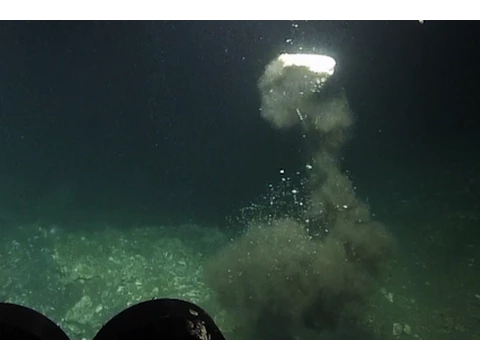

However, the depth of 3,500 meters represents a limiting factor: most of the methane released at great depths tends to be:
- Consumed by methanotrophic bacteria
- Dissolved in water
- Oxidized before reaching the surface
Still, the concern is related to possible large-scale destabilization scenarios over decades.
The Clathrate Gun Hypothesis and the Scientific Debate
The so-called “clathrate gun” hypothesis suggests that accelerated ocean warming could trigger massive release of trapped methane, amplifying global warming.
Although this hypothesis has been debated for years, most experts consider an abrupt and global release in the short term unlikely. What worries researchers is the possibility of:
- Persistent gradual releases
- Regional amplification in the Arctic
- Cumulative effects over time
Studies indicate that warming of deep waters occurs on decadal scales, not days, which makes the phenomenon more complex and less immediate than alarmist headlines suggest.
Monitoring in Critical Regions: Arctic, Antarctica, and North Pacific
The Arctic is considered one of the most sensitive regions due to the presence of submarine permafrost and shallow continental margins.
In the Ross Sea, researchers have identified methane plumes associated with ancient hydrate formations. In the North Pacific, seismic and acoustic surveys have detected columns of ascending bubbles in tectonically active areas.
These monitoring efforts utilize:
- Autonomous underwater vehicles (AUVs)
- Geochemical sensors
- High-resolution sonar
- Direct sediment sampling
The goal is to understand if there is a correlation between rising ocean temperatures and the instability of deposits.
Real Climate Impact: Immediate Risk or Gradual Process?
The main conclusion of the current scientific literature is that:
- The release of methane at abyssal depths is real and documented.
- Most of the deep methane does not reach the atmosphere directly.
- The greatest risk is in shallower regions and in the Arctic.

There is no robust scientific evidence of a sudden global methane explosion within 48 hours on a planetary scale. The scientists’ alert relates to the continuous monitoring of one of the largest natural carbon reservoirs on Earth.
Why the Topic Has Returned to the Center of Scientific Discussions
Three factors explain the recent increase in interest:
- Technological advancement in underwater monitoring
- Expansion of the debate on deep-sea mining
- Intensification of ocean warming recorded in recent climate reports
With ocean temperatures reaching historical highs in recent years, researchers have begun to reassess systems considered stable on geological scales.
A Giant Reservoir Under Scientific Surveillance
The detection of methane emissions at 3,500 meters reinforces that the ocean floor houses one of the largest carbon deposits on the planet.
Although there is no evidence of an immediate catastrophic event, the phenomenon remains under constant analysis by scientists studying the long-term impacts on the global climate system.
What is at stake is not just an isolated leak, but the behavior of a geological reservoir that could influence the climate balance in the coming decades.







É meio que..lógico que: o vácuo que fica após a extração de **** fósseis, como petróleo e gás causarão impacto ao planeta a longo prazo. O Humano, esta caminhando rumo a extinção do planeta.
É tema muito importante já que estamos lidando no dia a dia com o aquecimento global e a liberação desses gases pode causar um grande impacto no planeta. Além temos um problema maior a ambição das grandes potências pela mineração
Parabéns pelo artigo! Muito interessante!
Uma questão que vem preocupando-me há algum tempo é a extração de petróleo em águas profundas. Essa extração de petróleo não estaria contribuindo para esse vazamento e para o próprio movimento das placas tectônicas??