






 Portuguese
  Spanish





Phenomenon Registered At 4,000 Meters Challenges Traditional Models Of Oxygen In The Deep Ocean And Reignites Debate On Mining In Areas Rich In Polymetallic Nodules, After Measurements Indicated Increased Gas In The Dark And Elevated Electric Potentials On The Seabed.
Measurements Taken At The Bottom Of The Pacific, In An Abyssal Region Covered By Polymetallic Nodules, Registered An Increase In Oxygen In Complete Darkness, At A Depth Of About 4,000 Meters, Where Photosynthesis Does Not Occur.
In Chambers Installed On The Seabed, Gas Levels Increased For Nearly 48 Hours, Reaching More Than Three Times The Background Value.
The Result Was Described In An Article Published In Nature Geoscience, Based On Experiments On The Ocean Floor And Additional Tests With Collected Material.
-
Professor Builds Solar Power Plant from Electronic Waste, Restores School Days in Remote Brazilian Amazon Community

-
Massive 1.6 km-wide asteroid traveling at nearly 9 km per second to narrowly miss Earth this Saturday; here’s how, when, and where to watch the event.

-
Scientists Discover 10,000-Year-Old Stone Wall in the Baltic Sea, Used to Trap Reindeer Before Sea Levels Rose

-
Farmer’s DIY Cooling System Saves Harvests from Spoiling in 51 Countries by Tricking Standard Air Conditioners to Chill Rooms to 2°C


The Discovery Drew Attention For Occurring In Areas That Concentrate Deposits Coveted By Deep-Sea Mining Projects, The Subject Of Regulatory And Scientific Debate For Years.
Measurements On The Seabed Surprise Researchers

The Records Came From In Situ Experiments With Benthic Chambers, Used To Estimate The Flow Of Oxygen Between Sediment And Water Very Close To The Bottom.
In Deep Environments, The Expected Pattern Is A Gradual Decline In Oxygen Within The Chamber, Reflecting Respiration By Microorganisms And Animals, As Well As Oxidation Reactions.
This Time, However, Part Of The Incubations Showed The Opposite Signal.
Oxygen Accumulated Instead Of Decreasing, Suggesting A Local Production In The Dark.
According To The Study, Concentrations Started Around Typical Background Values And Reached Much Higher Maximums In Approximately Two Days, Characterizing The Phenomenon.
To Reduce The Chance Of Instrumental Error, The Authors Report Rechecks And Validations By Independent Methods, Seeking To Separate What Might Be A Sensor Artifact From What Could Be A Real Process.
Still, The Interpretation Is Not Consensus In The Scientific Community, And Critics Pointed Out Limits And Uncertainties Of The Evidence Set, Keeping The Topic Under Discussion.
Polymetallic Nodules And Economic Interest
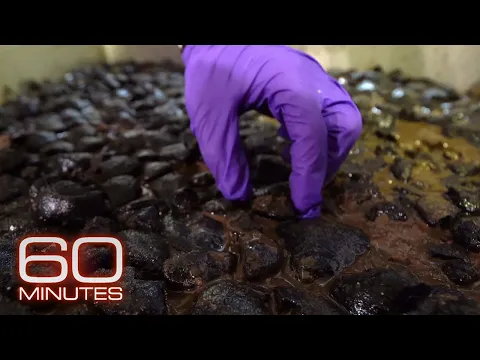
Polymetallic Nodules Are Concretions That Form Over Geological Timescales And Concentrate Metals Such As Manganese, Nickel, Copper, And Cobalt, Elements Relevant To Industrial Supply Chains.
In Certain Abyssal Plains Of The Pacific, They Appear In High Densities, Making Areas Such As The Clarion–Clipperton Zone A Focus Of Economic Interest And Environmental Controversy.

In Addition To Their Mineral Value, These Structures Create Hard Surfaces In An Environment Dominated By Fine Sediments, Providing Anchoring Points And Microhabitats For Organisms.
The Removal Of Nodules Would Therefore Not Only Be The Extraction Of Metal-Rich Material.
It Also Involves The Physical Alteration Of A Substrate That Plays A Role In The Local Ecosystem’s Dynamics.
The Study Describes A Second Line Of Evidence, Obtained Outside The Seabed, In Ex Situ Incubations With Collected Nodules Kept Under Controlled Conditions.
In These Tests, The Presence Of Nodules Was Also Associated With Increased Oxygen, Reinforcing The Hypothesis That The Effect Does Not Depend Solely On Currents, Leaks, Or Disturbances Caused By Equipment Installation.
Electrochemical Hypothesis To Explain Oxygen In The Dark
Instead Of Proposing A “Lightless Photosynthesis,” The Authors Treat The Phenomenon As Production Associated With Physicochemical Processes, Highlighting Electrochemical Mechanisms.
Electrical Measurements On The Surface Of The Nodules Found Potentials That, At Certain Points, Reached 0.95 Volt, A Value Used To Support The Idea Of Microenvironments Capable Of Favoring Specific Reactions.
The Discussed Hypothesis Is That The Electrolysis Of Seawater Could Contribute To Oxygen Generation, With Energy Coming From Potential Differences Related To The Layered Composition Of The Nodules.
The Article Itself Acknowledges That There Are Open Questions About The Exact Conditions, The Stability Of The Process, And The Influence Of Factors Such As Sediment Cover And Local Temperature.
As The Work Relies On Spot Observations And In A Difficult-To-Measure Environment, The Topic Gained Attention Alongside Calls For Replication And Longer Series Of Data.

In Parallel, Critical Analyses Highlighted That Extraordinary Results Require Independent Confirmation And That The Explanation Still Needs To Be Tested With More Robustness, Including In Other Nodule Fields.
Potential Impacts On Deep-Sea Mining
The Discussion Is Growing Because The Proposed Mining For These Plains Often Involves Vehicles That Collect Nodules From The Surface Of The Bottom, Resuspending Sediments And Altering Extensive Areas Of Habitat.
Scientific Briefings On Deep-Sea Mining Describe That The Activity Targets Deposits Such As Polymetallic Nodules And Involves Direct Impacts On The Bottom And Discharges Into The Surrounding Water, With Potentially Broad Risks.
In This Context, The Possibility Of A Chemical Process Associated With The Nodules Adds Another Variable To Environmental Assessment, Alongside Biodiversity, Sediment Plumes, And Slow Ecosystem Recovery.
The Study Does Not Suggest That The Oxygen Produced Is Relevant For The Global Ocean Balance.
The Central Argument Is That, Locally, The Phenomenon May Interfere With Sensitive Chemical And Biological Processes.
At The Same Time, The Regulatory And Political Debate Over Exploration In International Waters Remains Pressured By Economic Interests And Scientific Gaps.
Part Of The Controversy Involves The Difficulty Of Predicting Indirect Effects In Little-Known Environments, Where Small Changes Can Ripple Through Microbial Chains And Communities Adapted To Stability.
If New Studies Confirm That Nodule Fields Function, In Certain Contexts, As Abiotic Sources Of Oxygen On A Microscale, The Industrial Removal Of These Structures Would Have Even More Complex Implications Than Those Currently Considered.
For Now, The Discovery Remains A Scientific Alert.
There Are Mechanisms At The Bottom Of The Ocean That May Challenge Basic Expectations, And The Cost Of Learning This After Significant Interventions Could Be High For The Research Itself.
The Discussion Is Likely To Continue Centered On Verifiable Data, Independent Replications, And Careful Comparisons Between Mined And Preserved Areas.




Significa dizer que podemos ter energia de graça em breve ???
O ser humano e a busca pela tecnologia predatória… Haverá dias que nem a água será perdoada. Haverá escassez de alimentos, escassez de vida marinha por causa dessa busca por **** marinhos. Parece que filmes como ( MAD MAX, O LIVRO DE ELI) e entre outros q mostram um mundo sem água é apenas uma ilustração do que virá 🙁 triste isso.. apenas estaremos aqui pare ver isso acontece do debaixo de nossos olhos… O próprio ser humano destruindo o próprio habitat, que ipocrisia… Enquanto os animais vivem em eterna armonia, nos animais pensantes se auto-destruindo.
Agradeça a ciência, não crie expectativas de adversidade, o futuro depende muito dessas pesquisas, pois o caos está próximo, e não haverá paraíso, a partir de 2030 e graças aos cientistas que buscam soluções é que sabemos disso.