






 Portuguese
  Spanish


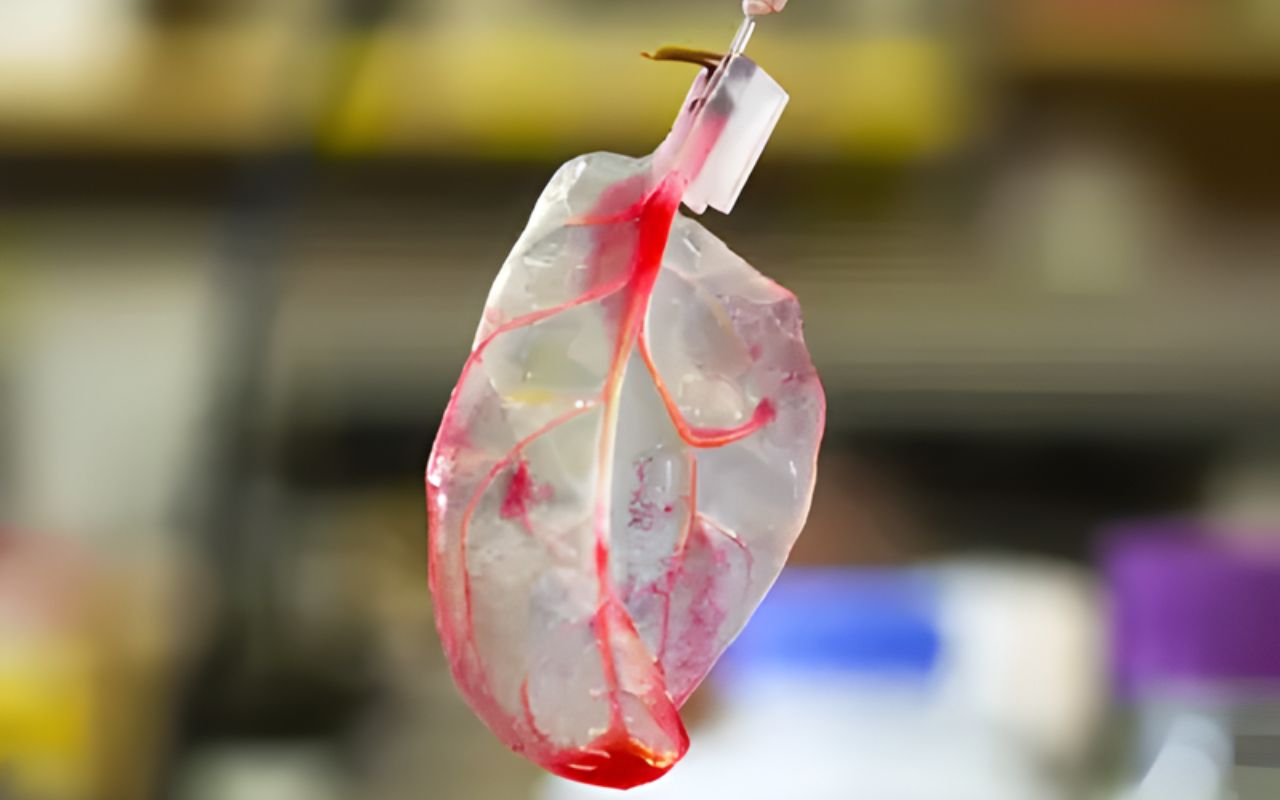


Scientific Research Demonstrates How Spinach Leaves Served as the Basis for an Experimental Artificial Heart with Human Cells.
The advancement of medicine doesn’t always stem from futuristic technologies or complex equipment. In some cases, it starts with an everyday observation. This is exactly what happened when scientists decided to look at a spinach leaf and see it as the foundation for an experimental artificial heart, developed in the lab as an alternative for studies on heart diseases and tissue regeneration.
The work was carried out by researchers from Worcester Polytechnic Institute in the United States and published in 2017 in the scientific journal Biomaterials.
Although not recent, the study has drawn renewed attention in recent years for presenting an unconventional approach to one of medicine’s greatest challenges: creating living heart tissues with functional circulation.
-
Engineers Develop Fridge-Sized Machine to Produce 95-Octane Synthetic Fuel from Air and Water, Aiming to Sustain Combustion Engines Without Oil

-
Two-Armed Robot Uses AI to Reassemble Destroyed Pompeii Frescoes, Solving an “Impossible” Puzzle
-
New Law in Brazil Requires Breaks for Type 1 Diabetes Management at Work, School, and Public Exams

-
Scientists Confirm “Greening” of Antarctica: Ice on the World’s Coldest Continent Turns Green as Mosses Multiply Over Tenfold in Four Decades


Artificial Heart: An Old Challenge of Modern Medicine
Cardiovascular diseases continue to lead mortality statistics worldwide.
At the same time, the supply of organs for transplantation is insufficient to meet the demand from patients relying on this type of treatment.
In light of this scenario, research involving artificial hearts and tissue engineering has become strategic.
The aim is not to immediately replace the human heart but to develop structures that can assist in treatments, test medications, and, in the future, reduce the need for transplants.
The Unexpected Choice of the Spinach Leaf
Instead of turning to synthetic materials, scientists sought inspiration from nature.
Spinach was chosen after the team identified an essential characteristic of the plant: its network of internal veins.
These natural branches resemble the human blood vessel system. The similarity raised the hypothesis that the leaf could function as a sort of natural map for fluid circulation, a fundamental element for any artificial heart.
Transforming the Spinach Leaf into a Biological Support
To allow the plant to receive human cells, it was necessary to completely remove its original cells.
This procedure, known as decellularization, eliminates living plant material while preserving only the physical structure of the leaf.
After the process, what remained was a transparent, lightweight, and sturdy cellulose matrix. This structure kept the internal channels of the leaf intact, creating a system capable of efficiently conducting fluids.

With the support ready, the researchers introduced human heart muscle cells into the spinach matrix.
From that moment on, the experiment entered its most observed phase.
Within a few days, the cells began to organize and exhibit behaviors typical of living tissue.
According to the scientists, spontaneous contractions were recorded under the microscope, indicating activity similar to that of a functioning heart tissue.
Fluid Circulation Confirms the Model’s Potential
To verify if the plant structure could fulfill one of the most complex functions of the heart — circulation — the researchers injected blood-like fluids into the veins of the leaf.
The liquid flowed continuously and efficiently throughout the internal network of the spinach.
This result was deemed crucial, as the lack of vascularization is one of the main obstacles in developing any artificial heart or lab-grown tissue.
Artificial Heart with Spinach Leaf: Possible Applications and Current Limits
Despite the encouraging results, scientists emphasize that the model is still far from being applied in humans.
The experiment has an experimental nature and primarily serves as a research tool.
Even so, the technique may contribute to the development of tissues aimed at treating heart attacks, cardiac injuries, and congenital malformations.
Additionally, other plants are being tested, expanding the possibilities of this approach.
The use of a spinach leaf to create an artificial heart draws attention not only for its creativity but also for the low cost and sustainability of the method.
The research reinforces the idea that innovative solutions can emerge from simple materials when observed from a new scientific perspective.
Therefore, even without immediate clinical application, the study represents an important step in regenerative medicine and shows that the future of cardiac treatment may be more connected to nature than previously thought.
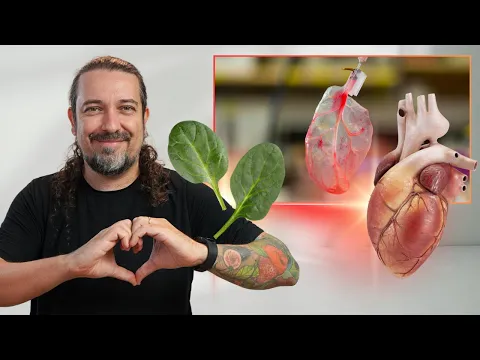

Source: TecMundo







Incrível, porém é preciso fazer cultura de órgãos humanos e evitar rejaicao
Absolutamente fantástico essa matéria. Graças a Deus existe Presidentes da República, que apoiam esses cientistas.
Pesquisa interessante. Vocês cientistas e pesquisadores estão de parabéns, agradecer sempre a Deus por da o dom e a inteligência .