Portuguese
  Spanish


Extraordinary Phenomenon: How Piezoelectricity Generated by Earthquakes Can Form Gigantic Gold Nuggets in Quartz Veins, Revolutionizing Understanding of Mineral Wealth Formation
In the depths of the Earth’s crust, an intriguing phenomenon has challenged scientists for decades: how do large gold nuggets form in quartz veins? A new study, led by geologists from Monash University, may have found the answer — and it involves electricity generated during earthquakes.
Most of the world’s gold is trapped in underground quartz veins, a widely studied mineral formation, but still surrounded by mysteries. These veins form in the deep layers of the Earth’s crust, where superheated fluids rich in gold rise from the planet’s core and cool down.
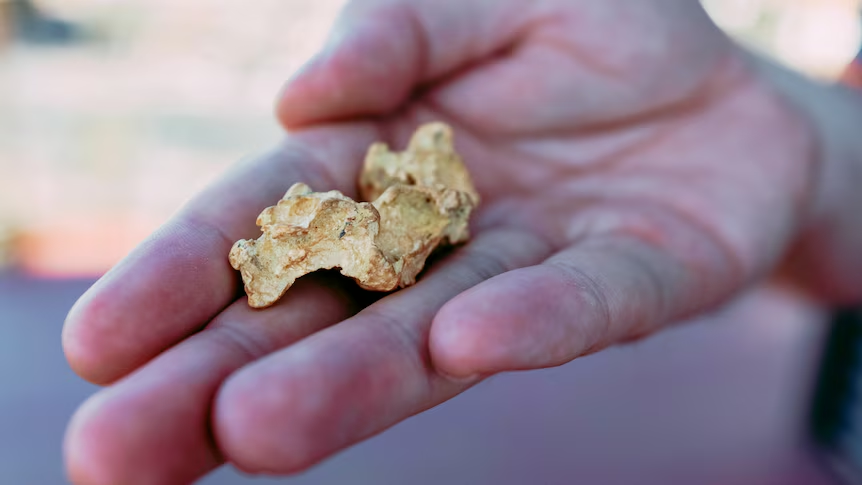
Gold, Quartz and Earthquakes
As these fluids travel through cracks and fissures in the rocks, they can leave precious deposits of gold along the way.
-
U.S. Invests $75 Million in Projects to Extract Rare Earths, Gallium, Germanium, and Aluminum from Coal Waste

-
Eni Acquires 25% Stake in Chilean Lithium Project, Plans to Invest Up to $225 Million in Eco-Friendly Extraction Method
-
Mexico’s Giant Crystal Cave: A Deadly 58°C Underground Palace with 11-Meter Crystals Formed Over Nearly a Million Years

-
China Dominates Over 90% of Rare Earth Refining, Prompting Global Concerns: Canada and Japan Launch Billion-Dollar Plan to Reduce Dependency and Safeguard Batteries, Semiconductors, and Defense


Previous theories suggested that gold would precipitate from these fluids as they cooled or underwent chemical changes, adhering to the quartz. However, this explanation does not fully account for the presence of large gold nuggets, which often appear suspended in quartz, without evident signs of chemical reactions that justify their formation.
It was then that Dr. Chris Voisey and his team from Monash University began to explore a different hypothesis, centered on a unique property of quartz: piezoelectricity. This phenomenon occurs when a material generates an electrical charge when subjected to mechanical stress.
Piezoelectric materials, such as quartz, undergo small deformations when compressed, which alters their internal electric balance and generates a voltage. This property is so reliable that it is widely used in various technologies, from sensors in smartphones to ignition systems in gas stoves.
“It was an obvious connection too good to ignore,” Voisey said in an interview with ABC News. Quartz is not only the most common piezoelectric mineral on Earth, but also where we often find large gold nuggets.
The Experiment That Unraveled the Mystery
To test their hypothesis, the researchers conducted an experiment simulating the conditions present in the Earth’s crust during an earthquake. They suspended quartz crystals in a gold-rich solution and then applied mechanical stress to replicate the seismic waves.
The results were surprising. Under these conditions, the quartz crystals subjected to stress not only deposited gold on their surfaces, but also attracted additional gold particles, forming larger clusters.
“The gold tended to accumulate on existing grains, rather than forming new deposits,” explained Professor Andy Tomkins from the School of Earth, Atmosphere and Environment at Monash University, a co-author of the study.
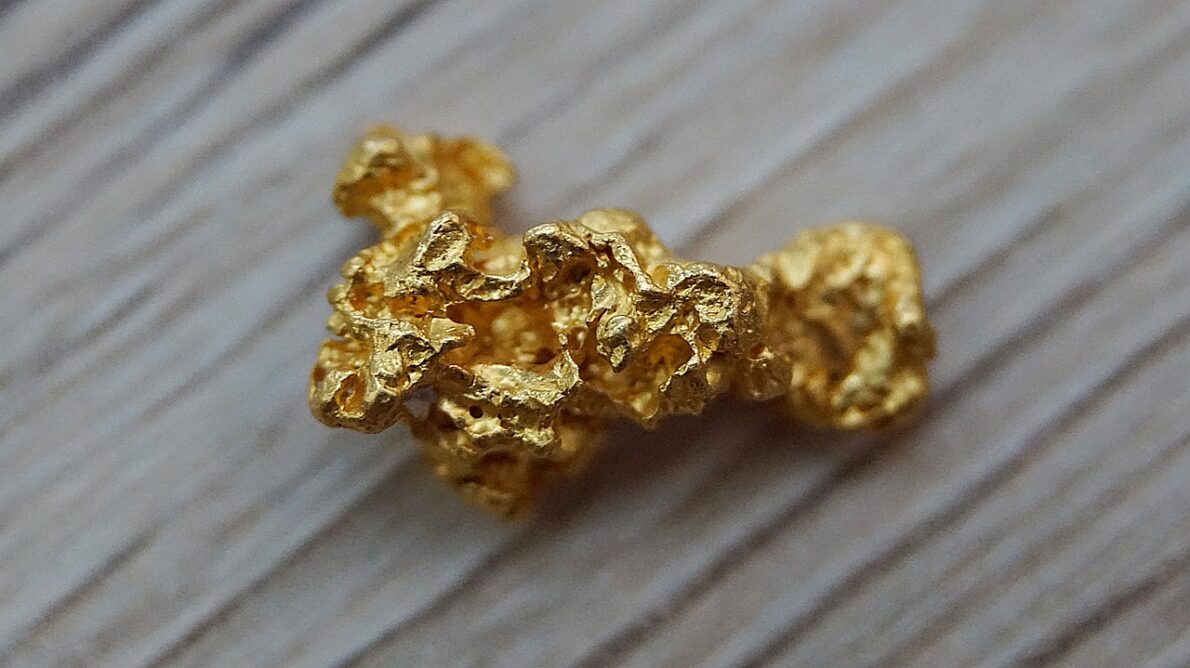
This discovery suggests that a small amount of gold, once adhered to quartz, acts as a ‘lightning rod’, attracting more gold during future seismic events. This process could be key to the formation of large pure gold nuggets over time, with quartz continuously generating piezoelectric voltages that facilitate the deposition of gold from surrounding fluids.
Implications for Mining and Beyond
The study, published in the journal Nature Geoscience, has attracted attention not only from geologists but also from experts in the mining industry. Understanding this new gold formation mechanism could revolutionize exploration techniques. “Knowing that there is an electrical component involved could change our approach to looking for these deposits,” said Rob Hough, director of mineral resources at CSIRO, who was not involved in the study.
While Voisey and his team’s experiments mainly resulted in small gold particles, the researchers believe this piezoelectric mechanism, under specific conditions, could form significantly larger nuggets. Moreover, the study opens doors to new applications of piezoelectricity in mineral processing, which could reduce costs and minimize the environmental impact of gold extraction.
As Voisey reflected: “Understanding these processes not only satisfies our scientific curiosity but also offers us the opportunity to harness the forces of nature in ways we have yet to imagine.”