






 Portuguese
  Spanish


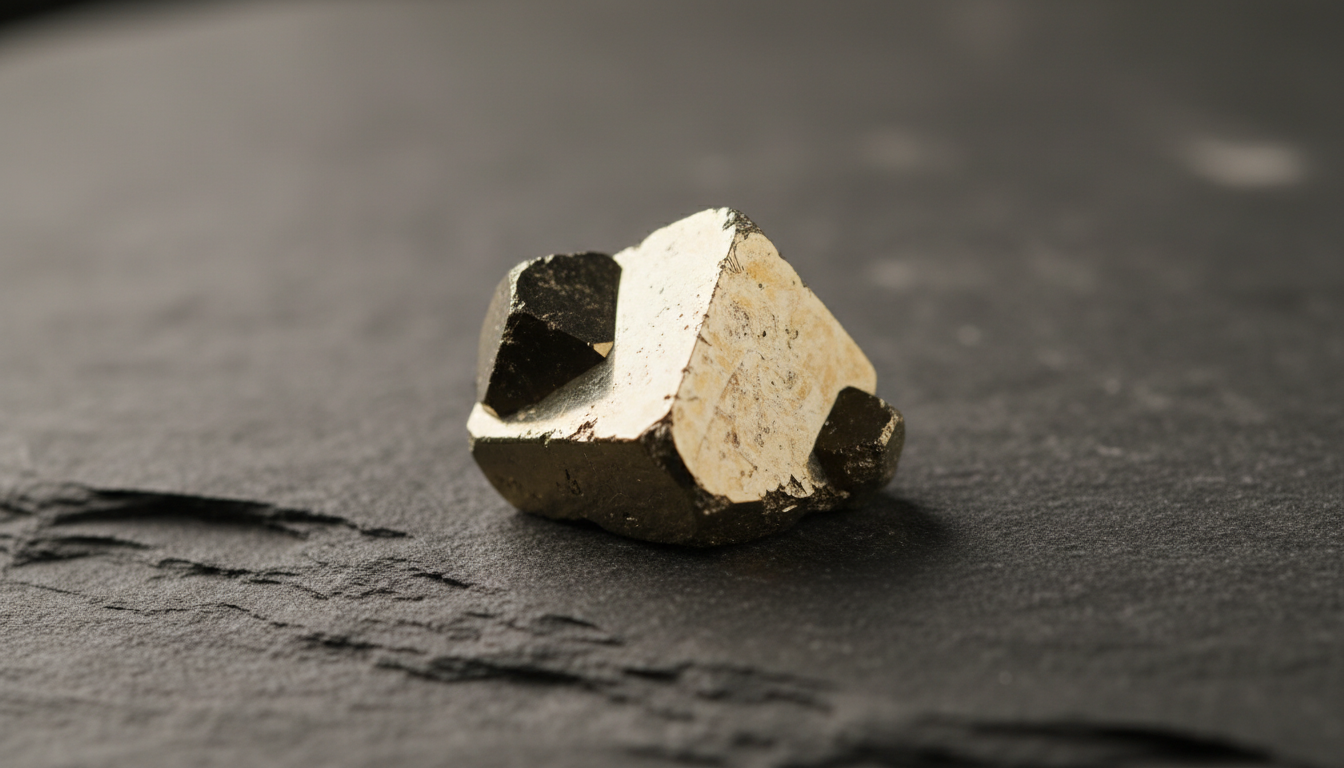
Researchers at West Virginia University analyzed 15 rock samples from the Devonian period in the Appalachian Mountains and discovered that pyrite — known as fool’s gold — hides significant amounts of recoverable lithium
A study published on April 16, 2026, in ScienceDaily revealed that researchers from West Virginia University in the United States found lithium hidden within pyrite crystals in shale rocks over 300 million years old.
Pyrite is popularly known as “fool’s gold” due to its shiny golden metallic luster that deceives unsuspecting miners.
Now, the mineral that everyone thought was useless may hold the key to powering the global lithium battery supply chain.
-
In Somaliland’s Desert, Greenhouse Uses Sun and Seawater to Grow Lettuce, Cucumbers, and Tomatoes Without Rain: 1-Hectare Project Cools Crops, Desalinates Water, and Converts Brine into Commercial Salt

-
Trump Unveils $400 Million Boeing 747 Donated by Qatar as Temporary Air Force One Amid Boeing Delays, Sparking Debate on National Security, Costs, and Foreign Influence
-
Chinese Company Unveils Robotic Toilet That Comes to You, Featuring Lidar Sensors, Voice Command, Bidet, Hot Air Drying, UV Light, and Self-Cleaning Waste Disposal
-
Rotterdam Develops Floodable Square to Absorb Nearly 2 Million Liters of Rainwater, Doubling as Sports, Theater, and Leisure Space When Dry to Combat Urban Flooding




The discovery surprised even the researchers themselves. According to the study, finding lithium within pyrite “is something unprecedented” in the scientific literature.
54% of the total lithium can be extracted solely from pyrite
The team analyzed 15 samples of Devonian sedimentary rocks collected from the Appalachian basin.

The results showed that samples with lower total lithium content in the rock can release up to 54% of all the lithium present solely from pyrite.
Additionally, the researchers identified a positive correlation between the amount of pyrite and lithium recovery — the more pyrite in the rock, the more lithium can be extracted.
This is relevant because pyrite is abundant in organic shales, a type of rock widely available and often treated as waste in drilling operations.
Lithium without new mines: the potential of waste
The major implication of the discovery is practical: it may be possible to extract lithium from existing drilling and mining waste, without the need to open new mines.

Conventional lithium mining involves processes that consume enormous amounts of water, alter landscapes, and generate environmental liabilities.
Countries like Chile, Australia, and China dominate current production, and demand continues to grow with the expansion of electric vehicles.
Finding an alternative source in minerals already considered by-products — like pyrite — could reduce pressure on new deposits and diversify the supply chain.
Moreover, interest in lithium-sulfur batteries has been growing in materials engineering. These batteries promise advantages over current lithium-ion batteries, and pyrite is indeed a mineral rich in sulfur.
The unexpected connection between lithium and sulfur
Until now, there has been little research connecting lithium to sulfur-rich minerals like pyrite.
The study from West Virginia University is pioneering in this regard.
If confirmed on a larger scale, the finding could create a lithium extraction route that utilizes shale waste — material abundant in various regions of the world, including the United States and Brazil.

Brazil has significant shale reserves, especially in the Irati Formation in Paraná. If the technique proves commercially viable, the country could benefit directly.
Caveats: it is still an exploratory phase
The researchers themselves emphasize that the study is exploratory.
The economic viability of large-scale lithium extraction from pyrite still needs to be demonstrated.
There is no data on processing costs or direct comparison with traditional lithium extraction methods from brines or pegmatites.
However, the fact that a mineral dismissed for centuries may now contain one of the most strategic elements of the energy transition is, at the very least, an irony that deserves attention.
“Fool’s gold” may not have deceived miners for so long — perhaps they were looking for the wrong metal.





-

1 person reacted to this.