






 Portuguese
  Spanish


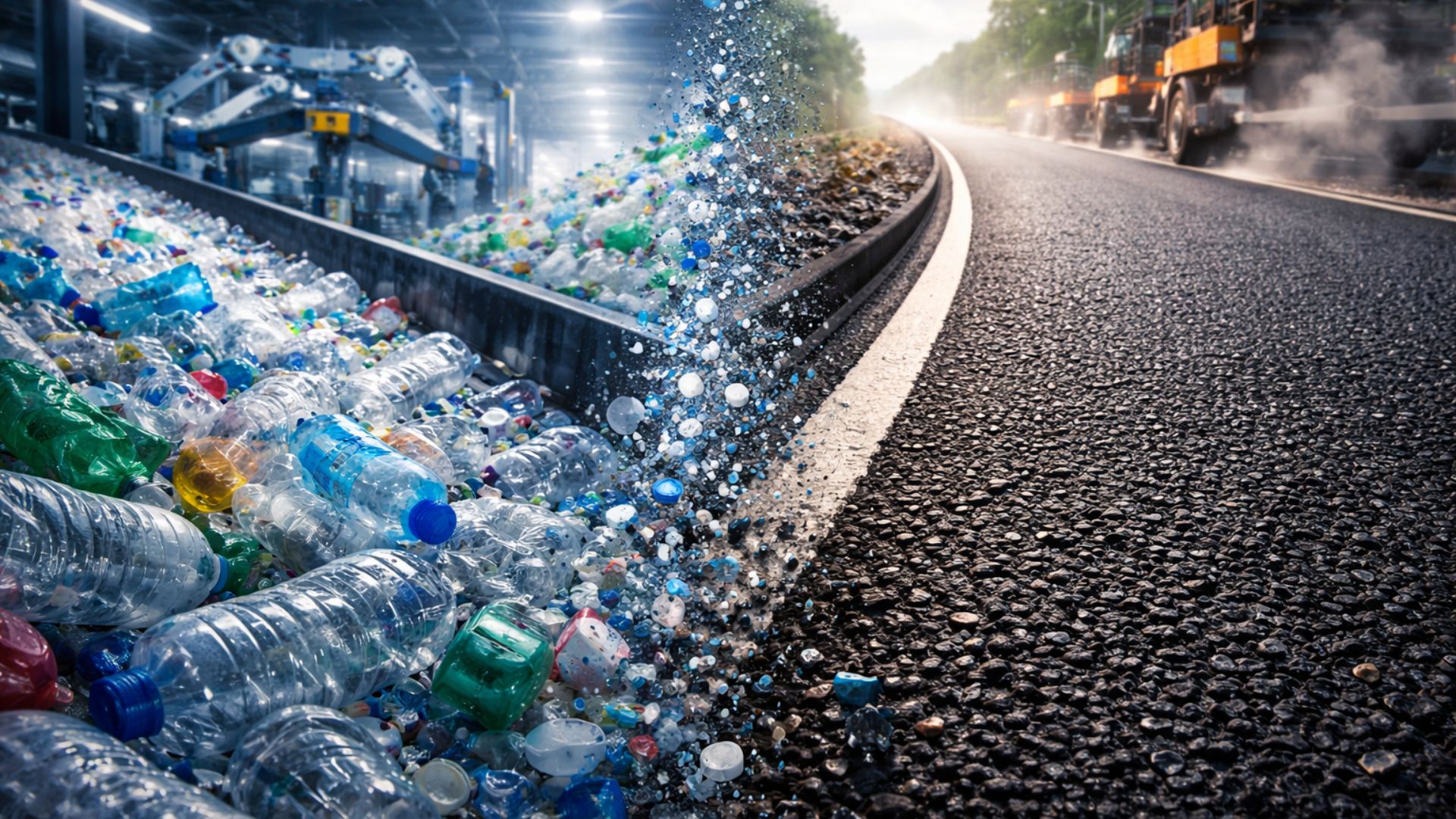


Technology Developed in Russia Reuses PET Plastic to Create More Durable Pavements, with Performance Gains in Intense Heat and Greater Adherence, While Proposing a Practical Solution to Reduce Solid Waste and Production Costs of Traditional Asphalt, According to Data Released by Researchers from the North Caucasus Federal University.
A group of researchers from the North Caucasus Federal University in Russia has developed an asphalt mixture that incorporates plastic waste of the PET type and, in laboratory tests, showed performance gains compared to conventional asphalt, according to the institution’s own announcement reported by international media.
The proposal combines mechanical reinforcement of the pavement with reduction of the volume of plastic destined for landfills.
The material adds recycled PET to the asphalt composition, with the promise of improving the resistance and flexibility of the coating.
-
As Brazil Expands Social Welfare, Survey Reveals 40% Blame Poverty on Laziness, While 58% Cite Lack of Opportunities

-
China Tightens Control on Antimony, Driving Prices from $22,000 to Nearly $40,000 per Ton as U.S. Rushes to Bolster Strategic Reserves

-
BlackRock Freezes $1 Billion in Brazilian Renewable Energy, Impacting 1.5 GW of Planned Projects and Highlighting Investor Concerns Over Infrastructure Bottlenecks Cutting Up to 25% of Solar and Wind Generation
-
Labor Shortage: Despite Record Average Salary, 90% of Brazilian Bar and Restaurant Owners Struggle to Hire Key Roles Like Sushi Chefs and Head Cooks


According to the team, the technology was designed to integrate into the production process without requiring complex changes in manufacturing, which is also pointed out as a cost reduction factor.
How Recycled PET Alters the Composition of Asphalt
The main change is the presence of PET as an additional component in the asphalt mixture.
According to the explanation provided by the university, the plastic undergoes treatment and is incorporated into the asphalt to modify the material’s characteristics, seeking greater capacity to withstand deformations and temperature variations.
According to Dmitri Vorobiov, senior professor of the Civil Engineering Department at the institution, the inclusion of recycled PET results in an asphalt that is more resistant and more flexible than the traditionally used one.

The combination of these two attributes is central to the durability of the pavement, as cracks and deformations tend to arise when the material loses its ability to “work” with heat, cold, and traffic pressure.
According to the announcement, the goal is to enhance the performance of the coating in high-temperature environments, where deformation of the asphalt tends to increase and compromise the surface over time.
At the same time, the technology is presented as an alternative to reuse waste that would otherwise have less noble disposal.
Gains in Resistance and Adherence in Heat Environments
The data reported by the team indicates that, in conditions of intense heat, the mixture would have registered 11% to 23% greater resistance than that observed in conventional asphalt.
The adhesion to the ground would have increased by 7% to 20%, also compared to traditional references.
These percentages, according to the project’s presentation, point to a more stable coating in situations where heat tends to accelerate wear and deformations.
In practice, asphalt with greater resistance and better adherence tends to offer a more regular surface with less propensity to early failures, although confirmation on a real scale depends on application on roads and monitoring over time.
On the other hand, the announcement emphasizes that the development was conducted in a research and testing context, reinforcing the need to assess the material’s behavior outside the laboratory, in different types of soil, traffic, and weather.
Even so, the university maintains that the technology is safe and that the use of recycled raw material can help reduce costs in the asphalt production chain.

Environmental Impact and Cost of Reusing PET
The discussion on reusing PET enters the project as a response to a broader challenge: the destination of post-consumption plastics.
In the released material, the cited estimate is that Russia consumes over 600 thousand tons of PET per year and recycles about 30% of that total, while the remainder goes to landfills and other forms of disposal.
By presenting the initiative as an alternative for part of this volume, the researchers argue that reusing plastic in asphalt can reduce pressure on disposal areas and, at the same time, lower the costs of virgin inputs.
The logic is to transform a high-use everyday waste, common in bottles and packaging, into an infrastructure component, with scaling potential if the application on highways proves viable.
In addition to the environmental argument, cost appears as a decisive point for adoption.
Depending on collection, sorting, processing, and logistics costs, the use of PET can become competitive compared to other solutions, especially when public policies value waste reduction and the proper disposal of recyclable materials.
Recycling and Infrastructure in the Context of BRICS Countries

The Russian research emerges in a context where waste management is treated as a priority in different countries, including among BRICS members, with initiatives geared towards transforming discarded materials into inputs for new production chains.
In India, there are projects and technologies that convert certain types of plastic waste into liquid fuels through thermochemical processes used to reuse materials that do not always enter traditional recycling routes.
In China and Brazil, recycling and reuse measures and programs are often associated with reducing environmental impacts and public health risks, as well as attempting to increase the circularity of raw materials.
Although strategies vary from country to country, the common point is the search for alternatives to reduce improper disposal and increase recycling of waste, with a direct impact on urban cleanliness, river pollution, and landfill use.
In this scenario, solutions that combine infrastructure and recycling, such as asphalt with PET, come into focus as they connect a constant demand for paving to a persistent challenge of solid waste.
If the mixture with PET advances from testing to streets and highways on scale, what criteria for oversight and monitoring will be decisive to prove that the “endless” asphalt delivers, in practice, the promised durability?






Vale a pena pesquisar!