






 Portuguese
  Spanish
  3 min of reading
  12 comments


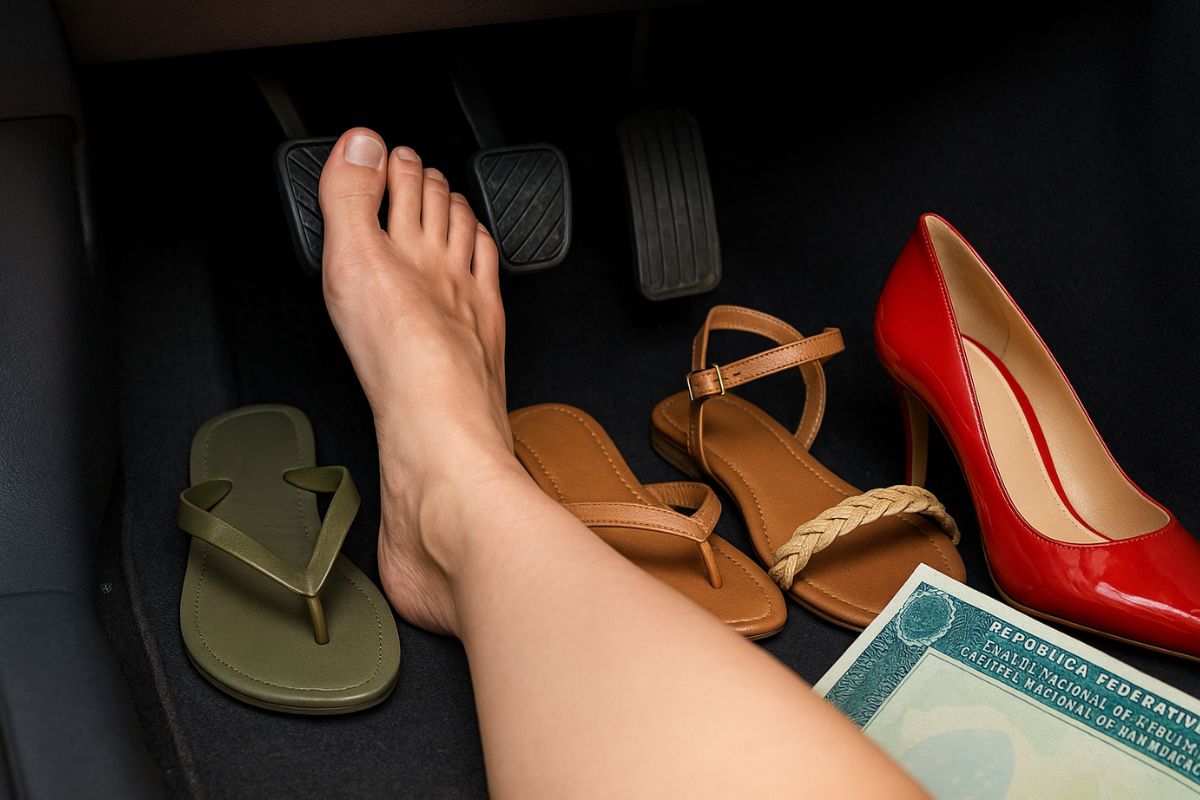


Driving Barefoot Does Not Result In Fines In Brazil — In Contrast To Flip-Flops, Sandals Or High Heels That Compromise Pedal Control And Are Prohibited By The CTB.
The Brazilian Traffic Code (CTB) addresses one of the most common doubts among drivers: driving barefoot is not prohibited. The legislation establishes that the infraction occurs when the driver uses footwear that does not secure the feet or that compromises the use of the pedals. This includes flip-flops, unstructured sandals, and high-heeled shoes.
In practice, this means that driving a vehicle without footwear is allowed and may even increase sensitivity in controlling the accelerator, brake, and clutch. On the other hand, the use of inappropriate footwear can result in fines and points on the license, reinforcing the importance of attention to safety rules.
What The CTB Says About Driving Barefoot
According to Article 252, Section IV, of the Traffic Code, the infraction is committed when the driver uses footwear that does not offer stability or hinders the operation of the pedals. Therefore, driving barefoot does not constitute a fine, as there is no risk of the foot “slipping” during driving.
-
Brazilian Joins Homeownership Consortium, Faces Decade of Dual Payments Totaling $141,000, Surpassing Traditional Mortgage

-
Land Rover to Halt Production in July, Putting 371 Jobs at Risk, as Chinese Automaker Negotiates to Convert Factory to 100,000 Vehicles Annually by 2027

-
Mexican Pest Threatens U.S. Cattle Herds at Historic Lows, Potentially Boosting Brazilian Beef Exports as Burger Prices Soar

-
Brazilian Freight Bill Progresses in Congress with $5,000 Minimum Wage, 70% Advance Payment, and Fines Up to $1 Million, as Agriculture and Industry Warn of Rising Costs and Legal Uncertainty


This interpretation has already been confirmed in official notes from traffic authorities and in administrative decisions. In other words: if the driver chooses to drive barefoot, no penalty is foreseen.
Footwear That Can Result In Fines
The problem arises with footwear that is loose or alters the way of contact with the pedals. Flip-flops, sandals, and high-heeled shoes are on this list, as they increase the risk of losing control of the vehicle.
In these cases, the infraction is considered medium, with a fine of R$ 130.16 and 4 points on the driver’s license. The use of sneakers, sturdy flats, or closed shoes, on the other hand, is completely permitted, as they ensure stability.
What About Clothing While Driving?
The Traffic Code does not impose specific restrictions on clothing. However, experts recommend avoiding very bulky pieces or those that could obstruct arms and legs, hindering mobility in emergency situations. The focus of the law is always to ensure that the driver has full control of the vehicle.
The Traffic Code makes it clear: driving barefoot is allowed, but footwear that hinders the use of the pedals can result in fines and points. The rule reinforces the idea that the priority is to ensure safety while driving, regardless of the driver’s choice regarding clothing or footwear.
And you, have you ever driven barefoot to avoid risks? Do you think the fine for flip-flops and high heels is fair or excessive? Leave your opinion in the comments — we want to hear your experience on the road.





Se caso acontecer de estarmos de chinelo e dirigindo descalço e o guarda parar e pedir para sairmos do carro, provavelmente vamos botar o chinelo para sairmos do carro e o guarda nos acusar de estarmos dirigindo de chinelo?
O que fazer em uma situação dessa?
Dificil e entender como alguem comenta,amei esta nova lei,ela sempre existiu,sempre soube disso,nao ha nada de novo,em 1988 a auto escola ja ensinava isso!
Amei esta nova lei, sempre dirijo descalço, pois sinto mais segurança ao pisar nos pedais. Já me envolvi em uma colisão traseira, quando fui atingido por um outro veículo em que a condutora estava de sapatos salto altos. Ela entrou na justiça dizendo que eu parei repentinamente, mais o trânsito estava parado, tirei fotos dela e foi determinado que ela pagaria todo o prejuízo a mim sofrido, pois conduzia seu veículo com Calcados não adequados. Tai a utilidade da câmera do seu celular ou câmeras veiculares.