Portuguese
  Spanish


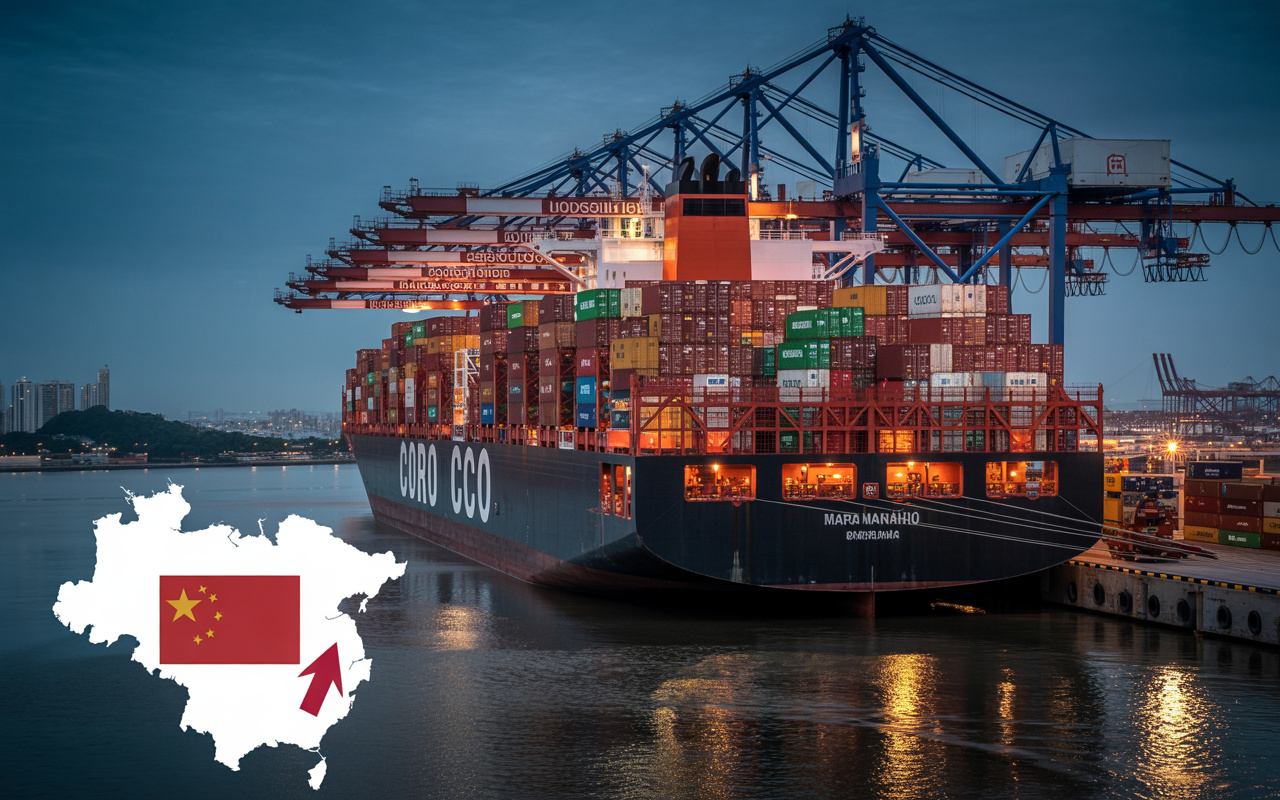

Cofco Aims to Purchase the Port of São Luís from Cosan. Terminal in Maranhão Could Become Direct Gate to Asia and Consolidate Brazil as Epicenter of Chinese Food Security.
The interest of Cofco International, the global arm of the Chinese state-owned food company, in purchasing the Port of São Luís reignites a debate that transcends the commercial sphere: it concerns logistics, sovereignty, and food security on a global scale. The terminal, controlled by Cosan since 2021, spans 200 hectares and was designed to handle grains, fertilizers, and general cargo, integrating with the Northern-Southern Railway and the Carajás Railway.
If realized, the deal could transform Maranhão into one of Brazil’s main exit points directly to Asia, reducing logistical costs and accelerating the flow of harvests. For China, the largest importer of Brazilian soybeans and corn, this would be a strategic move to consolidate the Northern corridor as the preferred export route.
Cosan and the Behind-the-Scenes of the Negotiation
Cosan acquired control of the Port of São Luís in 2021 for around R$ 720 million, but progress on the project has been slow. There were even discussions with Vale, with figures reaching R$ 1 billion, but without conclusion.
-
New Smart Radar Begins Issuing Fines to Solo Drivers in Carpool Lanes, Uses Cameras to Count Occupants, Changing Traffic Enforcement Rules on Busy European Roads

-
Why can the crane operator only obey the correct signalman on the construction site: among dozens of workers, a hand raised by the wrong person can confuse the maneuver and turn a load of tons into an immediate risk.
-
What changes with the new public transportation rules that can reduce pressure on fares and pave the way for zero fare in Brazil?
-
Argentina confirms Belgian giant to lead strategic Paraná River waterway and promises to reduce logistical costs on one of South America’s most important routes

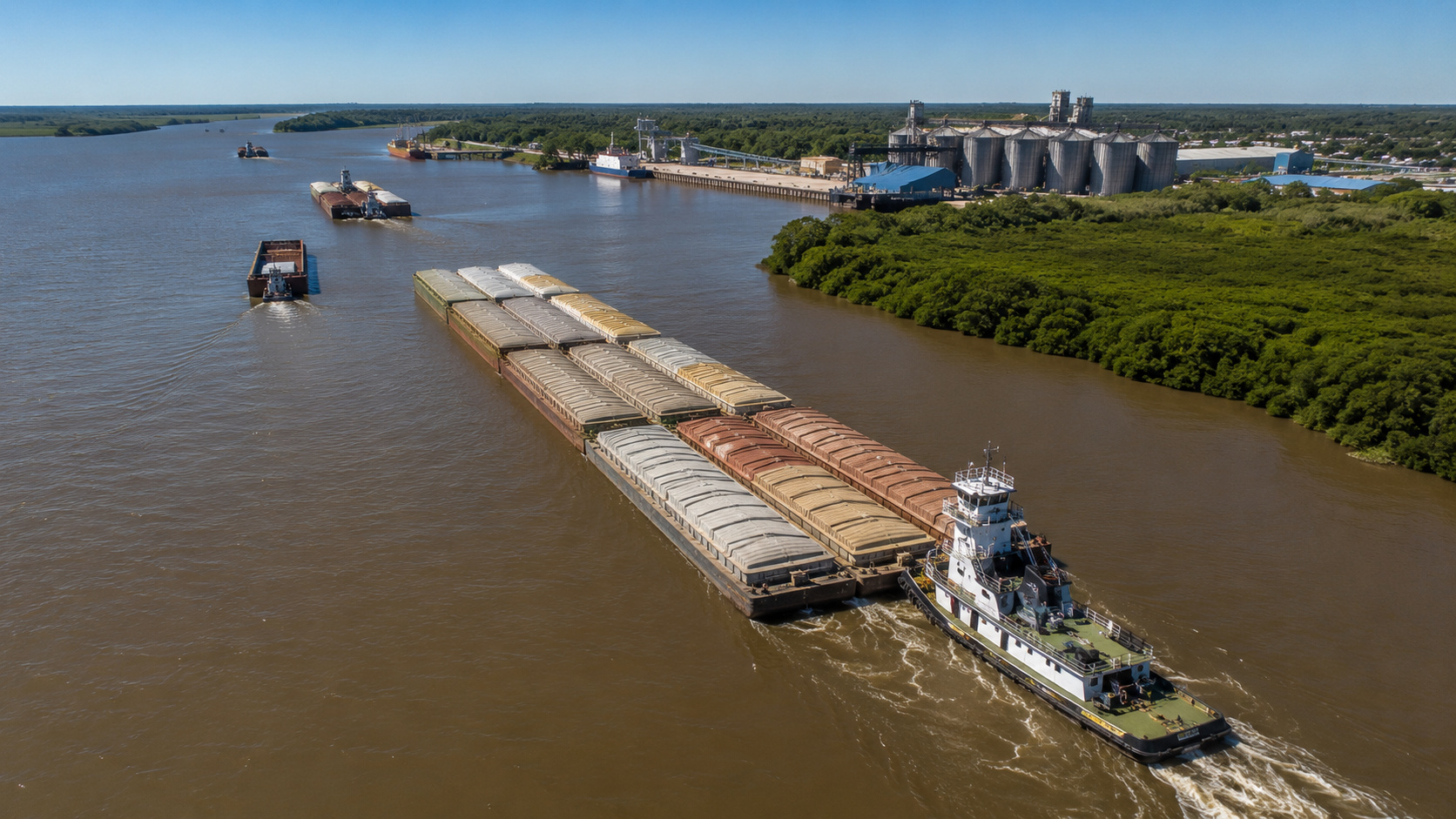
Now, the name of Cofco arises as a natural candidate to take over the asset, as the Chinese company operates port terminals in Santos (SP) and has declared interest in expanding its presence in Brazil.
For Cosan, a potential sale frees up capital for investments in energy and mining, sectors in which the company has doubled down. For Cofco, it would be a geopolitical and logistical leap: ensuring not only direct access to Brazilian crops but also reducing dependence on third parties in an increasingly competitive market.
Brazil as the Epicenter of Chinese Food Security
China accounts for over 60% of Brazilian soybean exports and has expanded purchases of corn and proteins.
In recent years, Beijing has made it clear that it does not want to rely solely on transportation via the Southeast and South—bottlenecks in infrastructure, high costs, and risks of congestion at ports like Santos and Paranaguá are pressuring the search for alternatives.
The Northern corridor, which includes Itaqui, Barcarena, and potentially the Port of São Luís, is the answer. By investing directly in infrastructure, Cofco is staying ahead of global competitors like ADM, Bunge, and Cargill, strengthening its logistics network and ensuring a shorter and cheaper route for China to the Asian market.
For analysts, controlling port assets in Brazil is also a gesture of food security. With global geopolitical instability and an ongoing trade war with the U.S., Beijing seeks to ensure nothing disrupts the flow of essential grains to its population.
The Impact on Agriculture and the Logistics Dispute
For Brazil, Cofco’s arrival in Maranhão could represent billion-dollar investments in infrastructure, job creation, and improvement of the national agribusiness competitiveness.
The country, which is already harvesting record crops of soybeans and corn, urgently needs new logistics corridors to avoid bottlenecks that erode the margins of producers and exporters.
However, there is also a growing debate about the Chinese presence in strategic infrastructure assets. Ports, railways, and logistical terminals are not just departure points: they are critical nodes of the economy. Controlling them is, in a way, controlling the negotiation of prices and timelines in global supply chains.
Brazilian entrepreneurs are watching carefully. On one hand, there is the immediate advantage of capital influx and logistical efficiency; on the other hand, there is the concern of excessive dependence on China, which already accounts for a large portion of national exports.
Experts Evaluate the Move
According to economist and foreign trade specialist José Augusto de Castro, “China does not just buy commodities; it also buys the logistics that ensure the continuous flow of food. This gives Beijing a strategic advantage in any future negotiation.”
For lawyer and infrastructure analyst Fernando Marcato, “the potential acquisition of the Port of São Luís by Cofco is plausible and represents the next logical step in the Chinese strategy in Brazil. The question is to what extent the country is prepared to regulate this participation in strategic sectors.”
Brazil, Cosan, and Cofco: A Game of Global Interests
- Cosan: focuses on energy and mining, relieving cash and stepping away from a project that did not advance at the expected pace.
- Cofco: strengthens the Northern corridor and brings Brazil closer to China, ensuring direct flow of harvests to the Asian market.
- Brazil: receives investments but needs to balance short-term gains with the risks of handing over strategic infrastructure to a foreign power.
Who Controls Logistics Controls the Game
The potential advance of Cofco over the Port of São Luís shows, once again, that in global agribusiness, it is not those who produce more that set the rules, but those who control logistics corridors and strategic ports.
If confirmed, the transaction will consolidate Brazil as the epicenter of Chinese food security, while rekindling the debate about foreign presence in vital sectors.
For entrepreneurs and producers, the lesson is clear: who controls logistics controls the negotiation.